
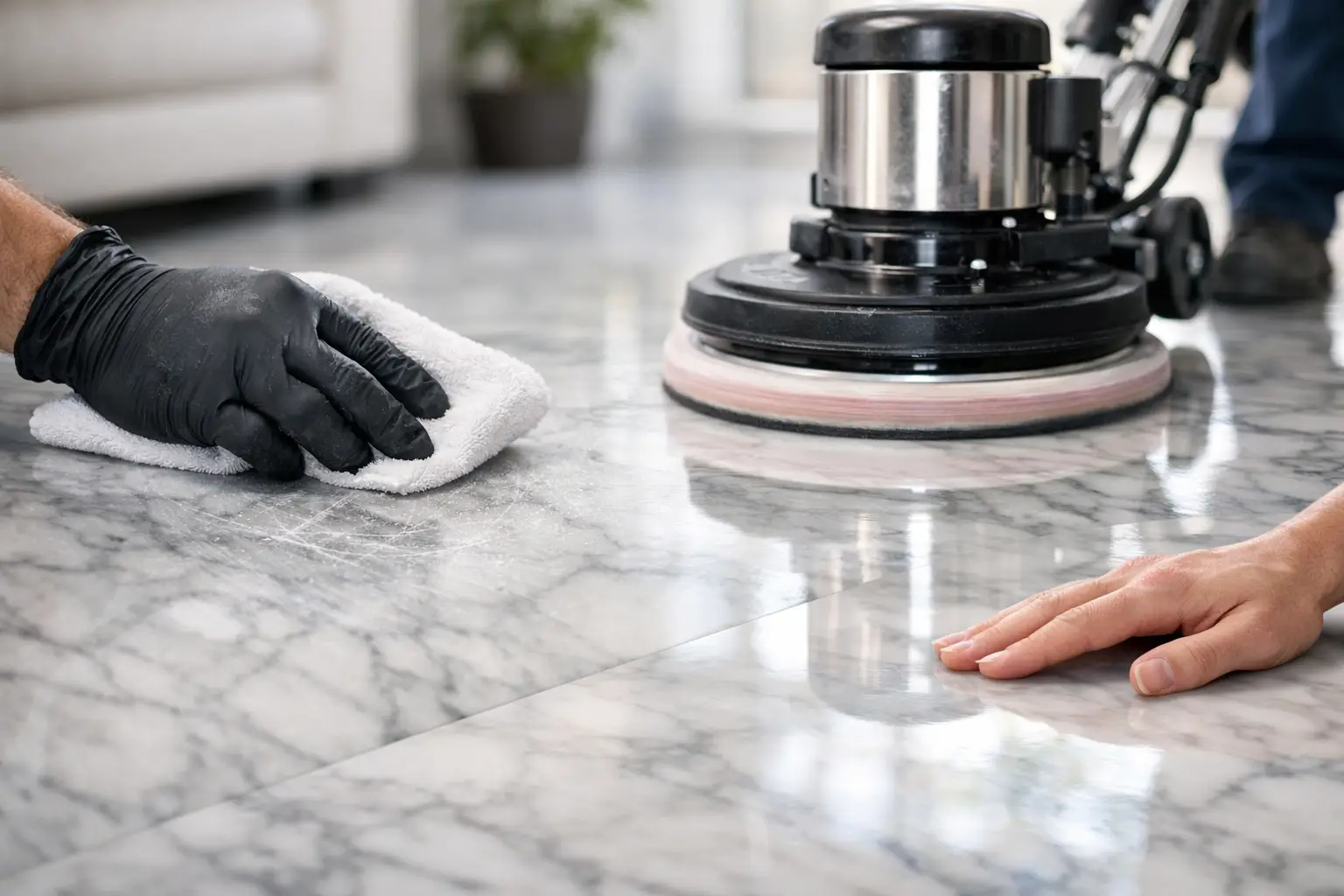
A fine scratch across a marble vanity can catch the light every morning. On a foyer floor, hundreds of small abrasions can turn an elegant surface cloudy and worn long before the stone itself has reached the end of its life. A professional marble scratch removal service corrects this damage at the surface level, restoring clarity, smoothness and the refined finish that makes marble such a valued feature.
Marble is not a material to treat with a generic cleaner, polishing paste or aggressive sanding pad. It is a calcium-based natural stone with distinctive veining, varying density and a surface finish that must be carefully matched. The right restoration method can revive a scratched marble surface without the cost, dust and disruption of replacement. The wrong method can leave swirl marks, uneven sheen or a patch that is more noticeable than the original damage.
Why marble scratches need specialist treatment
Marble may look hard and enduring, but it is softer than granite and many engineered stone products. Fine grit brought in on shoes, moving furniture, dropped ceramic items and regular cleaning with abrasive pads can all score the surface. Benchtops and vanity tops are also vulnerable to friction from pots, toiletries, decorative pieces and everyday use.
Not every mark is technically a scratch. Acidic spills from lemon, vinegar, wine or bathroom products can etch marble, creating a dull or pale area where the polished surface has been chemically disturbed. Etching can sit alongside genuine scratching, especially on kitchen benchtops, bathroom vanities and hospitality surfaces. The distinction matters because each issue calls for a different restoration approach.
A skilled technician assesses the depth of the damage, the marble type, its current finish and how the surface has weathered over time. Honed marble requires a soft, low-sheen consistency; polished marble needs crisp reflectivity and depth. Treating one small area without blending it into the surrounding stone can create an obvious contrast, particularly under direct lighting.
What a marble scratch removal service involves
Professional restoration is a controlled refinement process, not simply an attempt to cover marks with a topical product. Depending on the condition of the marble, the work may involve cleaning, honing, polishing and sealing in a carefully selected sequence.
Inspection and surface preparation
The process begins with identifying what is affecting the finish. A surface may show scratches, etching, soap residue, ingrained grime, old sealers or a combination of these issues. Removing contaminants first gives the technician an accurate view of the stone and prevents residue from interfering with the restoration result.
The area is then prepared to protect adjoining cabinetry, walls, fixtures and flooring. In commercial spaces, restoration can also be planned around access requirements and presentation-sensitive trading hours, helping minimise disruption to occupants, visitors or customers.
Honing away scratches and unevenness
Honing is the stage where light to moderate scratches are refined from the marble itself. Specialist diamond abrasives are used progressively, reducing surface damage while maintaining control over the stone’s profile. The aim is not to remove more material than necessary. It is to create an even, scratch-free foundation that can be finished to the desired level of sheen.
Deeper scratches may require more intensive honing, but there are limits. If a mark is severe, reaches a vulnerable edge or occurs beside a chip or crack, repair work may be needed before the final finish can be restored. An experienced stone restoration specialist will explain what can be removed completely, what can be substantially improved and where a repair offers the most refined visual outcome.
Polishing to restore clarity and brilliance
Once the marble is evenly honed, it can be polished where a high-gloss finish is required. This stage restores the light reflection that gives polished marble its sense of luxury. The result should look balanced across the entire treated area, rather than overly glossy in one place and dull beside it.
For honed marble, the objective is different. A quality result preserves the sophisticated matte appearance while removing visible scuffs and roughness. More shine is not always better. The best finish is the one that suits the original design intent of the space and remains practical for how the surface is used.
Sealing and ongoing protection
After restoration, an appropriate penetrating sealer can help reduce the absorption of moisture and staining agents. Sealers support easier maintenance, particularly on marble floors, benchtops and bathroom surfaces, but they do not make stone scratch-proof or acid-proof. They are one layer of protection, not a substitute for sensible daily care.
For particularly vulnerable benchtops or high-use surfaces, protective solutions such as anti-etch film may be worth considering. This depends on the appearance required, the pattern and condition of the marble, and the level of exposure to acidic food, cosmetics or heavy use. A tailored recommendation is more valuable than applying the same treatment to every stone surface.
Where scratch removal makes the greatest difference
Marble restoration delivers a strong visual return in spaces where light, finish and first impressions matter. In a residence, this may include kitchen islands, splashbacks, vanity tops, shower walls, dining tables, stair treads and living-area floors. Restoring rather than replacing these features preserves the character of the existing stone and avoids the challenge of matching new slabs to old material.
For commercial property operators, scratched marble can undermine an otherwise well-maintained environment. Office foyers, hotel reception areas, retail entrances, lift lobbies and restaurant bathrooms all benefit from a clean, consistent stone finish. In these settings, marble is part of the property’s presentation. Restoring it supports a polished impression without the major capital cost and operational interruption of replacement.
Why DIY scratch fixes often disappoint
Many DIY products promise a quick improvement, but marble does not respond well to shortcuts. Household abrasive powders can create further scratching. Generic polishing compounds may leave a greasy film or inconsistent shine. Acidic cleaners can etch the stone, while waxes and coatings can temporarily mask damage only to attract dirt, discolour or peel over time.
There is also a common temptation to polish a small scratched spot until it looks better in isolation. The problem is that marble reflects light across the whole surface. A highly polished patch in the middle of a softer, aged finish can be just as distracting as the scratch it replaced.
Professional equipment alone is not the answer either. Restoration quality depends on selecting the correct abrasive sequence, pressure, moisture level, polishing method and protective treatment for that specific marble. Carrara, Calacatta, Nero Marquina and other marbles can differ considerably in appearance and behaviour. The craft lies in reading the stone, then refining it with restraint.
Keeping restored marble looking its best
Once scratches have been professionally removed, simple habits will extend the life of the finish. Use pH-neutral stone cleaners rather than supermarket products designed for ceramic tiles or general bathroom cleaning. Wipe spills promptly, especially citrus, wine, vinegar, perfume and strong cleaning chemicals. On floors, use quality entry mats to reduce grit and avoid dragging furniture across the surface.
Benchtops benefit from boards, trivets and felt pads beneath decorative items. In bathrooms, avoid leaving wet metal containers, cosmetic bottles or soap dispensers in one place for extended periods. These measures are modest, but they prevent the kind of cumulative wear that gradually removes marble’s lustre.
Maintenance should also reflect the surface’s role. A lightly used ensuite vanity may only need careful routine cleaning, while a busy hotel foyer or family kitchen may need periodic professional maintenance to retain an even finish. Addressing light wear early is generally more economical than waiting until scratches, etching and staining have become widespread.
A considered alternative to marble replacement
Replacing marble is rarely a simple exercise. It can involve removing cabinetry or fixtures, sourcing compatible slabs, managing waste and accepting unavoidable variation in colour and veining. Even when replacement is feasible, new stone may not match surrounding marble installed years earlier.
A high-quality marble scratch removal service offers a more considered path when the stone is structurally sound. It restores the existing material, retains its natural character and brings back the elegant finish that justified marble in the first place. For Sydney homes and commercial interiors, Grand Stone Restoration applies material-specific expertise to achieve that result with precision.
If your marble looks dull, scratched or uneven, do not assume replacement is the only answer. A close professional assessment can show how much of the original brilliance is still waiting beneath the wear.