
A newly laid sandstone terrace can look exceptional on the day it is completed, then begin collecting dark moisture marks, barbecue spills and leaf tannins within a single Sydney season. An effective outdoor stone sealing guide starts with one principle: sealing is not a generic finishing step. It is a material-specific protection system that must suit the stone, its condition, its location and the way the area is used.
The right treatment helps preserve colour, limit stain absorption and make routine cleaning far easier. The wrong treatment can leave a slippery film, trap moisture, create patchiness or alter the natural character that made the stone appealing in the first place.
Why outdoor stone needs considered protection
Exterior surfaces work harder than indoor stone. They contend with UV exposure, rain, humidity, pool water, soil, organic debris, cooking oils and constant foot traffic. In Sydney, a shaded courtyard may stay damp long after rainfall, while a north-facing entertaining area can experience strong sun and heat for much of the day. These conditions affect both the stone and the sealer.
Natural stone is not one uniform material. Sandstone, limestone, travertine, slate, bluestone and granite have different densities, mineral compositions and absorbency levels. Even pavers from the same batch can perform differently where one section has weathered more heavily or sits over poor drainage.
Sealing is designed to reduce the rate at which water and contaminants enter the surface. It does not make stone invincible, and it should not be treated as a substitute for drainage, cleaning or timely spill removal. A quality sealer gives you valuable time to respond before a stain becomes embedded.
Outdoor stone sealing guide: choose the right sealer
The first decision is whether the stone needs a penetrating sealer, an enhancing sealer or a surface coating. For most natural outdoor stone, a premium penetrating sealer is the preferred option. It moves into the pores rather than forming a conspicuous layer on top, helping protect the surface while allowing the stone to retain a natural appearance and breathe.
An enhancing sealer deepens the colour and can bring out the richness of slate, travertine or certain sandstones. This can produce a refined, wet-look effect, but it is not a decision to make from a small online image. Enhancement is often difficult to reverse, and the finished colour can vary considerably across a weathered surface. A discreet test area is essential.
Topical coatings may be suitable in carefully selected situations, but they demand more caution outdoors. A film-forming product can peel, cloud or wear unevenly under UV exposure and foot traffic. It may also change slip resistance, particularly around pools, entry paths and entertaining spaces exposed to rain. A glossy finish is not automatically a premium finish – on the wrong stone, it can look artificial and create a maintenance burden.
For porcelain or dense engineered pavers, the issue is different again. These materials generally have very low absorbency and may not need conventional sealing on the face of the tile. However, grout, joints and surrounding natural stone can still benefit from targeted protection.
Test absorbency before committing
A simple water test can indicate whether protection is likely to be needed. Place a small amount of clean water on a dry, inconspicuous section and observe it for several minutes. If the stone darkens quickly as it absorbs the water, it is porous and may be ready for sealing once properly cleaned and dry.
If the water beads on the surface, an existing sealer may still be active. That does not necessarily mean the protection is adequate. Uneven beading, dark patches and areas that absorb water at different rates often point to inconsistent previous application or sealer breakdown. Professional assessment is worthwhile before applying another product over the top.
Preparation determines the final result
Sealer can only protect what it reaches. Applying it over ingrained soil, algae, efflorescence, old coating residue or moisture may lock in the problem and make later restoration more difficult.
Begin by removing surface dirt with an appropriate stone-safe cleaner. Avoid relying on harsh acids or high-pressure cleaning as a universal solution. Acidic cleaners can damage calcareous stones such as limestone, travertine and marble, while aggressive pressure washing can erode softer sandstone, disturb grout and open the surface further.
Organic staining from leaves, mould and tannins needs to be treated according to the stone and the source of the mark. Rust, oil and mineral deposits each require different methods. This is where specialist knowledge protects the asset: a product that works on granite may be unsuitable for honed limestone or a delicate sandstone paver.
The stone must then dry thoroughly. Surface dryness is not enough. Moisture held below the surface can interfere with penetration and may cause a hazy or blotchy finish. Drying time depends on the stone’s porosity, recent weather, shade, drainage and substrate conditions. After periods of heavy rain, patience delivers a far better outcome than rushing the application.
Apply for even, invisible protection
A well-applied penetrating sealer should not announce itself. The aim is an even, clean-looking surface with improved resistance to water and everyday contaminants, not a plastic sheen.
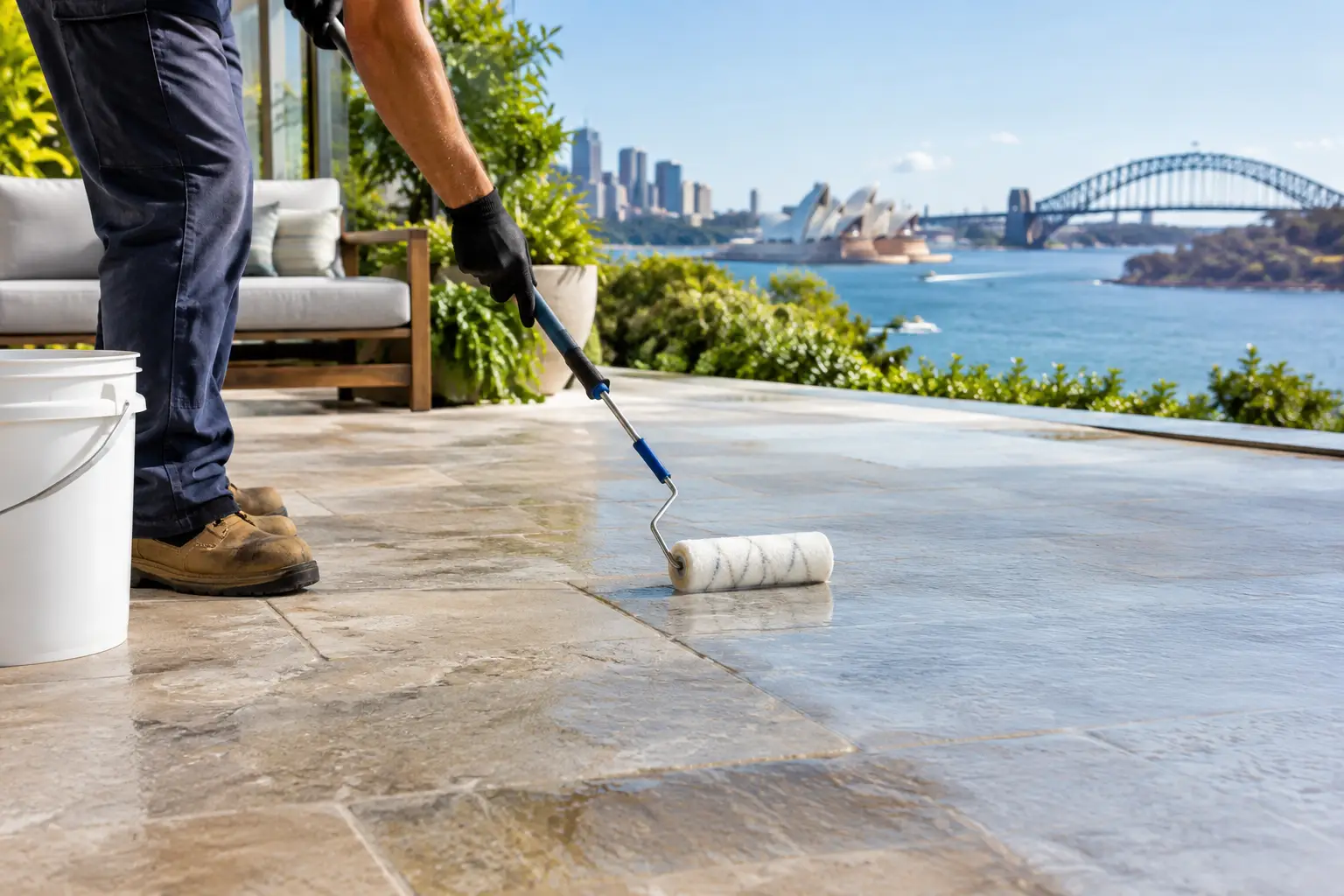
Application method depends on the product and surface, but the discipline is consistent: apply evenly in manageable sections, allow adequate dwell time for penetration, and remove all excess before it dries on the surface. Leaving excess sealer is a common cause of streaking, residue and slippery patches.
Edges, joints and textured faces deserve particular attention because they absorb differently from flat, dense areas. On heavily porous stone, a second coat may be required. It should only be applied within the product’s specified recoat window or after the first application has been assessed. More sealer is not always better. Oversaturation can create a patchy finish without improving protection.
Keep foot traffic, furniture, pets and water away during the curing period. A surface may feel dry well before the sealer has achieved its full protective performance. Planning the work around a reliable dry-weather window is especially valuable for exposed Sydney courtyards and pathways.
Where sealing matters most
Some exterior areas face a much higher risk of staining or moisture exposure than others. Pool surrounds need careful product selection because slip resistance and chlorine exposure matter as much as stain resistance. Barbecue zones are vulnerable to oil and grease, while driveways and entry paths must cope with tyre marks, soil and concentrated foot traffic.
Shaded side paths and garden-adjacent patios often need the strongest cleaning and drainage strategy. Sealer can help reduce moisture absorption, but it will not solve persistent algae growth caused by inadequate sunlight, overflowing garden beds or water pooling against the stone.
For commercial entrances, hotel courtyards and high-traffic common areas, appearance is only part of the equation. A maintenance plan should account for pedestrian volume, cleaning products, slip requirements and the practical timing of future re-sealing. The best specification balances presentation with safe, manageable long-term care.
How long does outdoor stone sealer last?
There is no honest one-size-fits-all interval. Exposure, stone type, application quality and cleaning habits all influence longevity. A protected covered terrace may perform well for several years, while a busy poolside area or unshaded sandstone path may need attention sooner.
Watch for practical signs rather than relying only on a calendar. Water that once beaded but now absorbs quickly, darkened areas after rain, stubborn oil marks and uneven colour can all indicate that the protection is diminishing. Test a few representative locations, including high-traffic zones, rather than judging the whole area from one sheltered corner.
Routine care extends sealer life. Sweep away abrasive grit, remove leaves before they break down, clean spills promptly and use pH-neutral products suited to natural stone. Avoid assuming that household degreasers, chlorine-based cleaners or vinegar are harmless because they are readily available. Their short-term cleaning power can come at the expense of the stone’s finish, grout condition or protective treatment.
When professional sealing is the better investment
DIY sealing can be appropriate for a small, clean, uniform area with a clearly identified stone and a suitable product. The risk rises where the surface is large, expensive, unevenly weathered, previously coated, heavily stained or close to a pool.
Professional stone restoration is particularly valuable when cleaning, stain treatment, honing, grout repair and sealing need to work together. Rather than concealing a tired surface beneath a coating, a specialist can restore a consistent foundation and select protection that complements the stone’s natural finish. Grand Stone Restoration applies this material-led approach to outdoor surfaces across Sydney, with treatments selected for lasting performance rather than a temporary cosmetic change.
Your outdoor stone should age with character, not with preventable staining and dullness. Start with the condition of the surface in front of you, respect the properties of the material, and choose protection that preserves its natural elegance long after the work is complete.