
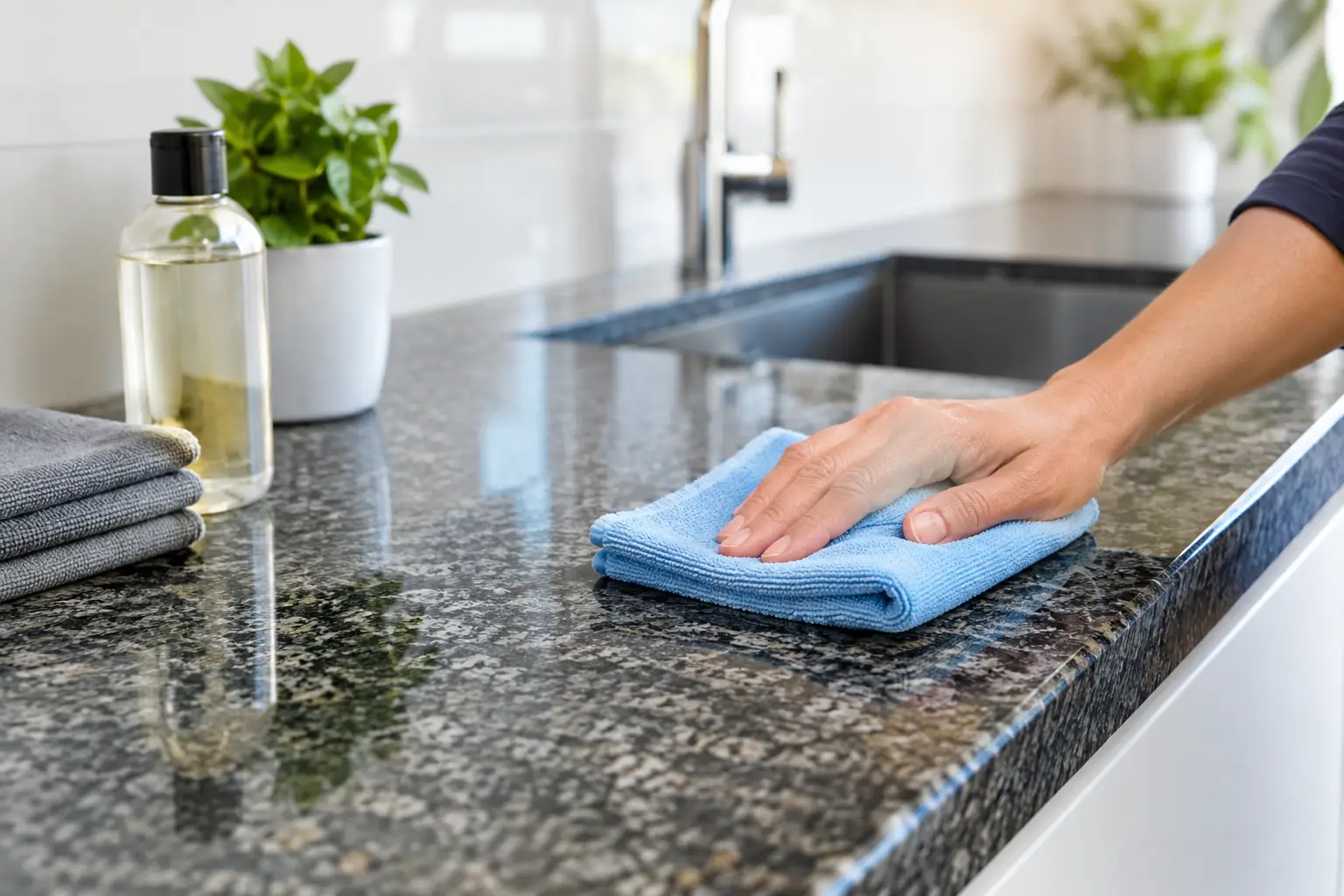
A granite benchtop can look dull long before it is actually worn out. Cooking oils, hard-water residue, cleaning-product film and fine surface scratches can all mute the depth and natural movement that made the stone stand out in the first place. To polish granite benchtops safely, it helps to understand one essential distinction: routine care can refresh the finish, while true stone polishing is a specialised restoration process.
Granite is exceptionally hard, but it is not indestructible. The wrong cream cleanser, an abrasive pad or a DIY polishing wheel used without experience can leave swirl marks, patchy gloss or a finish that no longer matches the rest of the kitchen. A careful approach protects both the stone and the investment beneath it.
What a Dull Granite Benchtop Is Telling You
Not every dull-looking granite surface needs to be polished. In many Sydney kitchens, the apparent loss of shine is caused by a residue sitting on top of the stone rather than damage within it. Spray cleaners, dishwashing liquid, oil splashes and mineral deposits can create a cloudy film that ordinary wiping does not remove.
Start by looking at the surface in strong natural light. If the stone looks hazy in broad areas but feels smooth, built-up residue is the likely culprit. If the finish is rough, scratched, uneven or visibly less reflective around the sink and preparation zones, the polish itself may have worn down. That is when professional assessment becomes worthwhile.
Granite also varies considerably. Some varieties are dense and highly polished, while others have more natural texture, fissures or a lower-gloss factory finish. The goal is not always a mirror shine. It is to restore an even, refined appearance that suits the particular stone.
How to Polish Granite Benchtops Safely: Start With Cleaning
For regular at-home maintenance, use a pH-neutral cleaner made specifically for natural stone, or warm water with a small amount of mild, non-abrasive dishwashing liquid. Apply it with a soft microfibre cloth, then wipe again with clean water and dry the benchtop thoroughly with another clean cloth.
Drying matters more than many homeowners realise. It prevents streaking and reduces the chance of mineral spotting, particularly in areas around taps. For a little extra lustre, buff the completely dry surface with a fresh, dry microfibre cloth using light pressure.
This process does not mechanically polish the granite, nor should it. It removes the surface film that can hide the stone’s natural brilliance. If the shine returns after a proper clean and buff, there is no reason to introduce more aggressive products.
Avoid using vinegar, lemon juice, bathroom cleaners, bleach, descalers, oven cleaner or general-purpose degreasers unless the product is expressly approved for natural stone. Granite is more acid-resistant than marble, but acidic and alkaline chemicals can still affect sealers, dull some finishes and leave difficult-to-remove residue.
Do Not Mistake a Polish for a Sealer
Polishing and sealing perform different roles. Polishing refines the surface and improves light reflection. Sealing helps slow the absorption of liquids into the stone. A sealer will not repair scratches, and a polishing product will not necessarily provide meaningful stain protection.
A simple water test can indicate whether the existing sealer may be weakening. Place a few drops of water on an inconspicuous area for several minutes, then wipe them away. If the stone darkens quickly, it may be absorbing moisture and could benefit from resealing. Darkening does not automatically mean the benchtop is damaged, but it is a prompt to choose protection carefully.
Quality impregnating sealers are designed to penetrate the stone without creating a thick plastic-like layer on top. Topical coatings and bargain shine products can sometimes leave an artificial gloss, attract grime or wear unevenly. In a high-use kitchen, that short-term shine may become a long-term maintenance issue.
When DIY Polishing Becomes Risky
True granite polishing uses professional abrasives, controlled water, specialist machinery and a process matched to the stone’s condition. It may involve honing to remove fine scratches before progressively refining the finish. This is not comparable to rubbing on a supermarket polish.
Never dry-grind, sand or mechanically polish a granite benchtop indoors. Grinding stone can generate hazardous respirable crystalline silica dust. It also introduces real risks of heat damage, inconsistent sheen, damaged splashbacks and rounded edges that no longer match the original fabrication.
Be cautious with any product described as a scratch remover or high-gloss restorer. Test it in a concealed area first, follow its instructions precisely and stop if the surface becomes streaky or tacky. A product that looks acceptable on one granite can react poorly on another, especially where the stone has previously been sealed or treated.
The same restraint applies to scouring pads. Even a pad marketed as gentle can create fine abrasion that becomes visible when sunlight falls across the benchtop. Use soft cloths for daily care, and reserve any corrective work for a stone restoration specialist.
Protect the Finish Between Professional Treatments
A polished granite benchtop stays elegant longer when daily habits support the finish. Wipe up wine, oils, fruit juice, coffee and sauces promptly. Granite is durable, but prolonged contact with staining liquids can mark more porous varieties or compromise an ageing sealer.
Use trivets beneath hot cookware and cutting boards for food preparation. Although granite handles heat better than many manufactured surfaces, sudden temperature changes can place stress on the stone or its joins. Cutting directly on granite can also blunt knives and increase the chance of scratching the finish with grit caught beneath utensils or appliances.
Pay special attention to the sink area. Detergent residue and hard-water deposits accumulate here first, making an otherwise polished surface appear tired. A quick dry after washing up is one of the simplest ways to retain clarity and shine.
For commercial kitchens, reception counters and hospitality spaces, cleaning routines should be equally deliberate. High-touch surfaces often receive frequent cleaning with products selected for convenience rather than stone compatibility. A stone-safe maintenance specification protects presentation-critical surfaces from gradual chemical dulling.
Signs You Need Professional Granite Restoration
Professional restoration is appropriate when cleaning no longer produces an even result. Common signs include widespread fine scratches, dull traffic patterns around work zones, stubborn haze, visible etching from unsuitable chemicals, chipped edges, stained patches or inconsistent sheen after unsuccessful DIY products.
A specialist can determine whether the issue is residue, sealer failure, surface abrasion or a deeper defect. Treatment may include deep cleaning, targeted stain removal, chip repair, honing, mechanical polishing and resealing. The right sequence matters. Polishing before residue or damage has been properly addressed can simply mask the problem for a short time.
For premium kitchens and commercial interiors, restoration is often considerably more economical and less disruptive than replacement. More importantly, it preserves the original stone, its fit with cabinetry and splashbacks, and the character that cannot always be recreated with a new slab.
Grand Stone Restoration applies material-specific methods to revive granite surfaces without treating every benchtop as though it were the same. That level of precision is particularly valuable where polished stone must blend cleanly with existing finishes, adjacent panels and detailed edge profiles.
The Safest Route to Lasting Brilliance
The safest at-home approach is modest: clean with pH-neutral products, dry thoroughly, buff gently and avoid abrasive shortcuts. If the granite remains dull after that care, do not assume it needs a stronger chemical. It may need a skilled restoration process tailored to the stone, its finish and the way the benchtop is used.
A beautifully restored granite surface should look naturally luminous, not coated or artificially glossy. With careful daily care and expert attention when wear becomes visible, a quality granite benchtop can retain its elegance for many years.