
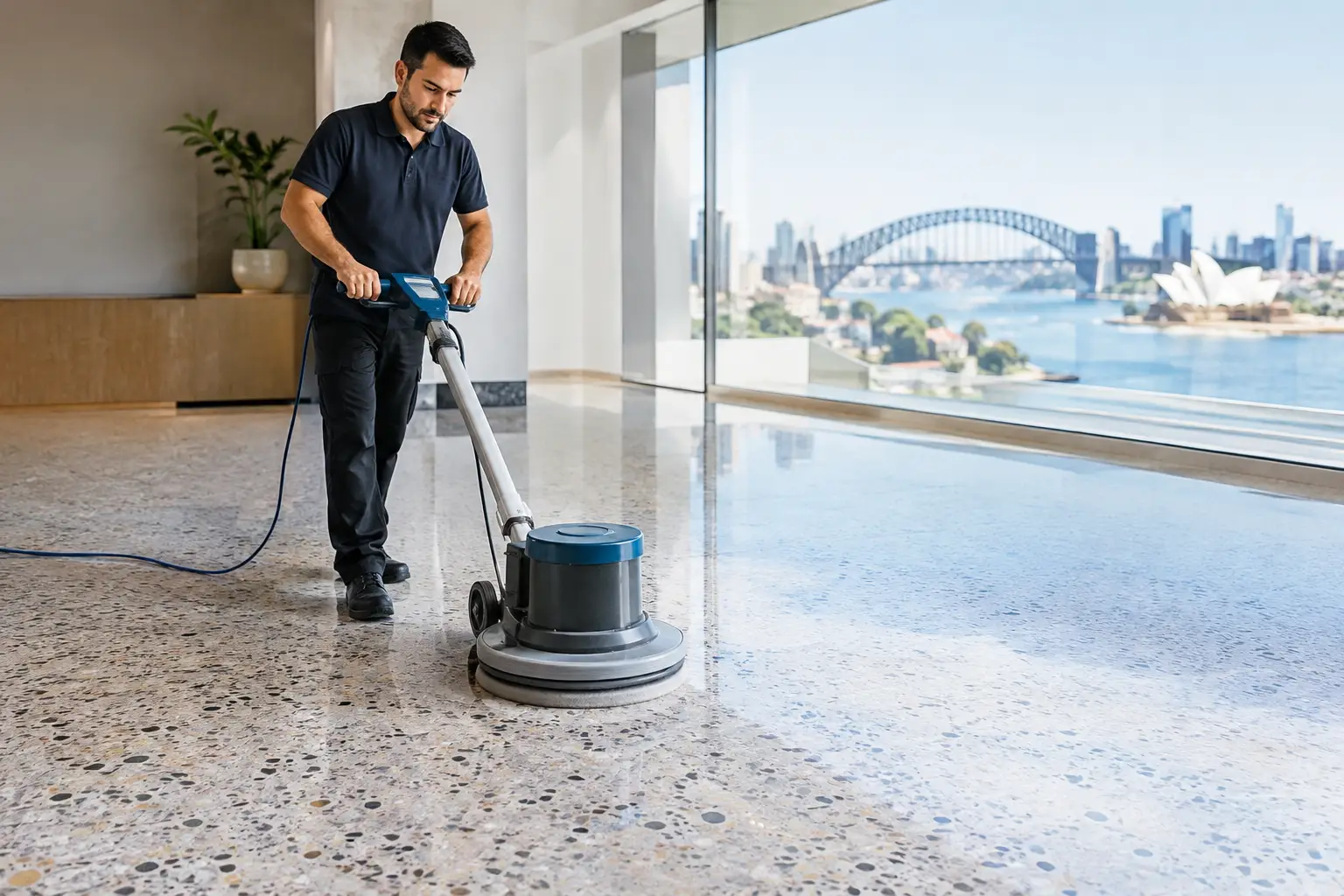
A terrazzo floor can look permanently tired long before it is beyond restoration. What appears to be deep staining, uneven colour or irreversible dullness is often a build-up of unsuitable cleaners, worn sealers and surface abrasion. The terrazzo cleaning specialists Sydney property owners choose should understand that distinction. Proper restoration is not about applying a glossy coating over the problem. It is about carefully revealing the clarity, colour and refined aggregate beneath.
Terrazzo remains a valued finish in Sydney homes, apartment foyers, retail spaces and commercial interiors because it is exceptionally durable and visually distinctive. Yet it is also a composite surface with specific cleaning, honing, polishing and sealing requirements. Treat it like ordinary tile and its finish can quickly lose the depth and elegance that made it worth choosing.
Why terrazzo needs specialist cleaning
Traditional terrazzo is commonly made from marble, granite or other decorative aggregates set in a cement-based binder. Modern installations may use an epoxy resin binder instead. Both can deliver a striking finish, but their response to moisture, chemicals, abrasion and polishing is not identical.
Cement-based terrazzo is particularly vulnerable to acidic products. Bathroom cleaners, vinegar solutions and some heavy-duty commercial chemicals can etch the binder or mineral aggregate, leaving pale marks and a roughened, lifeless appearance. Epoxy terrazzo is more chemically resistant, but it can still become scratched, scuffed or dulled by incorrect pads, harsh degreasers and ingrained foot traffic.
This is why a surface that looks dirty may not simply need stronger cleaning. It may need the residue removed, the damaged layer refined and the surface professionally sealed or polished. The right method depends on the terrazzo type, its location, its current finish and the level of wear.
What a professional terrazzo assessment should identify
Before machinery or chemicals are brought onto the surface, a specialist should establish what they are working with. This prevents well-intended cleaning from creating a larger restoration issue.
A thorough assessment considers whether the terrazzo is cement or epoxy based, how porous it is, whether an existing sealer is failing, and whether the finish is honed, polished or coated. It should also identify cracks, chips, open pinholes, staining, lippage between sections and areas affected by moisture.
In an entry foyer, blackened traffic lanes may be embedded soil held in an ageing sealer. In a bathroom, the issue may be soap residue, mineral deposits and chemical etching. On an outdoor terrace, dirt can be accompanied by organic growth and weather-related wear. These are different problems, so they deserve different treatments.
A quality assessment also sets realistic expectations. Deep rust marks, dye stains and long-standing moisture damage can often be improved significantly, but the outcome depends on the source, depth and condition of the material. A trusted specialist explains these variables clearly rather than promising a one-size-fits-all result.
The terrazzo cleaning and restoration process
Professional terrazzo restoration is a controlled sequence. The aim is to clean thoroughly while preserving the integrity of the surface, then refine the finish to suit the property and its use.
Removing contamination without damaging the surface
The process usually begins with a tailored cleaning method to lift soil, oils, residues and old maintenance products. Appropriate pH-balanced solutions and specialist equipment are selected according to the terrazzo binder and the contamination present. This is a far more measured approach than flooding the floor with a harsh chemical cleaner.
For commercial premises, agitation and extraction methods can remove years of embedded grime from porous or textured areas. In residential settings, careful detailing around skirtings, cabinetry and fixtures helps maintain a clean, precise finish without disrupting surrounding surfaces.
Honing away scratches, etching and uneven wear
If cleaning alone cannot restore clarity, mechanical honing may be required. Diamond abrasives are used progressively to remove a very fine layer of damaged material, reducing scratches, etching, traffic wear and inconsistent sheen.
Honing is not always necessary. A lightly dulled floor may respond well to deep cleaning and polishing, while a surface with pronounced etching or coarse scratches may need more involved refinement. The correct level of abrasion is a technical decision. Too little may leave visible damage; too much can create unnecessary cost and remove more material than required.
Polishing for depth and brilliance
Polishing brings back the light-reflective finish that gives terrazzo its premium character. The desired sheen should suit the space. A high-polish lobby floor can create a refined, luxurious impression, while a satin or honed finish may be more practical for wet areas, busy family homes or spaces where slip resistance is a priority.
This is where craftsmanship matters. A polished surface should look even across the entire floor, without cloudy patches, swirl marks or obvious transitions at repaired areas. It should enhance the aggregate rather than mask it under a temporary topical shine.
Repairing chips, cracks and open areas
Small chips, cracks and pinholes can interrupt the appearance of an otherwise beautiful terrazzo surface. Depending on the condition and material, these can be filled and colour matched before the final honing or polishing stages.
Repairs need to be approached with restraint and skill. An overly visible filler can be as distracting as the original damage, particularly in a feature entry, stair landing or high-end bathroom. The objective is a cohesive restoration that respects the character of the existing terrazzo.
Sealing for longer-term protection
Once the surface is clean and restored, the right protective treatment helps slow future staining and simplify maintenance. Penetrating sealers are often used for porous cement-based terrazzo, while other systems may be suitable for particular finishes or commercial maintenance requirements.
Sealing does not make terrazzo indestructible. It provides valuable resistance, not immunity. Acid spills, standing water, abrasive dirt and unsuitable products can still damage the finish, so ongoing care remains part of protecting the investment.
When cleaning is enough and when restoration is better
Not every terrazzo surface requires a full restoration. If the finish remains sound and the issue is limited to surface grime or residue, specialist cleaning and resealing may provide a substantial improvement. This is often the most efficient option for regularly maintained residential floors and lower-wear areas.
Where terrazzo has become visibly etched, scratched, patchy or rough underfoot, restoration offers a more enduring result. It addresses the damage within the surface rather than disguising it. For property managers, this can be considerably more economical and less disruptive than replacement, particularly in large foyers, lift lobbies and common areas where demolition creates noise, dust and downtime.
The same principle applies to heritage-style terrazzo. Replacement can remove a distinctive original feature. Careful restoration preserves its character while improving its performance and presentation.
Choosing terrazzo cleaning specialists in Sydney
The right provider should have genuine experience across natural stone, engineered surfaces and terrazzo systems, not simply general cleaning equipment. Ask how they identify cement versus epoxy terrazzo, whether they can repair chips and cracks, and what protection they recommend after cleaning or polishing.
It is also worth asking what finish is achievable and how the work will be staged around occupants, customers or building operations. In a busy commercial environment, access, drying time, dust control and safe reopening procedures are as important as the visual result. In a residence, care around adjoining stone, timber, cabinetry and fittings is essential.
Grand Stone Restoration approaches terrazzo as a premium surface restoration project, with treatment tailored to the material, level of damage and intended use of the space. That material-specific approach is what protects both the appearance and the long-term value of the surface.
Maintaining terrazzo after professional care
The best maintenance routine is uncomplicated: regular dry dust removal, prompt attention to spills and a neutral cleaner suited to stone or terrazzo. Avoid acidic bathroom products, abrasive powders, bleach-based cleaners and oily soaps that leave a film. Entry mats are also worthwhile in high-traffic areas, as fine grit acts like sandpaper under shoes.
For commercial properties, planned maintenance is often more cost-effective than waiting for the finish to fail. Periodic specialist cleaning can keep the surface presentable and may delay the need for more extensive honing or polishing.
A well-restored terrazzo floor should not look newly coated or artificial. It should look like itself at its best: clean, even, elegant and capable of carrying the space for many more years. If your terrazzo has lost that quality, a professional inspection is the clearest first step towards restoring its original brilliance.