
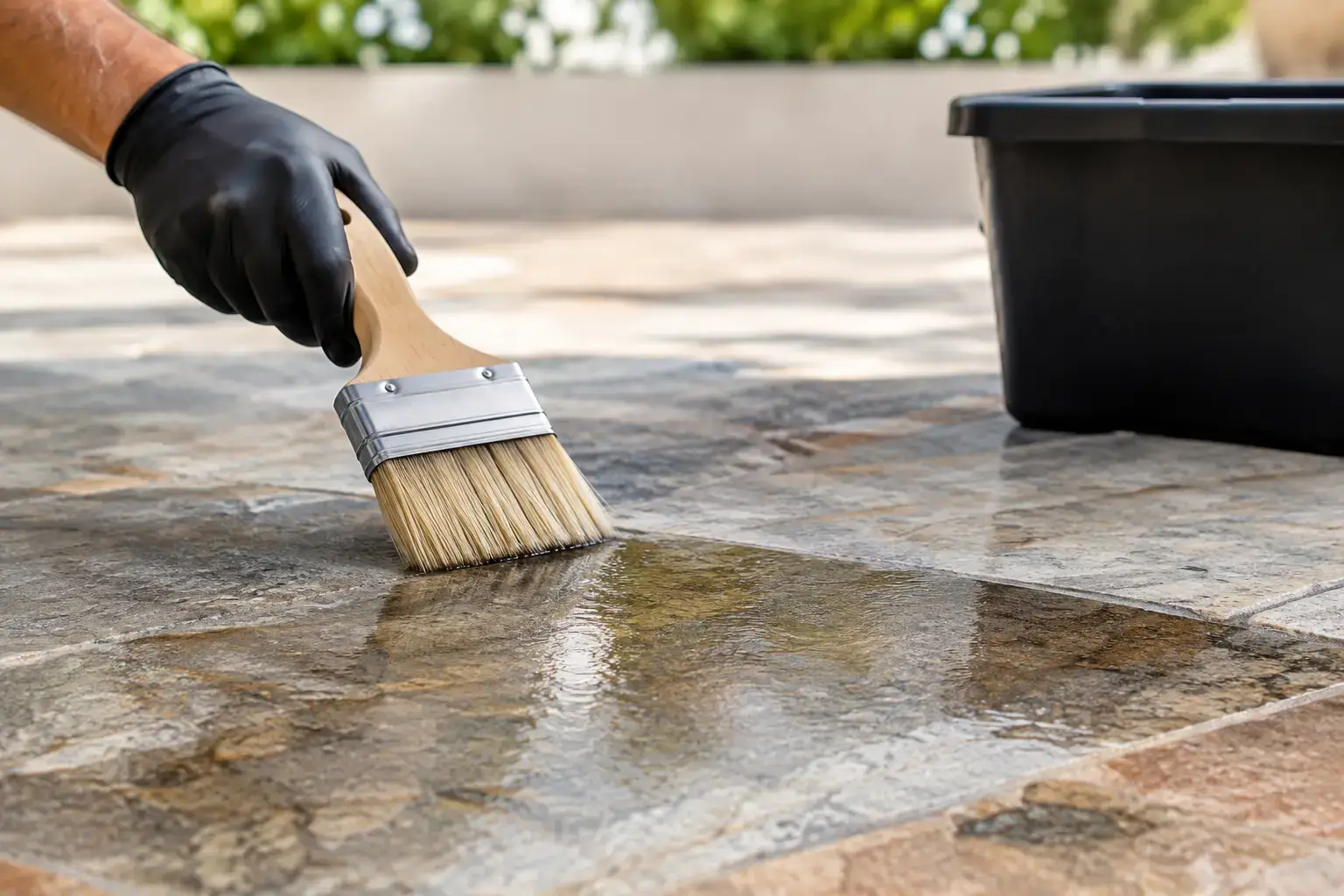
A stone sealer can be the difference between a natural stone surface that retains its elegance for years and one marked by avoidable staining, moisture damage and ingrained grime. But sealing is not a cure-all. It will not remove etching from marble, restore a worn polish, hide scratches or repair a chip. Its value lies in protecting a correctly prepared surface before everyday use takes its toll.
For Sydney homes and commercial spaces, that distinction matters. A marble vanity, limestone floor, sandstone patio or engineered stone benchtop may look similar at first glance, yet each material has different levels of porosity, chemistry and exposure. The right protection begins with identifying the surface, restoring it where needed, then applying the appropriate sealer with precision.
What Does a Stone Sealer Actually Do?
Most quality stone sealers are penetrating or impregnating sealers. Rather than creating a thick coating on top of the stone, they absorb into the pores and line the internal structure of the surface. This slows the penetration of water, oils and other contaminants, giving you valuable time to clean a spill before it becomes a permanent stain.
That extra time is particularly valuable in kitchens, bathrooms, entryways and hospitality settings. Oil, wine, coffee, cosmetics, soap residue and tracked-in moisture can quickly affect absorbent stone. A properly selected sealer makes routine care more manageable while preserving the natural appearance and texture of the material.
It does not make stone waterproof or indestructible. A sealer reduces absorption. It does not mean red wine can sit overnight on unprotected marble, or that harsh bathroom cleaners can be used without consequence. Natural stone still requires sensible care.
Stone Sealer Is Not the Same as a Surface Coating
The terms are often used interchangeably, but they describe different forms of protection. An impregnating sealer is generally preferred for many natural stone surfaces because it protects below the surface without significantly changing the finish. The stone remains natural in look and feel, whether it has a honed, polished, brushed or textured finish.
Topical coatings sit on the surface. In the right application, they can alter sheen, enhance colour or provide a sacrificial barrier. However, they can also wear unevenly, trap moisture, scratch, peel or create an artificial appearance if the product is unsuitable for the material or location. Exterior paving and some porous stone applications may call for a specialised coating system, but this should never be treated as a one-product solution.
A wet-look finish can be attractive on selected sandstone or outdoor stone, for example, but it is not always appropriate for premium interior marble or limestone. The desired appearance, slip resistance, traffic level and future maintenance all need to be considered before any product is chosen.
Which Stone Surfaces Need Sealing?
Porous natural stones generally benefit most from sealing. Marble, limestone, travertine, sandstone, terrazzo and some granites can absorb liquids to varying degrees. Grout is also highly porous and often needs protection, particularly in showers, bathrooms, kitchen splashbacks and tiled floors.
The need for sealing is not determined by the stone name alone. Granite is often described as low maintenance, yet some varieties are more absorbent than others. Dense marble may require a different approach from a softer, highly porous marble. Likewise, honed finishes can absorb more readily than highly polished finishes because of their more open surface texture.
Engineered stone products such as Caesarstone and Silestone are usually non-porous or very low-porosity and generally do not require conventional sealing. Applying the wrong product can leave residue, streaking or a hazy finish. Corian and other solid surfaces also require material-specific care rather than a generic stone treatment.
A professional assessment removes the guesswork. It establishes what the surface is, its current condition, whether it has been sealed before, and whether sealing is actually the correct next step.
Why Preparation Comes Before Sealing
Applying sealer to a dull, stained or contaminated surface can preserve the very issues you want removed. This is why quality restoration work follows a clear order: clean, repair and refine the stone first, then protect it.
For marble and limestone, this may involve honing away etch marks, scratches and dull traffic paths before polishing the surface to its intended level of clarity and shine. For sandstone or outdoor paving, deep cleaning may be needed to remove dirt, organic growth, old coating residue and salt deposits. Chips, cracks and open joints should also be repaired before sealing, as a sealer is not a structural repair product.
The surface must then be properly dry. Moisture trapped beneath unsuitable coatings or sealers can lead to blotching, cloudy patches or adhesion problems. This is one of the reasons professional application achieves a more refined and durable outcome than a rushed DIY treatment.
How to Know When Stone Needs Resealing
There is no universal calendar for resealing stone. A heavily used kitchen benchtop may need attention sooner than a low-traffic formal floor, while an exposed outdoor area faces sun, rain and airborne contaminants that affect performance differently.
A simple water-drop test can offer an initial indication. Place a few drops of water on a clean, dry area and observe them for several minutes. If the water beads, the existing sealer may still be performing. If it darkens the stone quickly as it absorbs, the surface may need resealing. This test is only a guide, as water repellence does not fully indicate resistance to oils or acidic substances.
Changes in appearance also matter. Increased darkening around taps, persistent marks near cooktops, grout that soils quickly, or stone that looks uneven after cleaning can all indicate that the protection has diminished or that the surface needs deeper restoration.
Common Mistakes That Shorten a Sealer’s Life
The most common mistake is selecting a sealer based on marketing claims rather than the stone itself. A product suitable for porous sandstone is not automatically suitable for polished marble, and an enhancing sealer can permanently deepen colour beyond what was expected.
Another problem is over-application. More sealer does not mean more protection. If excess product is left on the surface, it can dry as sticky residue, haze or uneven gloss. It may then require specialist removal before the stone can look clean again.
Harsh maintenance products also undermine good sealing work. Acidic cleaners can etch calcareous stone such as marble, limestone and travertine. Strong alkaline products, abrasive powders and aggressive scrubbing can dull finishes or break down protective performance. For daily care, use a pH-neutral stone cleaner, a soft mop or cloth, and clean spills promptly rather than allowing residues to build up.
Professional Sealing Protects the Restoration Investment
High-value stone deserves a treatment plan rather than a quick application from a hardware shelf. In a luxury bathroom, a well-restored marble vanity should be sealed in a way that protects its refined finish without leaving residue. In a commercial foyer, the product and application method must account for foot traffic, cleaning regimes and presentation standards. On an outdoor sandstone area, weather exposure and slip considerations shape the choice.
This is where material-specific expertise delivers real value. The correct sealer is only one part of the outcome. Surface preparation, product compatibility, even application, cure time and aftercare advice determine whether the protection performs as intended.
Grand Stone Restoration approaches sealing as part of a complete restoration lifecycle, not as a standalone shortcut. By restoring clarity, repairing damage and applying tailored protection, expensive stone surfaces can retain their brilliance while avoiding the cost and disruption of unnecessary replacement.
A stone surface should not have to look worn before it receives proper care. When sealing is matched to the material and applied after the right preparation, it quietly protects the finish you invested in, allowing the natural character of the stone to remain the feature.