
A wet marble entry, a honed limestone bathroom floor or a tiled pool surround can become hazardous long before it looks worn. The best non-slip coatings improve underfoot safety without sacrificing the refined appearance that made you choose natural stone in the first place. The right answer, however, depends on the surface, its finish, how it is used and how much change to colour, sheen and texture is acceptable.
For premium stone, an anti-slip treatment should never be treated as a one-size-fits-all paint-on solution. A coating that performs well on exterior concrete may leave polished marble looking cloudy, textured or artificially dull. Equally, a product that preserves a luxury finish indoors may not withstand constant water, salt and foot traffic around a commercial entrance or pool.
What makes a non-slip coating effective?
Slip resistance comes from friction. Some treatments create a microscopic texture, while others alter the surface chemistry so shoes and bare feet gain more purchase when water is present. The most suitable option needs to lift traction while preserving cleanability, visual consistency and the integrity of the substrate.
This distinction matters particularly with natural stone. Marble, limestone, travertine and sandstone are not interchangeable materials. Their porosity, mineral composition and existing finish affect both how a coating bonds and how it will look after treatment. Engineered stone, porcelain and ceramic tile demand different preparation again.
A quality system also needs to suit the environment. A bathroom floor encounters soap residue and bare feet. A restaurant foyer faces grit, frequent mopping and high heel traffic. An outdoor path in Sydney must contend with rain, UV exposure, organic growth and wind-borne dirt. Safety is essential, but long-term appearance and maintenance are part of the result.
Best non-slip coatings by surface and setting
There is no universal winner among the best non-slip coatings. The strongest choice is the one matched to your material and the level of traffic it must handle.
Penetrating anti-slip treatments for natural stone
Penetrating treatments are often the preferred solution for porous or lightly textured stone, including honed marble, limestone, travertine, sandstone and certain concrete surfaces. Rather than leaving a thick film on top, they work within or at the surface to improve grip, often with little visible alteration.
Their main advantage is discretion. When selected properly, a penetrating treatment can retain the natural character of stone, making it particularly suitable for elegant bathrooms, internal floors, entryways and stone-paved outdoor areas. It is not, however, a replacement for sealing where a stone needs protection from staining. In many cases, slip resistance and stain protection must be planned as compatible parts of the same treatment system.
Results vary according to the stone finish. A highly polished marble floor has limited natural texture, so any treatment must be tested carefully in an inconspicuous area. The goal is improved safety without haze, patchiness or an uneven loss of gloss.
Clear film-forming coatings for tile and concrete
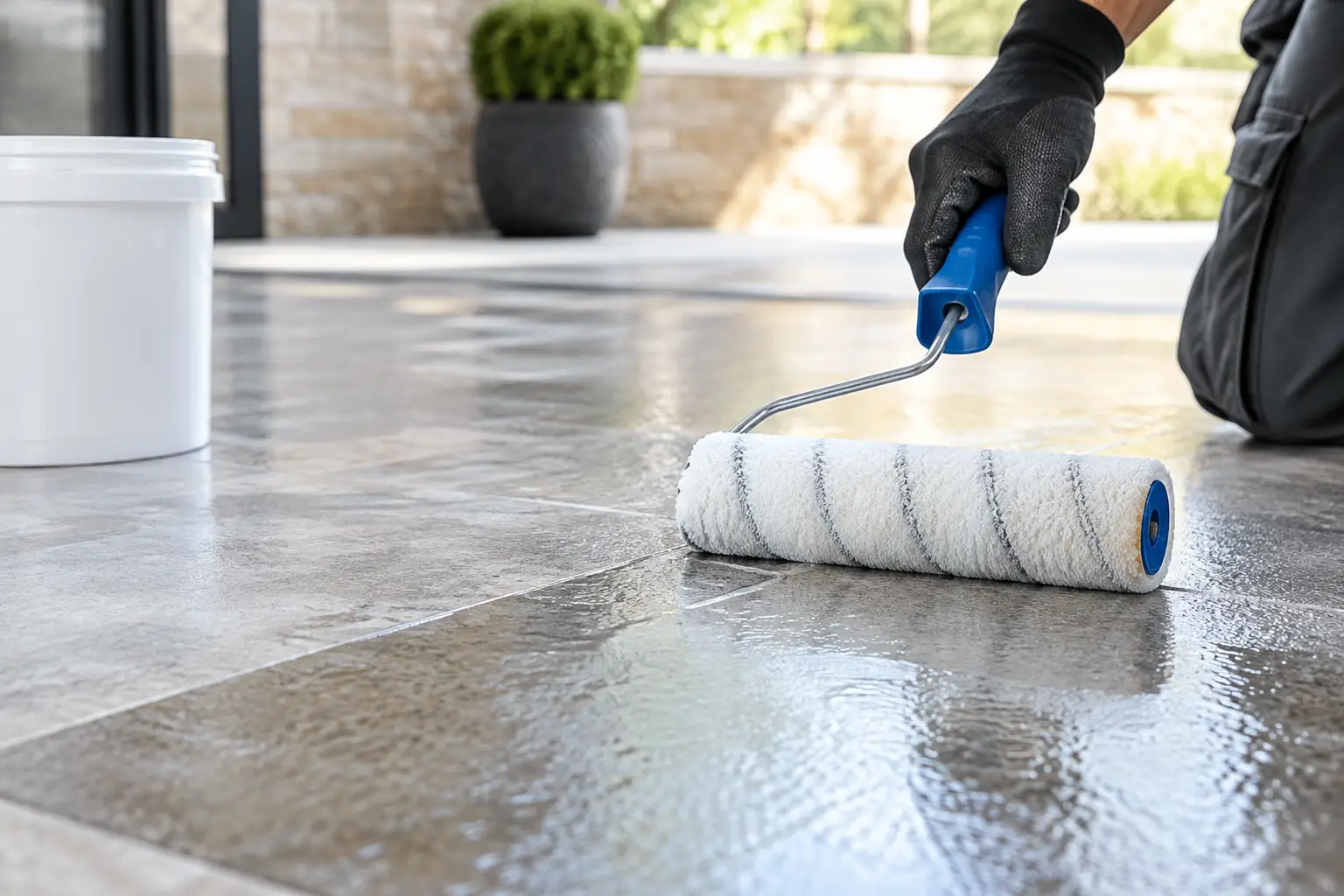
Clear film-forming coatings, including polyurethane and epoxy-based systems, can be effective on ceramic tile, porcelain, concrete and some commercial surfaces. These products form a protective layer and may include a fine aggregate to create grip.
They can deliver a more pronounced anti-slip finish in areas where practical performance outweighs the desire for a completely natural surface feel. Service corridors, utility spaces, commercial kitchens, loading zones and certain exterior concrete areas are common applications.
The trade-off is maintenance and appearance. Film coatings can alter sheen, deepen colour or create a slightly textured feel. If the coating is poorly prepared or incompatible with the substrate, it may peel, wear unevenly or trap dirt at the surface. On premium natural stone, especially polished marble or granite, this category should be approached with caution and professional assessment.
Aggregate-enhanced coatings for demanding wet areas
Where water exposure is frequent, an aggregate-enhanced coating offers stronger traction. Fine mineral or polymer particles are added to a clear or coloured coating to create a controlled textured finish. This is often appropriate for commercial ramps, pool decks, external stairs, plant rooms and heavily used tiled areas.
The aggregate size is critical. Too coarse, and the floor becomes uncomfortable under bare feet and difficult to clean. Too fine, and the improvement in wet grip may be modest. The best finish has enough texture for the risk level without turning a refined surface into something abrasive or visually heavy.
For residential pool surrounds, the existing surface should guide the decision. Textured porcelain, exposed aggregate and naturally riven stone may only need cleaning, sealing and targeted anti-slip treatment. Smooth tiles or polished concrete may require a more substantial system, particularly where children, guests or ageing family members use the area.
Etching treatments for ceramic and porcelain tile
Certain anti-slip systems lightly modify the surface of ceramic or porcelain tile at a microscopic level. They can improve wet traction without a visible coating layer, which makes them appealing where the original tile appearance needs to remain intact.
These treatments require disciplined application. Tile composition, glaze type, grout condition and drainage all influence the result. They are generally unsuitable for acid-sensitive natural stones such as marble, limestone and travertine. Applying an aggressive tile treatment to the wrong material can permanently damage the surface.
The finish matters as much as the product
Before selecting a coating, identify whether the surface is polished, honed, brushed, flamed, tumbled or naturally split. A polished finish reflects light beautifully but offers less texture. Honed stone has a soft matte appearance and can provide more natural grip, although it may still become slippery with water or contaminants. Textured finishes tend to be safer, but their grooves hold grime and require thorough cleaning.
This is why restoring a floor before adding protection can be the better investment. Etching, old sealers, soap film, grease, ingrained dirt and uneven wear can all undermine both appearance and traction. A professional deep clean, honing or controlled surface preparation creates a stable foundation for the chosen treatment.
For marble and other luxury stones, it may be possible to adjust the finish rather than rely on a heavy coating. A carefully honed surface can reduce slipperiness while maintaining a sophisticated, consistent appearance. The appropriate approach depends on the stone, the client’s preferred sheen and the location of the floor.
Preparation determines the durability of the result
Most premature coating failures begin before the coating is applied. Moisture in the slab, residual cleaner, wax, silicone, failing sealer or inadequate cleaning can prevent proper adhesion. On outdoor surfaces, algae, mould and airborne pollution must also be removed completely.
A specialist assessment considers drainage and water pooling as well. No anti-slip coating can fully compensate for a floor that remains covered in standing water. In bathrooms and balconies, correcting drainage, maintaining grout and sealing vulnerable joints may have as much influence on safety as the surface treatment itself.
After preparation, the coating should be applied evenly and allowed to cure under suitable conditions. Rushing this stage can lead to streaks, weak adhesion and inconsistent texture. In occupied commercial settings, planning access and cure time is essential so the area can return to service safely.
How to protect the appearance of premium stone
A non-slip solution should complement the architecture, not announce itself. For high-value interiors, request a sample test in an unobtrusive area and assess it under the lighting conditions that matter most. Check the look when dry and wet, with shoes and bare feet, rather than judging only from a small sample card.
Ask whether the proposed system may change colour, gloss or feel underfoot. Also ask how it will age, whether it can be recoated or removed, and which cleaning products are safe to use afterwards. Harsh acidic cleaners, oil soaps and wax-based products can compromise stone, leave residue and reduce the performance of some anti-slip finishes.
Routine care is straightforward but important. Use a pH-neutral cleaner suited to the material, remove spills promptly and avoid leaving detergent residue behind. In commercial spaces, scheduled professional cleaning helps preserve traction by removing the fine films of grease and grime that ordinary mopping can spread across the floor.
When professional application is worth it
DIY products can appear economical, particularly for a small tiled patio. Yet expensive stone floors and high-risk areas are rarely the place for trial and error. A specialist can determine the substrate, identify previous coatings, prepare the surface correctly and select a treatment compatible with the desired finish.
This is especially valuable for marble, limestone, terrazzo, travertine and engineered stone, where an unsuitable chemical or coating can create damage that costs far more to rectify than professional application. For strata properties, hospitality venues and public-facing commercial areas, a tailored solution also supports a more consistent standard across the entire site.
At Grand Stone Restoration, anti-slip protection is considered alongside cleaning, restoration, sealing and the visual expectations of the finished surface. The objective is not simply a rougher floor. It is a safer surface that continues to reflect the quality of the property.
The best choice is the one that respects both the material and the people using it. Begin with the condition of the stone, the real slip risk and the finish you want to preserve, then choose a treatment built to perform gracefully over time.