
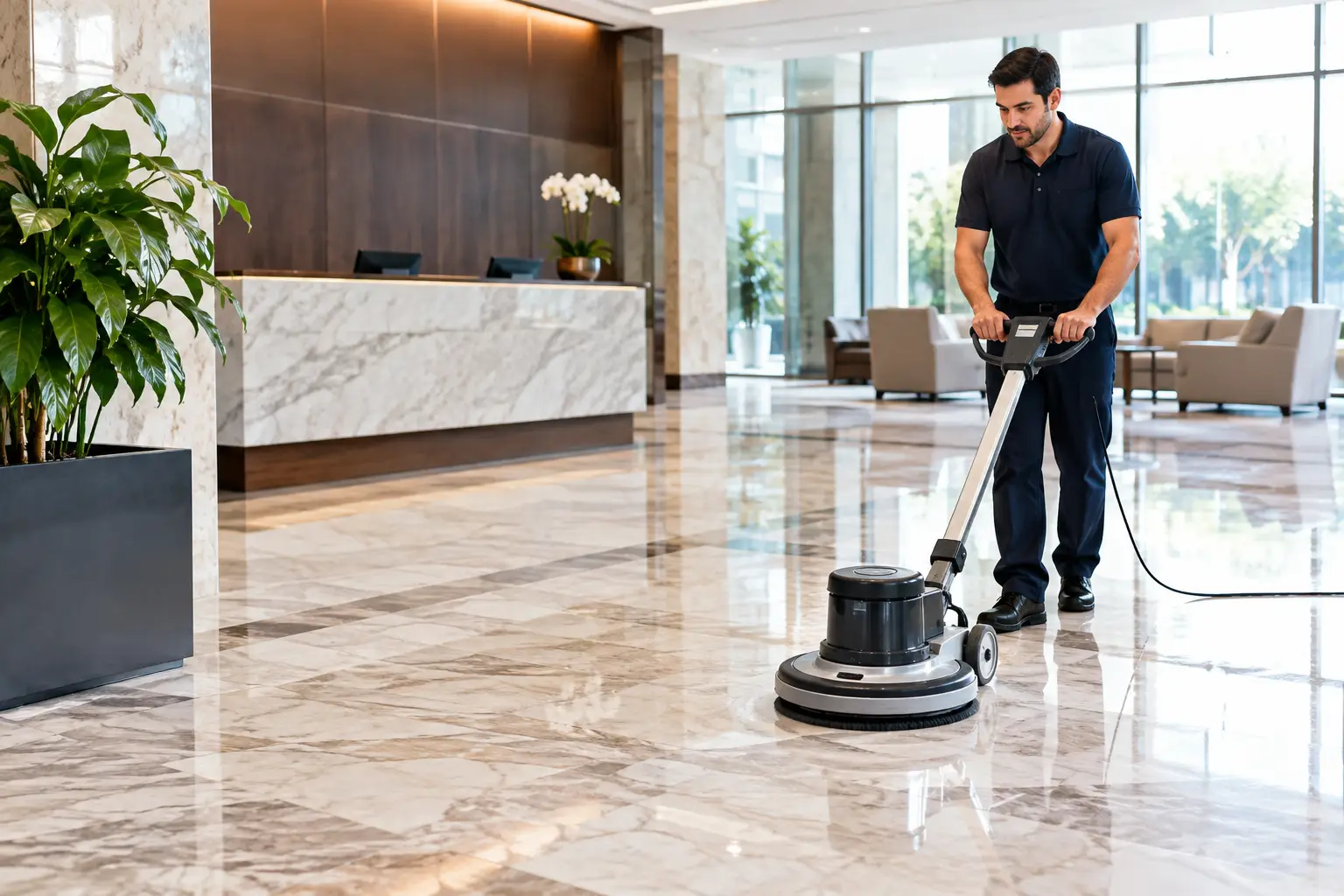
A marble lobby is judged before a visitor reaches reception. Light catches the floor, reflections reveal traffic lanes, and a dull patch near the entry can make an otherwise premium building feel neglected. This commercial marble lobby care guide is designed for property and facilities managers who need to preserve that first impression while protecting a significant surface asset.
Marble is not a hard, maintenance-free finish. It is a calcium-based natural stone that can react to acidic spills, scratch under grit and lose clarity through repeated foot traffic. The right care programme does more than keep the floor clean. It controls damage, extends restoration cycles and keeps the foyer looking considered rather than merely serviceable.
Why commercial marble lobbies lose their brilliance
Most marble deterioration is gradual. Fine abrasive soil carried in from the street acts like sandpaper beneath shoes, trolley wheels and wheeled luggage. Over time, this creates microscopic scratches that scatter light instead of reflecting it, leaving the stone grey, hazy or visibly worn along common walking paths.
Moisture and spills add another risk. Coffee, soft drinks, wine, juice, some cleaning agents and even certain hand sanitiser residues can etch polished marble. Etching is a chemical reaction, not a simple surface stain. It appears as pale, cloudy or dull marks and cannot be corrected by applying more polish or using a stronger cleaner.
Sydney lobbies can face particularly concentrated entryway wear during wet weather. Water tracked in from footpaths carries grit, while umbrellas, prams and delivery trolleys concentrate moisture around entrances. If the cleaning routine is not matched to these conditions, the damage often becomes most visible exactly where the lobby should look its best.
A commercial marble lobby care guide starts at the entrance
The most cost-effective restoration strategy is preventing abrasive soil from reaching the marble. High-performance matting is essential, but it must be long enough to work. A small mat at the doorway may look tidy while doing very little to remove grit from footwear.
Use a properly sized, recessed or well-secured matting system across the main point of entry. It should capture moisture first and then lift fine soil as people continue walking. Clean the matting as diligently as the marble itself. A saturated or grit-filled mat becomes a source of contamination rather than protection.
Consider how people actually move through the space. Side entrances, lift thresholds, loading routes and access points from car parks may create their own wear patterns. A lobby with excellent front-door matting can still develop dull tracks if staff, contractors or residents regularly enter through an unprotected secondary doorway.
Establish a cleaning routine that respects the stone
Daily cleaning should remove loose grit before it is pushed across the floor. A soft, clean dust mop or vacuum fitted with a suitable hard-floor head is preferable to dry sweeping with a stiff broom. The goal is to lift soil, not drag it along the marble.
For damp cleaning, use a pH-neutral cleaner formulated specifically for natural stone and follow the dilution instructions precisely. Overdosing cleaner leaves residue that attracts soil and makes polished marble appear flat. Use clean microfibre pads and change them frequently, especially in wet weather or high-traffic periods.
Avoid household products that promise shine, disinfectants with unsuitable acids or alkalis, vinegar, lemon-based cleaners, bleach and abrasive powders. These can etch, strip protective treatments, leave a film or alter the appearance of grout and adjacent stone. A product that works well on porcelain tile may be entirely wrong for marble.
A practical routine should cover four distinct areas:
- Remove dry soil from entry zones, lift approaches and high-traffic paths daily, with extra passes when rain or construction activity increases grit.
- Damp mop with a correctly diluted stone-safe cleaner, using minimal water and clean pads.
- Attend to spills immediately by blotting rather than rubbing, then clean the affected area with an approved stone cleaner.
- Inspect the floor weekly under both natural and artificial light for haze, new etches, loose grout, chips and developing traffic lanes.
Frequency depends on use. A boutique office foyer may need one detailed daily clean, while a busy residential tower, hotel or retail setting may require attention throughout the day. More cleaning is not automatically better if the wrong chemical, dirty water or overly wet method is being used.
Treat stains and etching as different problems
A dark mark is not always a stain, and a dull mark is not always dirt. This distinction matters because the wrong response can make the damage more obvious.
Stains sit within the stone and may be caused by oils, tannins, rust or coloured liquids. Depending on the source and how long it has been present, a specialist may use a controlled poultice treatment to draw contaminants from the pores. Sealing can reduce absorption, but it does not make marble stain-proof.
Etches change the surface itself. They are usually felt or seen as dull patches on polished marble, often around café counters, reception desks, planter areas or locations where drinks are carried. Professional honing and polishing may be required to level the affected surface and rebuild an even reflective finish.
Do not allow general cleaning staff to trial acidic products, abrasive pads or DIY polishing compounds on a visible marble area. A small test mistake can turn a localised mark into a larger, uneven repair zone.
Know when cleaning is no longer enough
Routine maintenance cannot reverse physical wear. When marble begins to show broad traffic lanes, widespread fine scratching, loss of reflection, etched patches, lippage between tiles or damaged grout, the floor needs restoration rather than another cleaning product.
Professional honing removes a controlled layer of damaged stone to reduce scratches, etches and unevenness. Polishing then refines the surface to the appropriate level of sheen. Not every commercial lobby should have a mirror-like finish. Highly polished marble delivers a striking luxury effect, but in a wet entry environment it may require careful slip-risk assessment and stronger maintenance controls. A refined honed finish can be more forgiving while still presenting beautifully.
The correct treatment depends on the marble type, its finish, the degree of damage, existing coatings, traffic levels and the building’s operating hours. Restoration specialists should assess a small test area before committing to a process across an entire foyer. This reveals how the particular stone will respond and helps set a realistic finish expectation.
Where replacement is being considered, restoration is often the more economical and less disruptive option. Existing marble can frequently be cleaned, repaired, honed, polished and sealed in stages, avoiding the demolition, matching challenges and extended closure associated with replacement.
Sealing and protective options for commercial spaces
A penetrating sealer can improve resistance to water- and oil-based staining by reducing how readily liquids enter the marble. It does not create a plastic film, stop etching or eliminate the need for prompt spill response. In a polished lobby, it is best viewed as one layer of protection within a disciplined maintenance plan.
Sealer performance varies with the stone’s density, finish and usage. Applying it too often or using an unsuitable product can leave streaks, alter slip characteristics or create an inconsistent appearance. A professional assessment can determine whether the marble needs sealing, resealing or a different protective approach.
For areas exposed to frequent acidic spills, such as hospitality-adjacent foyers or reception zones with refreshments, anti-etch protective film may be worth considering. It is not appropriate for every floor or design scheme, but it can offer a practical protective layer in targeted, high-risk locations without replacing the marble beneath.
Plan restoration around building operations
The best marble maintenance plans are scheduled before the floor looks tired. Establish a regular inspection with a stone restoration specialist and document the condition of key zones with photographs. This makes it easier to identify change over time and budget for maintenance rather than responding to a visibly degraded entrance.
For large or active sites, restoration can often be staged by section and completed outside peak hours. Dust management, controlled access, curing times and safe reopening procedures should be agreed before work begins. The aim is not simply to produce shine on the night of completion, but to deliver an even finish that performs under daily commercial use.
Grand Stone Restoration tailors marble cleaning, honing, polishing, repair and protection to the actual condition of each surface, helping Sydney property managers restore elegance without the cost and disruption of premature replacement.
A well-cared-for marble lobby quietly communicates quality every day. Protect the entry from grit, insist on stone-safe maintenance, and address dullness while it is still localised. That attention preserves the marble’s natural character and gives every arrival the polished welcome the building deserves.