
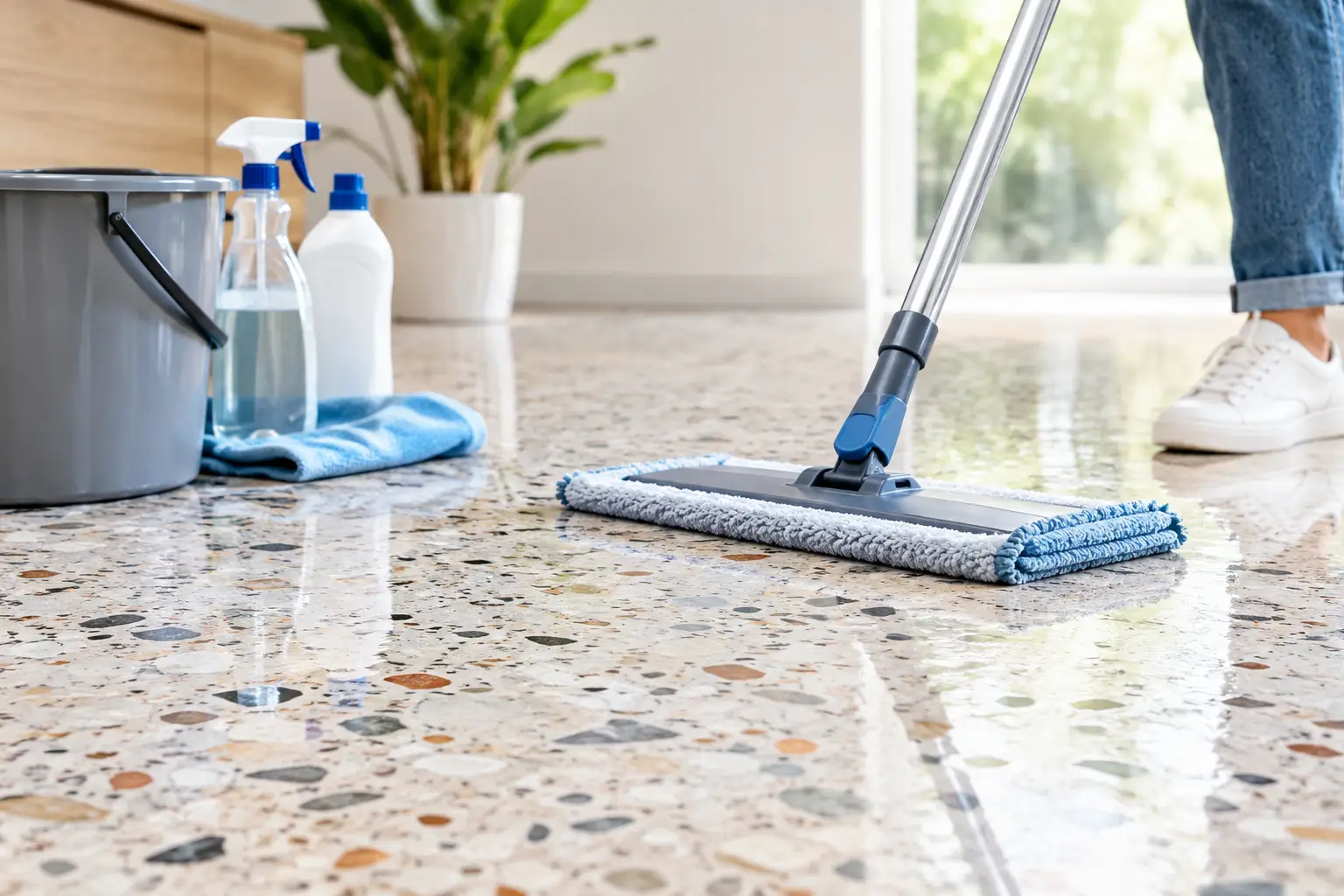
Terrazzo earns its place in exceptional interiors through depth, movement and a distinctive polished finish. But knowing how to clean terrazzo tiles correctly is what keeps that finish elegant rather than cloudy, scratched or worn. The wrong cleaner can gradually strip protection, attack the cement binder or leave a residue that hides the stone’s natural brilliance.
Whether terrazzo is installed across a refined residential bathroom, a busy apartment foyer or a commercial floor, the best routine is simple: remove grit, use a pH-neutral cleaner, rinse away residue and respond quickly to spills. The detail lies in choosing products and methods that respect the surface beneath your feet.
Understand the Terrazzo Before You Clean
Traditional terrazzo is made from chips of marble, granite, quartz or glass set into a cement-based binder, then ground and polished to expose the aggregate. Many newer tiles use an epoxy or resin binder instead. Both can look strikingly similar, yet their response to chemicals, moisture and abrasion can differ.
Cement-based terrazzo is porous unless properly sealed. It can absorb oils, coloured liquids and acidic spills, particularly where the sealer has worn thin. Epoxy terrazzo is generally less porous but is not immune to damage. Abrasive powders, aggressive degreasers and harsh pads can still dull its polish or leave fine scratching.
If you do not know which type you have, treat the floor conservatively. A mild pH-neutral stone cleaner and a soft mop are safe starting points for well-maintained terrazzo. For a floor with widespread staining, uneven sheen or a gritty feel, professional assessment is wiser than escalating to stronger household chemicals.
How to Clean Terrazzo Tiles Day to Day
The quality of the clean is often determined before any liquid touches the floor. Fine sand, dust and loose grit act like sandpaper under shoes and mop heads. In Sydney properties, this is especially common around entries, balconies and ground-level commercial spaces where foot traffic brings in particles from outside.
Start by vacuuming with a hard-floor setting or sweeping with a soft, clean broom. Avoid a worn broom with stiff bristles, as it can drag grit across the surface. Pay close attention to corners, grout lines and doorways, where abrasive debris tends to collect.
Next, dilute a pH-neutral cleaner formulated for natural stone or terrazzo according to the label directions. More solution is not better. Over-concentrated cleaner can leave a film that makes terrazzo appear dull and attracts more dirt over time.
Mop with a clean microfibre mop or soft cotton mop, keeping the mop damp rather than saturated. Terrazzo should not be flooded with water, particularly if grout joints, cracks or edges are compromised. Work in manageable sections and change the water when it becomes visibly dirty rather than spreading soil back across the floor.
Finish with a rinse using clean water if the cleaner requires it, then allow the tiles to dry fully. Buffing lightly with a dry microfibre pad can lift any remaining moisture and restore clarity to the polished surface. This is particularly worthwhile on dark or highly polished terrazzo, where streaks show more readily.
A practical weekly routine
For most homes, dry removal of dust several times a week and damp mopping once weekly is sufficient. Kitchens, bathrooms, entrances and pet-friendly households may need more frequent attention. Commercial foyers, retail spaces and hospitality venues often benefit from daily dust control and scheduled machine cleaning using equipment suited to polished stone.
The aim is not to make terrazzo wet more often. It is to prevent abrasive dirt and residues from becoming embedded in the surface and grout.
Remove Spills Before They Become Stains
Terrazzo rewards prompt action. Blot spills immediately with a white absorbent cloth or paper towel. Do not rub, as rubbing pushes coloured or oily material outward and deeper into porous areas.
After blotting, clean the affected area with a small amount of pH-neutral stone cleaner and rinse with clean water. Dry the surface thoroughly. Wine, coffee, cooking oil, cosmetics, juice and plant-pot runoff deserve particular attention, as they can leave discolouration or dull patches on unprotected cementitious terrazzo.
For oily marks, use a stone-safe alkaline cleaner only when the product is confirmed suitable for terrazzo and follow its dilution instructions closely. Never assume a heavy-duty kitchen degreaser is safe simply because it removes grease quickly. Strong alkaline products may alter the appearance of the binder, weaken coatings or leave an uneven finish.
If a stain remains after careful cleaning, avoid repeated scrubbing. Persistent staining can require a tailored poultice treatment, honing or professional restoration depending on the contaminant and the condition of the tile.
Clean Grout Without Damaging the Tile
Grout can make an otherwise beautiful terrazzo floor look tired long before the tiles themselves need restoration. It also requires restraint. Acidic grout cleaners are a common cause of avoidable terrazzo damage, particularly on cement-based surfaces. Products containing hydrochloric acid, phosphoric acid or similar acids can etch the marble chips and binder, creating pale, rough or permanently dulled areas.
Use a pH-neutral grout cleaner or a terrazzo-safe alkaline cleaner, applied sparingly to the grout lines. Agitate gently with a soft grout brush, taking care not to scrub aggressively across the tile face. Rinse thoroughly and dry the area afterwards.
Where grout is deeply stained, cracked or receding, cleaning alone may not deliver a refined result. Grout restoration can transform the overall presentation of a tiled surface, but it should be completed without compromising the polished terrazzo around it.
What Not to Use on Terrazzo
The most damaging products are often the ones kept under the kitchen sink. Avoid vinegar, lemon-based cleaners, acidic bathroom sprays, bleach, ammonia-heavy cleaners, scouring powders and abrasive cream cleansers. These products may seem effective in the moment, but they can etch mineral-based terrazzo, erode sealers or leave a haze that requires mechanical restoration to correct.
Also avoid steel wool, abrasive scourers and hard scrubbing pads. A glossy terrazzo floor can accumulate fine scratches gradually, so the damage may only become obvious when sunlight catches the surface or the floor is professionally cleaned.
Wax and generic floor polish are another false economy. They can produce a temporary shine but may yellow, wear unevenly and trap soil. Terrazzo should look polished because the surface has been correctly refined and protected, not because it has been coated with a film that will later need stripping.
Protect the Finish Between Cleans
Cleaning is only one part of terrazzo care. Entry mats positioned outside and inside doorways reduce the abrasive grit that causes premature wear. Use breathable mats where possible, and avoid rubber-backed mats that can trap moisture or discolour some finishes when left in place for extended periods.
Fit felt pads beneath chairs, stools and movable furniture. Lift heavy items rather than dragging them. In commercial settings, use suitable protective barriers during deliveries, fit-outs and maintenance works, when concentrated traffic and equipment can mark a polished floor surprisingly quickly.
Sealing is equally important for cement-based terrazzo. A quality impregnating sealer helps resist moisture and staining while preserving the natural appearance of the surface. It is not a licence to leave spills unattended, and it does not prevent physical scratching or etching. Its lifespan depends on traffic, cleaning products, exposure and the porosity of the material, so resealing should be based on the floor’s performance rather than a fixed calendar date.
When Cleaning Is No Longer Enough
A clean terrazzo floor should feel smooth, look even and reflect light with clarity. If it remains dull after proper cleaning, shows traffic lanes, has visible etching, scratches, patchy sheen or ingrained staining, the issue is likely within the surface rather than on it.
Professional terrazzo restoration can involve deep cleaning, stain treatment, diamond honing to remove surface damage, mechanical polishing and resealing. This process is tailored to the tile composition, existing finish and level of wear. It can revive a floor that appears beyond saving without the substantial cost, mess and disruption of replacement.
For high-value homes and presentation-critical commercial spaces, this distinction matters. A poorly chosen cleaning product can turn a manageable maintenance issue into a restoration project. Conversely, a professionally restored and protected terrazzo surface makes routine care straightforward and preserves the luxurious character that made the material worth choosing.
Grand Stone Restoration approaches terrazzo with the same material-specific precision applied to every premium stone surface. When the finish has lost its clarity, expert restoration can return the depth, polish and enduring elegance that daily cleaning alone cannot recreate.
Treat terrazzo gently, clean it consistently and act early when its finish changes. That measured care will keep the tiles looking considered and luminous for years to come.