
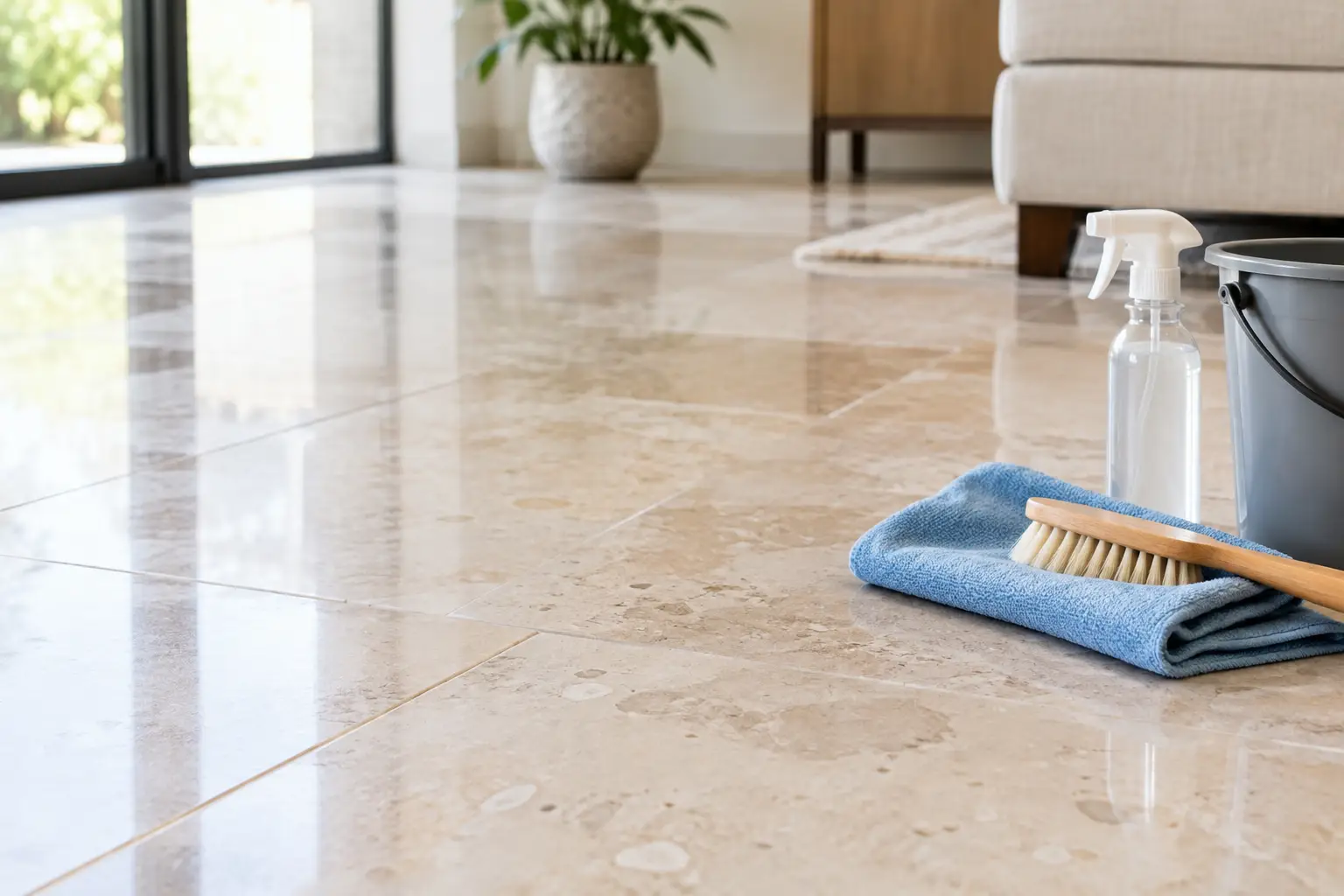
A limestone floor brings quiet luxury to an entry, living area, bathroom or commercial foyer. Its soft, natural variation is precisely what makes it special, but limestone is also more porous and chemically sensitive than many property owners expect. This limestone floor care guide explains how to protect that finish from everyday wear, avoid permanent damage and recognise when specialist restoration will deliver the better result.
Why limestone needs a different standard of care
Limestone is a calcium-based natural stone. Although it feels solid underfoot, its surface can absorb liquids, react to acids and gradually lose clarity under abrasive dirt. The issue is not that limestone is impractical. It is that generic cleaning methods, particularly those designed for ceramic tiles, can leave it dull, blotchy or etched.
Acidic products are the most common problem. Vinegar, citrus-based cleaners, toilet cleaners, rust removers and many bathroom sprays can react with limestone and create pale, rough-looking marks known as etching. These marks are not ordinary stains that can be wiped away. They are physical changes to the stone’s surface and often require honing and polishing to correct.
Sydney properties also contend with fine grit tracked in from patios, balconies and footpaths. Under shoes, chair legs and cleaning equipment, that grit acts like sandpaper. Over time, a polished limestone floor may become flat and hazy, while honed finishes can develop uneven traffic lanes. A considered maintenance routine protects both the appearance and the long-term value of the stone.
Daily and weekly limestone floor care
The most effective floor care is preventative and uncomplicated. Dust-mop or vacuum regularly using a hard-floor setting with no rotating brush that could scratch the surface. In high-traffic residential areas, this may mean several times each week. Hotel entries, retail spaces and busy commercial foyers may need attention daily.
Place quality mats at external doors, especially where wet weather or garden debris is likely to be carried inside. Mats should trap grit without having a coarse rubber backing that can mark or discolour the floor. Felt protectors beneath furniture are equally worthwhile, particularly under dining chairs that move frequently.
For routine mopping, use warm water and a pH-neutral cleaner formulated specifically for natural stone. Use a well-wrung microfibre mop rather than flooding the floor. Limestone does not benefit from excess water sitting across grout joints or surface pores, and dirty mop water can leave a dull film once dry.
A practical approach is to clean in small sections, changing the water when it becomes grey. Follow with a dry microfibre mop or clean towel where possible. This simple final step prevents water spotting and helps retain a more even finish on honed and polished limestone alike.
Never use a scouring pad, abrasive powder, steam mop, bleach or a multipurpose cleaner unless its suitability for calcareous natural stone is confirmed. Even products marketed as ‘natural’ can contain acids or oils that create problems. If there is uncertainty, test a small hidden area first or seek advice before using it across the entire floor.
Act quickly when spills occur
Limestone’s porosity means spills need prompt attention, particularly on unsealed or older floors. Blot liquids with a clean white cloth or paper towel. Do not rub, as rubbing spreads the spill and can work it further into the surface.
Oil, wine, coffee, cosmetics, pet accidents and coloured drinks may all stain limestone. After blotting, clean the area gently with a pH-neutral stone cleaner and rinse lightly with clean water. Avoid reaching for vinegar or harsh stain removers, even when the mark appears stubborn. An inappropriate cleaner can turn a localised stain into a larger etched patch.
The right response depends on the source of the stain, the stone finish and whether the contaminant has penetrated below the surface. Some stains can be treated with a carefully selected poultice, while others require professional stain removal, honing or colour enhancement. This is one of the occasions where a trial-and-error approach can be costly.
Sealing limestone: valuable protection, not an invincible barrier
A quality penetrating sealer is an important part of limestone floor care, particularly in kitchens, bathrooms, entrances and outdoor entertaining areas. It enters the pores of the stone to slow the absorption of water and oil-based contaminants while allowing the material to breathe.
However, sealer does not make limestone stain-proof, scratch-proof or acid-proof. It cannot prevent etching from vinegar, lemon juice or acidic cleaners. It also does not replace regular cleaning. Think of sealing as additional response time: a spill remains closer to the surface for longer, giving you a better chance to remove it before a stain develops.
How often a floor needs resealing depends on the limestone, its finish, its location and how it is used. A busy foyer exposed to wet shoes will usually need more attention than a low-traffic formal room. Rather than working to a fixed calendar, assess performance. If water darkens the stone immediately rather than beading briefly on the surface, the sealer may be due for renewal.
Professional sealing is valuable because preparation determines the result. The floor must be properly cleaned, dry and free from residue before the correct sealer is applied. Applying sealer over embedded dirt, old coatings or moisture can lock in an uneven appearance and make later restoration more difficult.
Restoring dull, scratched or etched limestone floors
When limestone loses its elegance, replacement is rarely the first or best answer. Many issues that look permanent can be corrected through a tailored restoration process. The appropriate treatment depends on whether the floor is honed, polished, tumbled or has a naturally textured finish.
Light etching, minor scratches and general dullness can often be improved through honing. This uses specialist abrasives to carefully refine the damaged surface and restore an even appearance. For polished limestone, polishing follows to rebuild clarity and a refined sheen. The aim is not to create an artificial gloss where it does not belong, but to bring the stone back to the finish intended for the space.
Deep scratches, lippage between tiles, cracks, chips and ingrained staining require closer assessment. Repairs may need colour-matched resin, while uneven tiles may require precision grinding before honing. In commercial spaces, restoration can be planned in sections to reduce disruption and preserve a professional presentation.
It is worth addressing damage before it spreads across high-traffic pathways. A small etched area can become visually prominent as surrounding stone wears, and accumulated scratches hold dirt more readily. Timely restoration protects the floor’s visual consistency and avoids the expense and disruption of removing sound stone.
A professional limestone floor care guide for problem areas
Bathrooms and kitchens demand particular care because moisture, cosmetics, soap residue and food spills are frequent. Use stone-safe products, dry standing water promptly and ensure ventilation is adequate. In shower-adjacent areas, hard water deposits should be removed using a method approved for limestone, not an acidic descaler.
Outdoor limestone has different pressures: UV exposure, organic growth, rain, pool water and changing temperatures. A process suitable for indoor polished stone may be entirely unsuitable outdoors. Slipperiness, drainage, surface texture and the choice of breathable protection all need consideration before cleaning or coating.
For strata managers and commercial operators, appearance and safety must work together. A floor can be beautifully restored while retaining the appropriate level of slip resistance for its setting. Maintenance programs should account for peak foot traffic, cleaning contractors, entry matting and planned periodic restoration rather than relying on aggressive daily chemicals.
When to call a stone restoration specialist
Professional assessment is advisable when limestone has visible etching, broad dull patches, stubborn staining, cracking, loose tiles or an uneven sheen. It is also the right step before applying a coating or sealer to a floor with uncertain maintenance history.
Grand Stone Restoration evaluates the stone type, finish, condition and location before recommending a treatment. This material-specific approach matters because limestone should never be treated as though it were porcelain, granite or engineered stone. The right combination of deep cleaning, honing, repairs, polishing and protection can restore a premium floor without the cost of replacement.
A limestone floor rewards measured care. Keep abrasive grit and acidic products away, clean with stone-safe products, protect the surface before spills become stains, and restore wear with skilled hands when daily maintenance is no longer enough. The result is a floor that continues to bring warmth, elegance and distinction to the property for years to come.