
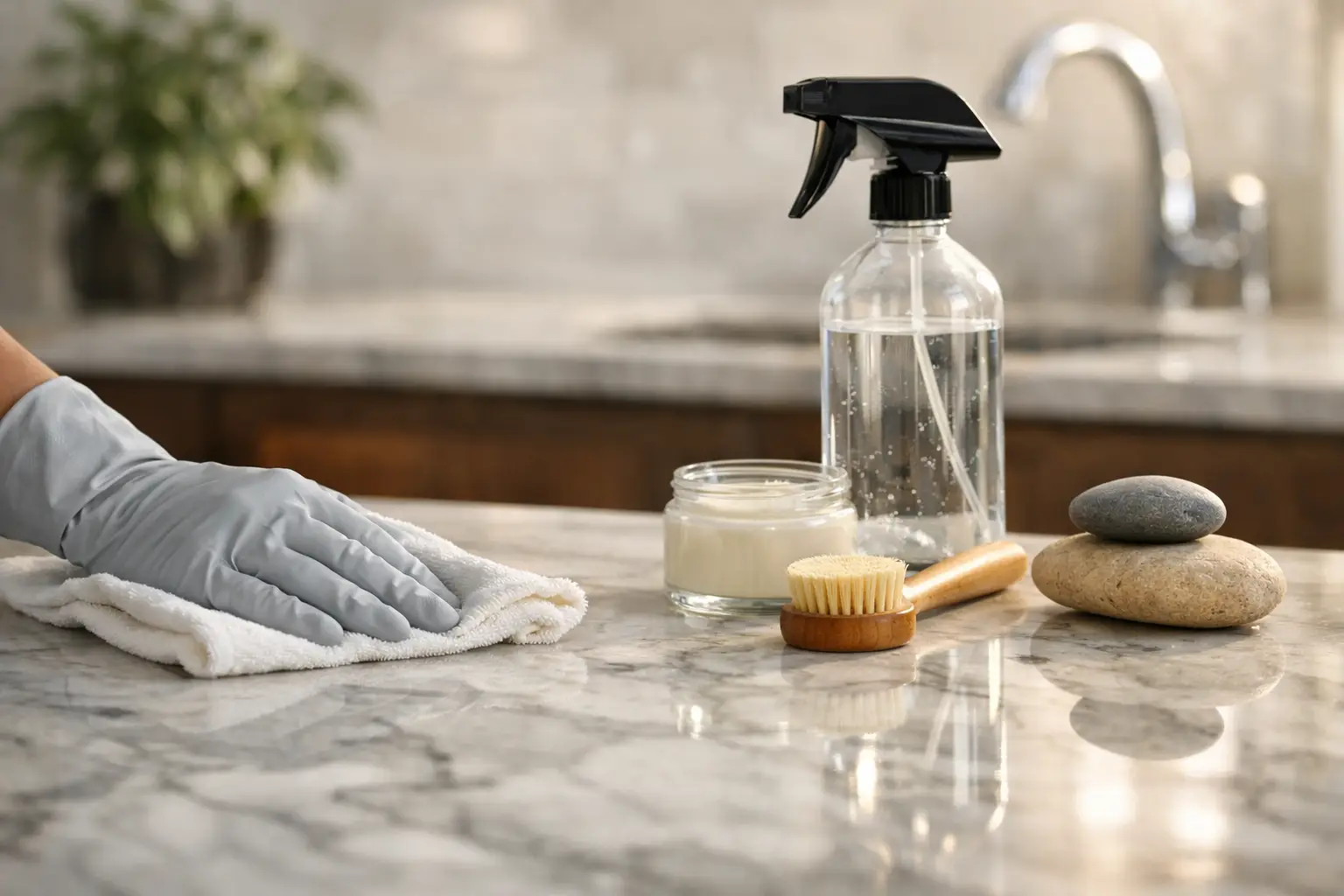
A marble vanity can look flawless at installation, then lose its crisp reflection after a single acidic spill. A limestone floor can gradually darken around doorways, while a granite benchtop may appear dull despite being cleaned every day. This natural stone care guide is designed to prevent those costly changes and help preserve the elegance, value and finish of stone surfaces throughout your property.
Natural stone is not one material with one set of rules. Marble, limestone, travertine, sandstone, granite, terrazzo and slate each respond differently to moisture, acids, abrasion and cleaning products. The most effective care starts with recognising the stone beneath the surface, rather than treating every floor, benchtop or bathroom wall alike.
Why stone care is more than routine cleaning
Stone is durable, but it is not maintenance-free. Its surface can be porous, reactive or vulnerable to physical wear depending on its mineral composition and finish. Polished marble, for example, offers a refined, reflective appearance but can etch when exposed to acidic substances. Honed limestone provides a softer, understated finish, yet may absorb oils and spills if its protection has weakened.
Daily cleaning removes surface residue. Proper care also protects the stone from damage that cleaning alone cannot solve. This includes managing moisture, reducing grit underfoot, keeping acidic products away from calcium-based stone, and renewing protective treatments at the right time.
For Sydney properties, this distinction matters indoors and out. Bathrooms and kitchens face water, cosmetics and food spills. Entry areas and commercial foyers collect abrasive grit. Outdoor sandstone is exposed to weather, organic growth and changing moisture levels. A tailored approach preserves the surface without compromising its natural character.
Natural stone care guide: start with the right cleaner
The safest everyday choice for most natural stone is a pH-neutral cleaner formulated specifically for stone. It should be used sparingly with clean water and a soft microfibre mop or cloth. More product does not mean a better result. Excess cleaner can leave a film that attracts dust and makes a polished floor appear hazy.
Avoid household products marketed as powerful degreasers, bathroom cleaners or disinfectants unless they are confirmed safe for your exact surface. Vinegar, lemon-based cleaners, bleach and many supermarket sprays can cause etching, discolouration or a patchy finish on marble, limestone and travertine. Even where granite is more acid-resistant, harsh chemicals can degrade sealers and leave residue behind.
For stone floors, vacuum with a soft brush attachment or sweep regularly before mopping. Fine sand and grit act like sandpaper under shoes, slowly reducing gloss in high-traffic areas. At entrances, well-maintained mats are a simple but highly effective line of defence.
Clean spills by blotting, not rubbing
When a spill occurs, act promptly. Blot it with an absorbent cloth or paper towel rather than rubbing it across the surface. Rubbing can spread pigments and oils into a wider area, particularly on porous stone.
Follow with a small amount of stone-safe cleaner and dry the area thoroughly. Red wine, cooking oil, turmeric, coffee, cosmetics and ink can all leave stubborn staining if allowed to sit. Acidic liquids such as wine, juice and soft drink need special attention on marble, limestone and travertine because they may etch before they visibly stain.
Etching and staining are often confused, but they require different treatment. A stain changes the colour of the stone. Etching alters the surface itself, leaving a dull spot, ring or roughened area where the polish has been chemically damaged. Scrubbing an etched mark will not restore the gloss. Professional honing and polishing may be required to bring the finish back evenly.
Match care to the stone and its finish
A polished surface shows etching and fine scratches more readily, while a honed finish can better disguise minor wear. However, honed stone is not automatically more resistant to staining or acid damage. It still needs appropriate cleaning and protection.
Marble, limestone and travertine are calcium-based stones. They are beautiful choices for bathrooms, kitchens and feature floors, but they need careful product selection and timely spill response. Granite is generally denser and more resistant, though it can still stain or lose its clarity when neglected. Sandstone and slate are commonly used outdoors and may need specialist cleaning to remove ingrained soil, algae or efflorescence without damaging the face of the stone.
Terrazzo deserves particular care because it combines aggregates with a cement or resin-based matrix. Its restoration method depends on the specific composition and existing finish. Engineered stone also has its own requirements. Caesarstone, Silestone and similar surfaces should not be treated as natural stone, even though their appearance is stone-like. Always follow the manufacturer’s care guidance and seek specialist advice before using abrasive pads, polishes or strong chemicals.
Sealing provides protection, not immunity
A quality sealer helps reduce the absorption of water, oils and staining agents. It is especially valuable for porous stone, grout lines, splashbacks, benchtops and bathroom surfaces. Yet sealing is often misunderstood as a permanent shield against every mark.
Sealer performance depends on the stone type, the finish, the level of use and the products placed on the surface. A busy kitchen benchtop may need attention sooner than a lightly used wall tile. Outdoor stone faces further pressure from rain, sun and contaminants. Water beading is a useful indicator, but it is not the only measure of protection.
Before resealing, the surface must be thoroughly cleaned and completely dry. Applying sealer over residue, moisture or existing staining can lock problems beneath the protective layer. The correct product and application method are equally important. An unsuitable topical coating can alter the colour, create uneven sheen or trap moisture where the stone needs to breathe.
Know when professional restoration is the smarter choice
There is a point where careful maintenance should give way to specialist restoration. Persistent dullness, etch marks, deep scratches, lippage, chips, stained grout and uneven sheen are not signs that a surface needs replacing. In many cases, they are repairable through a considered restoration process.
Honing removes fine scratches, etching and surface damage to create an even foundation. Polishing refines that surface to the desired level of gloss. Chips and cracks can be filled and colour-matched where appropriate, while targeted deep cleaning can revive grout and textured stone. The process should always be selected for the material, its condition and the finish you want to achieve.
This is where a general cleaning approach can become expensive. Aggressive pads, incorrect polishing powders and acid-based products may create permanent damage or inconsistent patches that are harder to rectify. For premium interiors, the goal is not simply a cleaner surface. It is a controlled, uniform finish that complements the quality of the space.
Grand Stone Restoration assesses each surface individually, from delicate marble vanities to high-traffic commercial stone floors. With the right restoration and protection plan, an aged surface can often regain its clarity and elegance without the disruption and cost of replacement.
Practical habits that protect stone every day
Small habits make a visible difference over time. Use coasters under acidic drinks, particularly on marble coffee tables and benchtops. Place trays beneath toiletries in bathrooms, where perfume, hair products and cleaning residues can cause marks. Use chopping boards and avoid dragging cookware, ceramics or decorative objects across stone surfaces.
For floors, address spills quickly and keep entry mats clean so they capture grit rather than redistribute it. In commercial settings, a scheduled maintenance programme is usually more cost-effective than waiting until the floor has become visibly worn. Regular professional care can maintain presentation standards while reducing the intensity of future restoration work.
Stone should look natural, not overworked. A well-cared-for surface retains its depth, movement and individual character, whether the desired finish is soft and honed or brilliantly polished. When a mark will not lift, a floor no longer reflects light evenly, or protection appears to have failed, early specialist advice gives you the best chance of restoring the surface beautifully.