
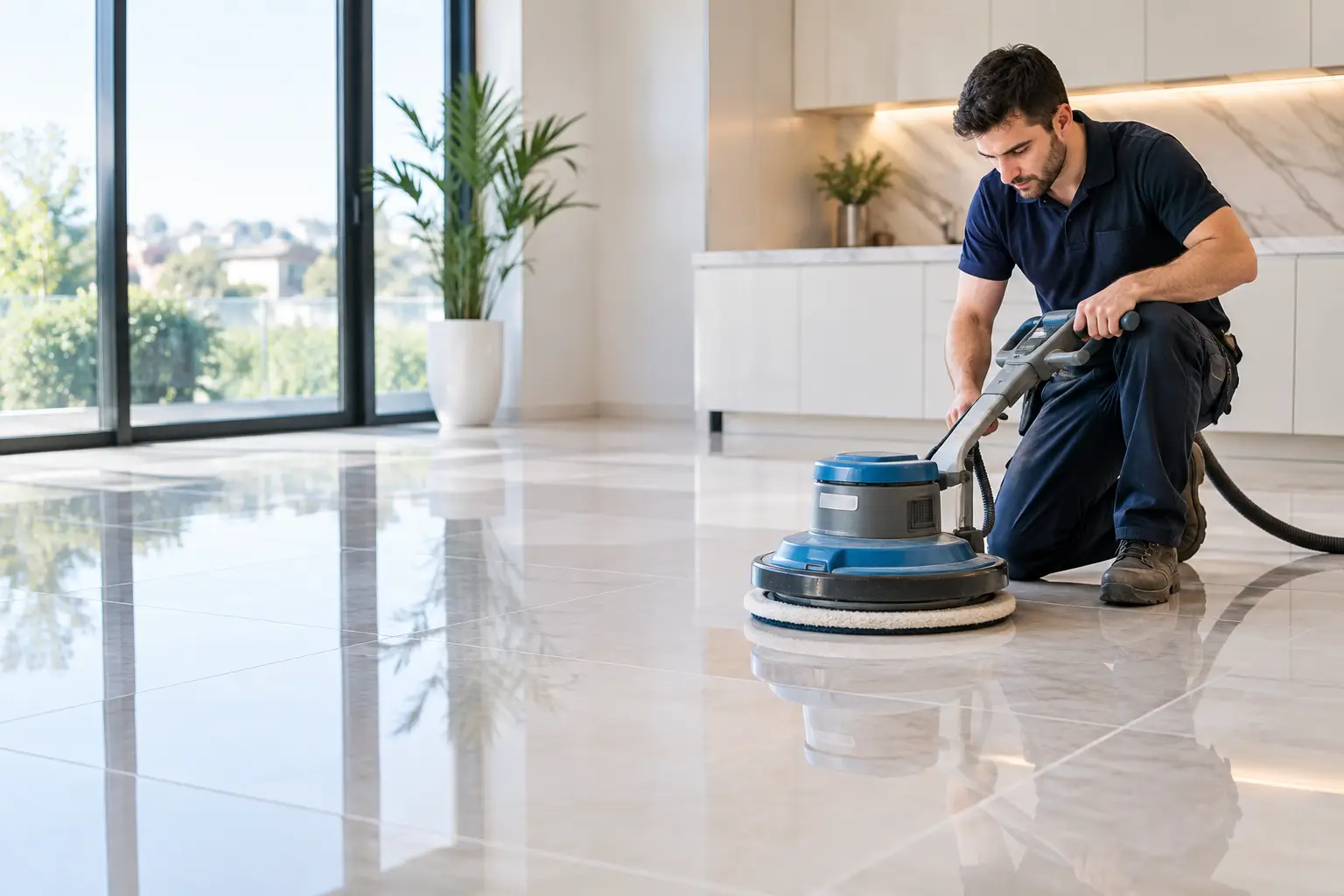
A porcelain tile polishing service is not a one-size-fits-all cleaning job. When porcelain floors lose their crisp finish, develop traffic haze, show stubborn residues or appear dull beside newly renovated surfaces, the cause may sit in the glaze, the tile body, the grout or the products previously used to clean it. The right restoration process brings back clarity and refinement without risking permanent damage to an otherwise durable surface.
For Sydney homes, apartments, foyers and retail spaces, porcelain tile restoration is often a far more economical and practical alternative to replacement. It avoids the dust, demolition, disruption and cost of lifting sound tiles simply because their appearance has deteriorated.
What a porcelain tile polishing service can achieve
Porcelain is prized for its density, low porosity and clean contemporary appearance. It is also more technically demanding than many property owners expect. Unlike marble or limestone, not every porcelain tile can be mechanically polished to create a new gloss. Much depends on whether the tile is glazed, unglazed, through-body, lappato or polished porcelain.
A specialist assessment determines what is possible before any work begins. On many glazed porcelain tiles, the best outcome comes from precision deep cleaning, removal of haze and residues, grout restoration, careful treatment of surface marks and application of an appropriate protective finish where suitable. The aim is to restore an even, elegant appearance, not to use aggressive abrasives that can compromise the factory finish.
For suitable unglazed, full-body or lappato porcelain, controlled mechanical refinement may improve the surface feel and visual consistency. This work requires the correct abrasives, water management and progressive technique. A coarse approach can leave visible swirl marks, alter slip resistance or create patches that catch the light differently from the surrounding floor.
The most satisfying transformations are often not about making every tile mirror-shiny. They are about removing the grey film, ingrained grime and unevenness that prevents the original colour and texture from presenting at their best.
Why porcelain tiles become dull or patchy
Porcelain itself is hard-wearing, but the surface is continually exposed to contaminants and wear. In kitchens, bathrooms and entry areas, a dull finish can develop gradually enough that it is only noticed once one section has been cleaned or furniture is moved.
Common causes include soap residue, hard-water minerals, detergent build-up, grout haze after installation and fine abrasive grit carried in from outdoors. In commercial foyers and hospitality settings, foot traffic can compact dirt into textured tiles and grout joints, leaving a finish that appears tired despite routine mopping.
Incorrect products can also be the problem. Heavy cleaners and glossy topical coatings may leave a streaky film that attracts more soil. Acidic products can damage surrounding cement-based grout, while harsh pads may scratch or flatten delicate surface textures. A tile that looks dull is not necessarily worn out, and it should not be treated as though it were natural stone.
The grout affects the whole result
Even when porcelain tiles remain in good condition, stained or discoloured grout can make the entire floor appear neglected. Grout is more porous than porcelain, so it readily holds moisture, cleaning residues, oils and dirt. In wet areas, it may also become affected by mould or mineral deposits.
Professional restoration addresses the tile and grout as one visual surface. Deep cleaning the joints, repairing isolated grout loss where required and applying suitable grout protection can make the lines look sharper and the floor look substantially newer. It is a detail that has a major impact on the final finish.
The specialist restoration process
A quality result starts with identifying the exact tile type and the condition of its surface. This is particularly important where porcelain is designed to resemble honed stone, timber or concrete, as the finish may be intentionally matte or lightly textured. The goal is to retain that design intent while removing the contamination that obscures it.
The area is first inspected for chips, cracks, lipping, ingrained staining, coating residue and previous repair work. A small test area may be used to confirm how the tile responds to the proposed cleaning or refinement method. This prevents assumptions and gives the property owner a clear expectation of the achievable result.
The restoration treatment then focuses on lifting embedded soil and residues with tile-safe products and professional equipment. Depending on the surface, this may involve agitation, controlled dwell time, extraction and detailed edge work. Grout joints receive separate attention rather than being treated as an afterthought.
Where polishing or mechanical refinement is appropriate, it is performed progressively and conservatively. The specialist works to create a consistent visual finish without chasing an unnatural gloss or damaging the tile’s factory face. Finally, the surface is thoroughly rinsed and assessed under changing light, because streaks and unevenness often become most apparent near windows, entrances and downlights.
Polished porcelain is different from natural stone polishing
The term “polishing” can be misleading. Marble polishing generally involves refining the stone itself to restore a reflective surface. Porcelain is manufactured under intense heat and pressure, often with a glaze or factory-finished face. Its restoration therefore calls for a different technical approach.
A reputable contractor will explain this distinction rather than promising that every porcelain tile can be polished like marble. In some cases, cleaning and grout renewal will deliver the most dramatic improvement. In others, an existing protective coating must be safely removed before the original finish can be seen again. For selected tile types, controlled polishing can be part of the solution.
This material-specific judgement is what separates specialist restoration from a generic cleaning service. It protects the lifespan, appearance and safety of the surface.
When professional restoration is worth it
Professional porcelain tile care is particularly valuable when a large tiled area is difficult to replace, when the tiles are still structurally sound, or when the property is presentation-critical. A tired apartment entry, luxury bathroom, office reception or retail floor can affect how the entire space is perceived.
Restoration also makes sense before selling, leasing or reopening a commercial space. Clean, even porcelain surfaces create a more considered impression and can help avoid the expense of unnecessary refurbishment. For owners of high-value interiors, preserving quality finishes is part of protecting the property itself.
Replacement may be the better option where tiles are extensively cracked, badly chipped across a large area or incorrectly installed. However, isolated chips, dirty grout and widespread dullness do not automatically justify demolition. An expert inspection provides a clearer and more cost-effective path forward.
Maintaining the finish after restoration
Once porcelain has been professionally restored, maintenance should be straightforward. Sweep or vacuum regularly to remove abrasive grit, then mop with a pH-neutral cleaner formulated for tiles. Use clean water and a well-rinsed mop head, as dirty water is a common source of streaking and residue.
Avoid waxes, oil soaps and strong acidic cleaners unless they have been specifically recommended for the tile and grout. Place quality mats at external entrances, clean spills promptly and use furniture pads where tables or chairs are moved frequently. In bathrooms, reducing soap and mineral residue before it builds up will preserve the fresh, refined appearance for longer.
For homes and commercial properties across Sydney, Grand Stone Restoration assesses porcelain surfaces with the same care applied to premium stone finishes. The objective is simple: restore the best possible version of the surface you already own, with workmanship that respects both the material and the space around it.
If your porcelain tiles have lost their lustre, a specialist assessment can reveal whether the answer is deep cleaning, grout restoration, controlled polishing or a tailored combination of treatments. The right approach can return a sense of brightness and order to the room without the disruption of replacement.