
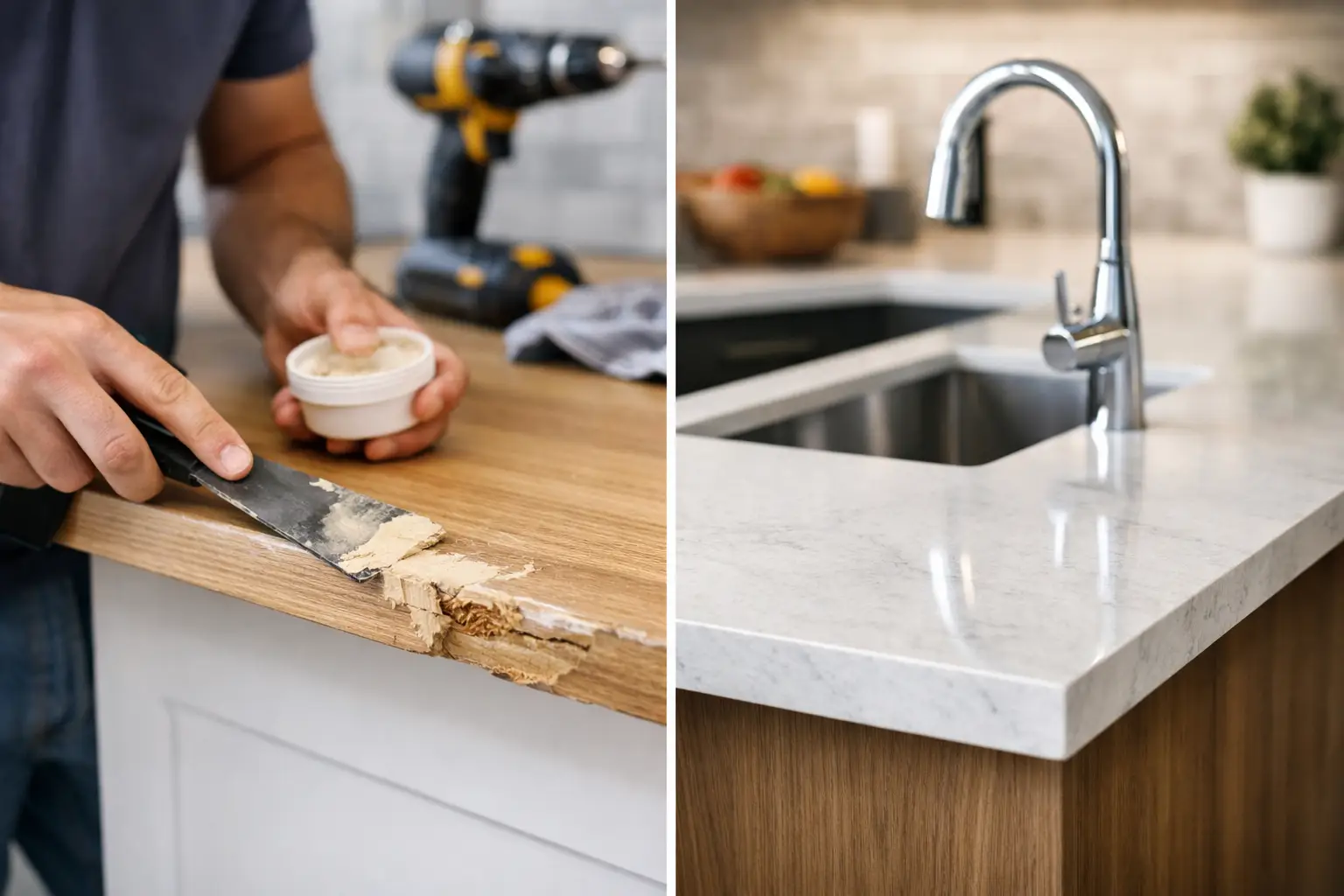
A marble island can look tired long before it has reached the end of its useful life. Acid etching around the sink, dull traffic lanes, a chipped edge or a stubborn stain can make an otherwise exceptional kitchen feel neglected. The question of whether to repair or replace benchtops deserves more than a quick visual judgement, particularly when the surface is natural stone or engineered stone.
Replacement can be the right decision in some cases. Yet many Sydney property owners are surprised by what skilled stone restoration can achieve. A specialist assessment identifies whether damage is cosmetic, localised or structural, then recommends the treatment that protects both the appearance and value of the surface.
When benchtop repair is the smarter investment
Repair is often the preferred option when the stone itself remains sound. Surface damage can look dramatic under kitchen lighting, but it may only affect the finish rather than the slab’s strength. Professional restoration is designed to correct these issues while preserving the original material, profile and character of the benchtop.
Marble, limestone, travertine, terrazzo and some granite surfaces commonly respond exceptionally well to honing and polishing. Fine scratches, dull patches, water marks and mild etching can be refined out through a controlled process that restores an even sheen. The result is not a coating sitting on top of the stone. It is a carefully renewed surface with a finish selected to suit the material and the room.
Small chips and edge damage are also frequently repairable. A colour-matched resin repair, expertly shaped and polished, can make a chip far less visible and prevent further breakdown at a vulnerable edge. Cracks can sometimes be stabilised and repaired as well, depending on their depth, location and cause.
Engineered stone benchtops, including Caesarstone and Silestone, need a different approach. They cannot simply be treated like marble, and aggressive polishing can damage the factory finish. However, professional cleaning, stain treatment, minor chip repair and tailored refinishing may still offer a practical alternative to replacement where the damage is limited.
Damage that is usually repairable
A benchtop is often a strong candidate for restoration when it has light to moderate scratching, etch marks, dullness, surface stains, minor chips or uneven shine. These concerns affect presentation, but they do not necessarily mean the slab has failed.
The greatest value of repair is not only financial. Retaining an existing benchtop avoids the disruption of removing splashbacks, disconnecting plumbing, altering cabinetry or sourcing a matching replacement slab. This is particularly valuable with natural stone, where each slab has distinctive veining and colour movement that cannot be replicated exactly.
When replacing a benchtop makes more sense
There are circumstances where restoration will not provide a reliable long-term result. Deep structural cracking, substantial movement in the cabinetry, widespread heat damage or severe deterioration around cut-outs may indicate that replacement is the better course.
A crack running through a sink or cooktop cut-out deserves particular attention. These areas carry less support than the rest of the slab and are exposed to heat, moisture and daily loading. A repair may be possible, but the underlying cause must be resolved before a specialist can recommend it with confidence. If cabinetry is uneven or the benchtop is flexing, a beautiful repair will not last.
Replacement may also be appropriate when damage is extensive across multiple sections, when the surface has been altered beyond practical restoration, or when a property owner genuinely wants a new material, colour or layout. In a full kitchen renovation, changing the benchtop can be part of a broader design decision rather than a response to damage alone.
The key distinction is this: restoration revives a serviceable surface; replacement addresses a failed surface or delivers a deliberate redesign. A professional inspection prevents costly decisions based on appearance alone.
Repair or replace benchtops: the factors that matter
The decision should account for the material, the type of damage and how the benchtop is used. It should also consider the finish you expect once the work is complete. High-gloss marble can be restored to an elegant reflective polish, for example, but a honed finish may be a more practical choice in a busy family kitchen because it disguises future etching more effectively.
The stone type
Natural stone is porous to varying degrees and reacts differently to acids, moisture and abrasion. Marble and limestone are prone to etching from lemon juice, vinegar and many common household products. Granite is generally harder and more resistant, but can still lose its polish, stain or chip. Porous stone may require sealing after restoration to improve resistance to everyday spills.
Engineered stone is manufactured from mineral aggregates and resin, so its repair methods, heat tolerance and cleaning requirements differ. A specialist should identify the material before proposing any abrasive treatment, cleaning chemical or protective coating.
The cause of the damage
Treating symptoms without identifying the cause is rarely good craftsmanship. Repeated etching near a bar area may point to acidic spills. Chips on a waterfall edge may result from impact. Cracks around a sink can stem from poor support, movement or excess weight placed on the benchtop.
Once the cause is understood, restoration can be paired with sensible protection. This may include resealing, altered cleaning methods, edge care, protective coatings or anti-etch film for vulnerable marble surfaces. Anti-etch film is particularly useful where the refined look of polished marble is desired but the area receives frequent use from food preparation, drinks or entertaining.
The total cost of replacement
The cost of a new benchtop extends well beyond the slab. Removal and disposal, measuring, fabrication, delivery, installation, plumbing disconnection and reconnection, appliance adjustments and potential splashback repairs can all add to the final figure. Replacement may also involve longer lead times and considerable interruption to the home or commercial space.
Repair is typically more economical when the existing surface is structurally sound. It can restore the visual impact of premium stone without dismantling the surrounding kitchen, bathroom or reception area. For commercial premises, this reduced downtime can be as important as the direct saving.
What professional benchtop restoration can achieve
The right restoration process is tailored rather than generic. It may begin with deep cleaning to remove ingrained residue, followed by stain treatment, chip repair, honing to level scratches and etching, then polishing to achieve the required finish. Sealing is applied where appropriate to support ongoing stain resistance.
The objective is not to make every stone surface look artificial or overly glossy. Quality work respects the material. Some clients prefer the soft, understated elegance of a honed marble benchtop; others want the brilliance of a polished surface that catches the light. Both outcomes require technical control and a consistent finish across the full visible area.
For premium homes, apartments, hospitality venues and presentation-critical commercial interiors, restoration also protects the visual continuity of the space. Replacing one slab can create mismatched tones or veins beside existing flooring, wall cladding or splashbacks. Restoring the original stone retains the design integrity that made the interior distinctive in the first place.
How to protect a restored benchtop
A restored benchtop will perform best with thoughtful daily care. Wipe spills promptly, especially citrus, wine, vinegar and oils on natural stone. Use pH-neutral stone-safe cleaners rather than harsh supermarket sprays, and avoid scouring pads that can scratch or dull the finish.
Use trivets beneath hot cookware, chopping boards for food preparation and care around edges and cut-outs. Sealer is valuable protection for suitable natural stone, but it is not a licence to leave spills unattended. It reduces absorption; it does not make stone invulnerable.
If etching is a recurring concern on marble, particularly in kitchens and bar areas, a protective anti-etch film can offer an extra layer of confidence without sacrificing the refined look of the surface.
A benchtop with scratches, etching or chips is not automatically a replacement project. With an experienced stone specialist assessing the material, damage and underlying support, many surfaces can be returned to a level of polish and elegance that makes the whole room feel renewed. Before committing to the cost and upheaval of a new slab, arrange an expert assessment and give quality stone the opportunity to show what restoration can preserve.