
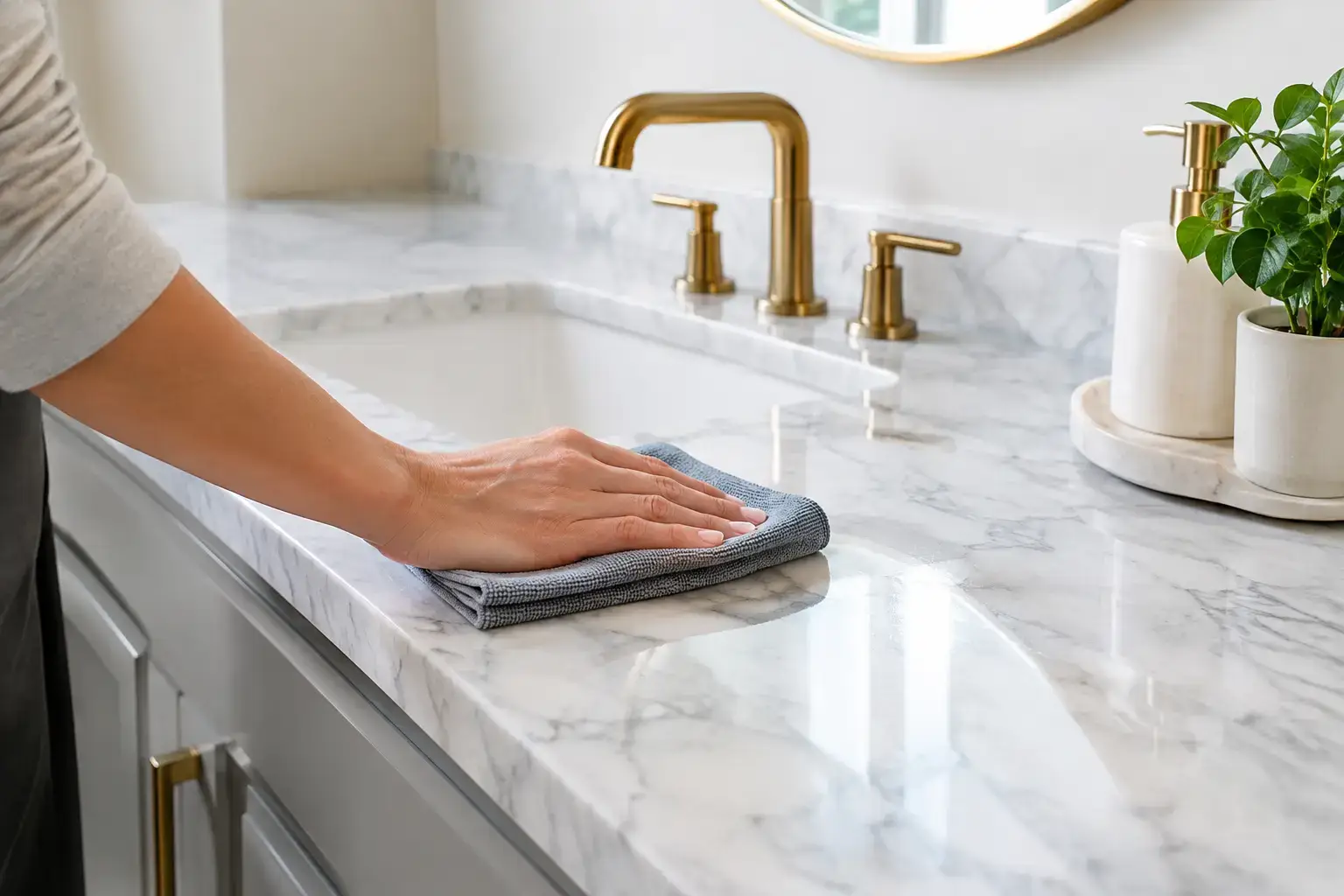
A marble vanity can look immaculate one week and unexpectedly cloudy the next. A stray splash of acidic cleanser, a dripping skincare serum or a lemon-based product can leave pale, dull marks that catch the light differently from the surrounding stone. Knowing how to restore etched marble vanity damage starts with recognising that the affected area has not simply become dirty. The marble’s polished surface has been chemically altered.
For a premium bathroom, that distinction matters. Marble is valued for its natural movement, depth and refined sheen. When etching interrupts that finish, aggressive cleaning or a quick polish can make the difference in gloss more obvious. A tailored restoration process can bring the surface back into balance, often without the cost, mess and disruption of replacing the vanity top.
What marble etching looks like
Etching occurs when an acidic substance reacts with calcium carbonate in marble. Rather than sitting on top of the stone, the acid lightly dissolves the polished surface. The result is commonly a dull patch, ring, splash mark or rough-feeling area.
On polished marble, etches usually appear lighter or less reflective than the surrounding stone. On honed marble, where the finish is intentionally soft and matte, the mark may look darker, smoother or slightly different in texture. The exact appearance depends on the marble variety, its finish and the angle of the bathroom lighting.
Etching is regularly mistaken for staining, but the remedies are very different. A stain is discolouration absorbed into the stone and may require a poultice or specialist stain treatment. An etch is surface damage and is corrected by carefully refining the finish. Treating an etch like a stain can waste time; treating a stain like an etch can make it worse.
Common causes in bathroom vanities
Bathrooms contain more etching risks than many owners realise. Toothpaste, fragranced products, hair products, vinegar-based cleaners, descaling sprays and acidic cosmetics can all be problematic. Even repeated water exposure around tapware may leave mineral deposits that tempt people to use harsh cleaners.
The issue is not limited to obvious spills. A product left beneath a soap dispenser, tray or electric toothbrush can create a distinct ring. In Sydney apartments, compact vanity areas also tend to see concentrated daily use, which makes early intervention worthwhile.
Why household fixes can create a bigger problem
It is understandable to reach for a marble polish from the hardware aisle. Yet many products temporarily fill or coat the etched area rather than restoring the stone itself. Some can leave a waxy film, increase patchiness or create a gloss level that does not match the rest of the vanity.
Abrasive creams, scouring pads and coarse polishing compounds are riskier again. They may remove the etch but leave a visible halo, scratch the surrounding marble or create a flat spot in the reflection. This is particularly noticeable on dark marble, richly veined stone and vanity tops positioned under downlights.
There are occasions when a very minor etch on a plain honed marble surface can be softened with an appropriate marble-specific product. However, success depends on matching the existing finish exactly. For most polished vanities, widespread etching, or a surface with visible veining and variation, professional honing and polishing offers the more dependable result.
The professional process to restore etched marble vanity surfaces
Restoration is not a one-product solution. A stone specialist assesses the marble, the finish, the depth of the etching and any accompanying stains, scratches, chips or limescale. This ensures the work addresses the actual condition of the surface rather than merely improving it for a short period.
1. Assessing the stone and existing finish
Not every pale mark is etching, and not every marble vanity has the same sheen. The first step is identifying whether the finish is polished, honed or a customised semi-polished finish. The specialist also checks whether prior sealers, coatings or cleaning residues are affecting the appearance.
This assessment is essential where damage sits close to the basin cut-out, splashback, tapware or delicate edges. These areas require control and experience, not broad machine work intended for a large stone floor.
2. Cleaning and preparing the surface
The vanity is cleaned using stone-safe methods to remove residues that may interfere with restoration. Soap scum, cosmetic build-up and mineral deposits can disguise the true extent of the etching. Preparation also allows the technician to assess the marble’s natural colour and clarity before honing begins.
3. Honing away the etched layer
Honing is the precision stage that removes the damaged microscopic layer of marble. Using specialist abrasives, the technician gradually refines the surface until the etch marks blend into the surrounding stone. The aim is not to remove more material than necessary, but to create an even, consistent foundation for the final finish.
Deep etches may require several stages. This is where workmanship makes a visible difference: an overly aggressive approach can alter the surface profile or leave an obvious transition between the repaired area and untouched marble.
4. Polishing or refinishing for a consistent sheen
Once the etching has been removed, the marble is polished or refinished to match the rest of the vanity. Polished marble needs clarity and reflectivity without a hazy patch around the repair. Honed marble needs a calm, even lustre rather than an accidental shine.
The right finish should look natural to the stone, not artificially glossy. A quality restoration respects the marble’s original character while returning the elegant appearance expected in a high-end bathroom.
5. Sealing and considering long-term protection
A penetrating sealer can help reduce the risk of staining by limiting how readily liquids enter the stone. It is valuable protection, but it does not make marble acid-proof. An acidic product can still etch a sealed surface because the reaction occurs at the surface itself.
For vanities that see frequent exposure to cosmetics, perfume, skincare products or cleaning chemicals, an anti-etch protective film may be worth considering. This creates a practical barrier while preserving the appearance of the marble. It is especially useful for busy family bathrooms, rental properties and commercial washrooms where careful product use cannot always be controlled.
When restoration is better than replacement
Replacing a marble vanity often means more than changing the stone slab. It may involve disconnecting plumbing, removing basins and tapware, sourcing a close colour match, modifying joinery and managing the risk of damage to surrounding tiles. Natural marble is inherently variable, so a replacement section may never perfectly match existing splashbacks or wall cladding.
Professional restoration preserves the original material and usually costs considerably less than replacement. It is particularly compelling when the vanity is structurally sound and the damage is limited to etching, dullness, light scratches or minor staining.
Replacement may be the better option where the stone is badly cracked, severely delaminated, poorly supported or extensively damaged beyond a practical restoration threshold. A reputable specialist should be clear about that trade-off rather than promising a result the marble cannot deliver.
Keeping the restored vanity looking its best
After restoration, everyday care protects the finish between professional services. Wipe spills promptly with a soft cloth and clean using a pH-neutral stone cleaner. Avoid vinegar, bleach, citrus cleaners, bathroom descalers and abrasive powders, even if they are marketed as powerful solutions for soap scum.
Place skincare, perfume and soap products on trays with protective feet, rather than directly on the stone. Do not leave wet metal cans or containers on the vanity, as they can create marks or rust staining. A simple dry wipe after use also reduces water spotting around tapware.
Grand Stone Restoration can assess damaged marble vanities across Sydney and recommend the appropriate combination of honing, polishing, sealing and surface protection. The goal is a finish that looks considered, even and true to the stone, not a temporary cover-up. With the right restoration and a few careful habits, your marble vanity can remain a defining feature of the room for years to come.