
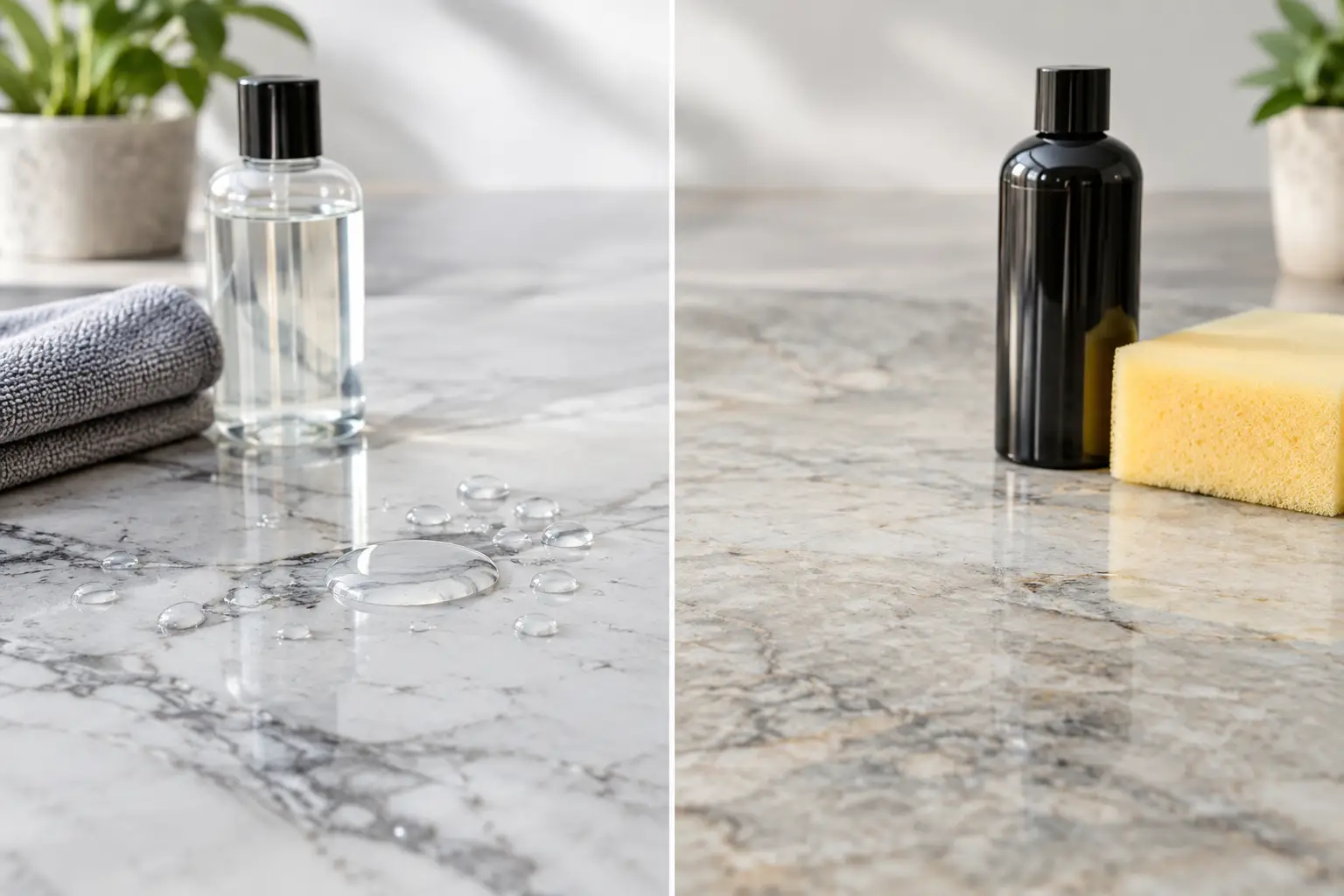
A beautiful marble benchtop can be polished to a brilliant finish, then marked by a single splash of lemon juice or wine. This is where the choice between stone film versus sealant becomes practical, not merely cosmetic. Both treatments help preserve premium surfaces, but they work in very different ways – and selecting the wrong one can leave a stone vulnerable to the damage its owner was trying to avoid.
For Sydney homes, apartments, hospitality venues and commercial interiors, the right protection depends on the stone, its finish, its location and the way the surface is used every day. A marble vanity in a busy family bathroom needs a different approach from a limestone floor, a granite kitchen island or a polished office foyer.
Stone Film Versus Sealant: The Essential Difference
A penetrating stone sealant is designed to enter the pores of natural stone and grout. It creates an invisible, water-repellent and stain-resistant barrier below or at the surface, slowing the absorption of spills. It is particularly valuable on porous materials such as marble, limestone, travertine, sandstone, concrete and many grout types.
A protective stone film sits on top of the surface. Often called anti-etch film or protective film, it is a clear sacrificial layer applied over a prepared stone surface. Rather than changing the stone itself, it takes the impact of everyday contact. When correctly specified and installed, it can provide a stronger defence against etching, light scratching and surface wear in vulnerable areas.
That distinction matters because sealers and films solve different problems. A sealer helps prevent staining. A film helps shield the visible face of the stone from damage that occurs at the surface. Neither should be treated as a universal substitute for the other.
Why sealant does not stop acid etching
One of the most common misunderstandings in stone care is that sealing marble will make it acid-proof. It will not. Marble, limestone and travertine contain calcium carbonate, which reacts chemically with acidic substances. Citrus, vinegar, wine, soft drinks, perfume, bathroom products and some cleaning agents can dull or mark the finish within minutes.
A quality impregnating sealer can give you valuable time to wipe up a coloured or oily spill before it penetrates and stains. However, acid can still react with the polished stone surface and create a dull etch mark. The issue is not simply absorption – it is a chemical reaction.
Protective film is often the more suitable choice where etching is the principal concern, particularly on marble benchtops, vanity tops, bar tops and dining surfaces. It places a transparent barrier between the acid and the stone, preserving the refined polish beneath.
When a Penetrating Sealant Is the Better Choice
Sealing remains an essential part of proper stone care. For many surfaces, it is the most discreet and effective protective treatment available because it maintains the natural appearance and texture of the material without adding a visible layer.
It is especially well suited to honed or textured natural stone, grout lines, outdoor paving and areas where a film would be impractical. A honed limestone floor, for example, benefits from protection against moisture and spills while retaining its natural slip characteristics and tactile finish. Similarly, porous sandstone around an outdoor entertaining area may require a carefully selected sealer that addresses water absorption without creating an artificial-looking coating.
Sealant is also an excellent choice when the main risk is staining from oils, cosmetics, food, dirt or moisture. Kitchen splashbacks, stone floors, shower surrounds and grout can all benefit from professional sealing after thorough cleaning and restoration.
The trade-off is maintenance. Sealants do not last indefinitely, and their longevity depends on the stone’s porosity, traffic levels, cleaning products and exposure to water or weather. High-use areas should be checked periodically and resealed when water no longer beads on the surface as it should.
What sealing can and cannot do
A professionally applied sealer can reduce absorption, make cleaning easier and help preserve the stone’s even colour. It can also reduce the likelihood of deep-set staining that may otherwise require specialist poultice work or refinishing.
It cannot repair scratches, remove etches, fill chips or restore a dull polish. It will not make a soft stone invincible, and it should never be relied upon as protection against abrasive cleaners or harsh chemicals. The best results come when sealing follows correct preparation: deep cleaning, stain treatment, repairs and, where required, honing or polishing.
When Anti-Etch Film Delivers Greater Value
Protective film is most compelling on valuable polished stone in areas where appearance is under constant pressure. A white marble kitchen island may be the visual centrepiece of a home, yet it is also exposed to cooking spills, glassware, bags, keys and daily cleaning. In these situations, a quality anti-etch film can protect the elegant finish without requiring the owner to treat the surface as untouchable.
It can be particularly worthwhile for polished marble and other acid-sensitive natural stones used in kitchens, bathrooms, bars, reception counters and commercial hospitality spaces. The film acts as a sacrificial surface. If it eventually becomes worn or marked, it can be replaced without the same level of stone restoration that may be needed after repeated etching.
The right film should be clear, professionally fitted and chosen to suit the stone’s finish. Poor installation can lead to visible edges, trapped debris, bubbles or an uneven appearance. On a premium surface, those details matter. Precise preparation and application are what allow a protective treatment to remain discreet rather than detract from the stone’s natural elegance.
Film also has limits. It may not be appropriate for heavily textured finishes, irregular surfaces, expansive flooring, wet exterior areas or stone with existing instability. Edges, cut-outs, joins and complex profiles require experienced assessment. Heat exposure, direct sunlight and regular abrasion can also influence suitability and expected service life.
Choosing Protection by Surface and Use
The best choice is rarely based on stone type alone. It comes down to risk. A low-traffic marble feature wall may only need correct cleaning and occasional sealing if it is porous. A heavily used marble vanity top may benefit from film because toothpaste, skincare products and acidic bathroom cleaners create frequent etching risks.
Granite is generally denser and more acid-resistant than marble, although many varieties still benefit from sealing to limit staining. Engineered stone products such as Caesarstone and Silestone are non-porous compared with many natural stones, so penetrating sealers are often unnecessary or unsuitable. Their care requirements should follow the manufacturer’s guidance, with treatment decisions based on the specific material and condition rather than assumptions.
For commercial spaces, maintenance expectations deserve equal weight. A hotel bar top, retail counter or office reception desk must retain a polished, professional appearance under constant use. Anti-etch film can be an intelligent investment where a costly surface needs a more forgiving layer. Meanwhile, sealed stone flooring and grout can make routine cleaning more efficient and help maintain a consistent finish across high-traffic areas.
Restoration Comes Before Protection
Applying a sealer or film over damaged stone does not restore it. In fact, it can lock in stains, highlight scratches or preserve a dull etched finish beneath the protective layer. Protection should be the final stage of a considered restoration process, not a shortcut around it.
Before treatment, a specialist should identify the material, assess porosity, inspect for cracks or chips, test existing coatings and determine whether the surface requires cleaning, honing, polishing, repair or stain removal. This is particularly important where a stone has been treated with unknown products in the past. Some topical coatings can interfere with adhesion, alter the stone’s appearance or create patchy results.
At Grand Stone Restoration, this material-specific approach allows each surface to receive the treatment it actually needs. A polished marble benchtop may require etch removal and refinement before anti-etch film installation, while a porous limestone floor may need deep cleaning, targeted repairs and a premium impregnating sealer to protect its natural character.
Care Still Matters After Treatment
Neither film nor sealant removes the need for sensible stone care. Use pH-neutral products formulated for stone, wipe up spills promptly and avoid abrasive pads, bleach, vinegar and acidic cleaners. On benchtops, use chopping boards and trivets rather than expecting any protective system to withstand every form of impact, heat and abrasion.
For film-protected surfaces, follow the installer’s cleaning recommendations and inspect high-use edges or corners over time. For sealed stone, monitor water beading and arrange reassessment before staining becomes a recurring issue. Regular professional maintenance is a practical way to preserve the finish, especially in presentation-critical commercial interiors.
The finest result is not simply a surface that looks protected on the day of installation. It is a stone surface that continues to look composed, polished and worthy of its place years later – with protection selected for how it will truly be used.