
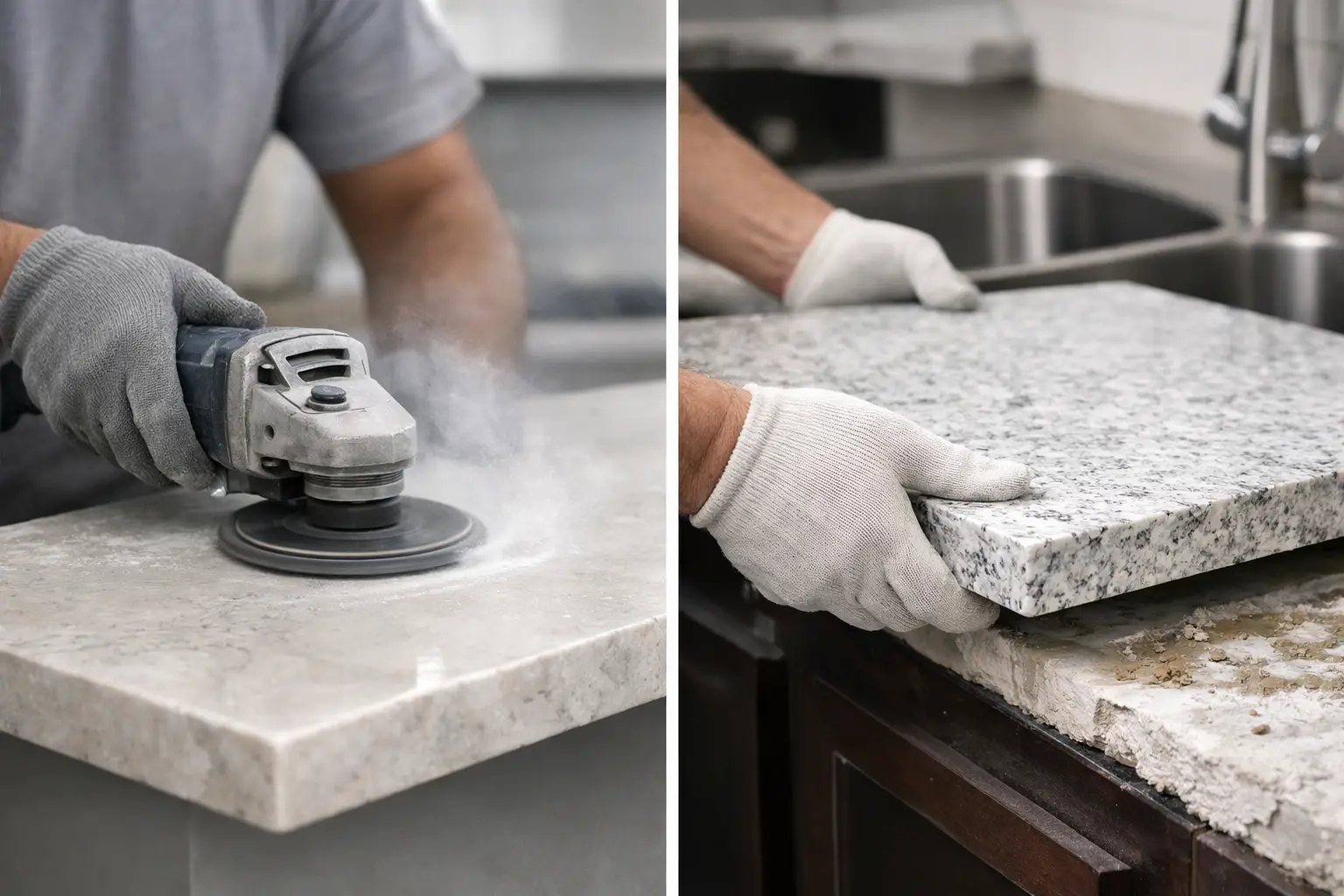
A marble floor can look beyond saving long before it has reached the end of its serviceable life. Etch marks around a vanity, dull traffic paths through a foyer, scratched benchtops and stained grout often prompt an immediate question: stone resurfacing vs replacement – which is the better investment? For many Sydney properties, professional restoration delivers the more intelligent outcome, bringing back clarity, colour and refinement without the expense, dust and disruption of removing a sound surface.
The right choice depends on the material, the depth of damage, the condition of the substrate and the finish you want to achieve. Replacement has its place, particularly where stone is structurally compromised. However, surface damage is frequently mistaken for permanent damage. A specialist assessment separates the two.
What stone resurfacing actually involves
Stone resurfacing is not a cosmetic clean or a quick coat applied over a problem. It is a material-specific restoration process that works with the stone itself. Depending on the surface, this may include deep cleaning, diamond honing, polishing, chip repair, crack filling, stain treatment, grout restoration, sealing and protective treatments.
For marble, limestone and travertine, resurfacing can remove or significantly reduce etching, fine scratching, ingrained grime and uneven sheen. Diamond abrasives carefully refine the surface before it is polished to the appropriate level of brilliance, whether that is a soft honed finish or a high-gloss reflective polish.
Granite, terrazzo, engineered stone and porcelain require a different approach. Their density, resin content, texture and intended finish all affect the techniques and products used. A premium result comes from recognising those differences rather than treating every hard surface as though it were the same.
The goal is not to make a surface look artificially new. It is to restore a consistent, elegant finish while preserving the character and value of the original material.
Stone resurfacing vs replacement: the real comparison
Replacement begins with demolition. Existing stone, tiles or engineered slabs must be removed, the base prepared, new materials selected and fabricated, then installed and finished. In a kitchen, this can involve disconnecting plumbing, appliances and splashbacks. In a commercial foyer, it can mean access restrictions, noise, dust management and a visible interruption to normal operations.
Resurfacing works with what is already in place. In many cases, it can be completed with far less mess and substantially less downtime. A marble bathroom floor that has lost its lustre may be honed, polished and sealed without removing fixtures or rebuilding the room around it.
Cost is another clear distinction. Natural stone and premium engineered surfaces are significant assets, and replacement costs extend well beyond the price of the new material. Labour, waste removal, fabrication, installation, associated trades and the risk of matching nearby finishes all add to the final figure. Restoration is usually the more economical path when the substrate is stable and the damage is limited to the surface.
That said, resurfacing is not an automatic answer. An honest recommendation considers the condition of the stone rather than selling a one-size-fits-all treatment.
When resurfacing is the better investment
Resurfacing is generally the preferred option when the surface has cosmetic or moderate wear rather than structural failure. It is especially effective for dull marble floors, acid-etched benchtops, scratched limestone, worn terrazzo, stained stone tiles and grout lines that detract from an otherwise sound installation.
Dullness, etching and light scratches
These are among the most common restoration concerns. Marble is particularly vulnerable to etching from acidic products, cosmetics, food and cleaning agents. Etching changes the surface itself, leaving pale or dull marks that ordinary cleaning cannot remove. Skilled honing can level the affected area and restore a uniform finish.
Fine scratches, traffic wear and inconsistent shine respond well to professional resurfacing. In high-use foyers, retail settings and apartment common areas, this can restore the polished presentation expected of a premium environment without closing off the space for a lengthy refurbishment.
Chips, small cracks and failed grout
Many minor chips and cracks can be repaired using colour-matched resins and carefully refined to blend with the surrounding stone. The repair will not always disappear completely, particularly in strongly veined or highly patterned material, but expert workmanship can make it far less noticeable and prevent the damage from becoming worse.
Grout restoration can transform tiled surfaces that look aged despite clean tiles. Recolouring, repairs and sealing improve both appearance and day-to-day maintainability, particularly in bathrooms, balconies and high-traffic commercial areas.
Stains and neglected finishes
Some stains can be drawn from porous natural stone through specialist poultice treatments, while others may require honing if the contamination has affected the surface. Results depend on the stone type, the source of the stain and how long it has been present. A professional assessment should be clear about what can be removed, what can be reduced and where a residual mark may remain.
When replacement is the wiser choice
Replacement becomes more compelling when a surface is broken through, severely unstable or no longer fit for purpose. Large cracks caused by substrate movement, widespread hollow tiles, extensive water damage, major slab fractures and severe delamination are not surface-level issues. Polishing cannot correct a failing base or return structural integrity to stone that has fractured beyond repair.
Replacement may also be appropriate when the owner wants a completely different material, layout or design direction. If a dated tiled kitchen is being rebuilt as part of a full renovation, retaining the existing surface may not align with the wider project.
Engineered stone deserves particular care in this decision. Small chips, dullness and some marks can often be improved, but deep cracks, heat damage, widespread resin degradation or significant structural issues may require replacement. The product, its age, installation method and damage pattern must be considered before any recommendation is made.
The hidden value of preserving original stone
Original stone often has qualities that are difficult, and expensive, to replicate. Older marble and terrazzo can carry distinctive veining, aggregate patterns and scale that give a property genuine presence. Replacing a single damaged section may create a noticeable mismatch, even when the new material is selected carefully.
Preservation also avoids unnecessary disposal. Removing heavy stone, tiles and associated materials creates considerable waste. Where restoration is viable, extending the life of an existing surface is a practical decision that respects both the material and the investment already made in it.
For strata managers and commercial facilities teams, restoration can also support staged maintenance. Rather than replacing an entire lobby floor at once, areas can be restored in planned sections to manage access, budget and presentation standards.
Choosing the finish after restoration
Restoration is an opportunity to reconsider the finish, not simply reproduce it. A high-polish marble floor creates drama and reflected light, but it may show etching and traffic wear more readily in busy areas. A honed finish has a quieter, contemporary elegance and can be more forgiving in kitchens, bathrooms and commercial spaces.
Sealing is often recommended for porous stone after restoration, helping to slow the absorption of spills and contaminants. It is not a guarantee against stains or etching, and it does not replace sensible daily care. The correct sealer must suit the stone and the location, whether it is an indoor benchtop, an outdoor sandstone area or a wet bathroom floor.
For highly vulnerable marble surfaces, protective options such as anti-etch film may be worth considering. These treatments can help preserve the restored appearance in areas exposed to frequent spills, cosmetics or acidic products, while maintaining the refined look of the stone.
Why an assessment matters before making the call
Photographs can reveal a great deal, but an on-site inspection provides the clearest answer. A stone specialist can identify the material, test the condition of the finish, assess cracks and substrate movement, and determine whether marks are on the surface or embedded beneath it.
At Grand Stone Restoration, the focus is on recommending the treatment that protects the long-term value of the surface. That can mean honing and polishing an etched marble vanity, repairing and sealing a limestone floor, restoring grout in a tiled bathroom or advising replacement where the damage is too extensive for a durable repair.
A worn stone surface does not automatically need to be removed. Before committing to demolition, have the material assessed by a restoration specialist. The right treatment can return the depth, elegance and lasting shine that made the surface worth choosing in the first place.