
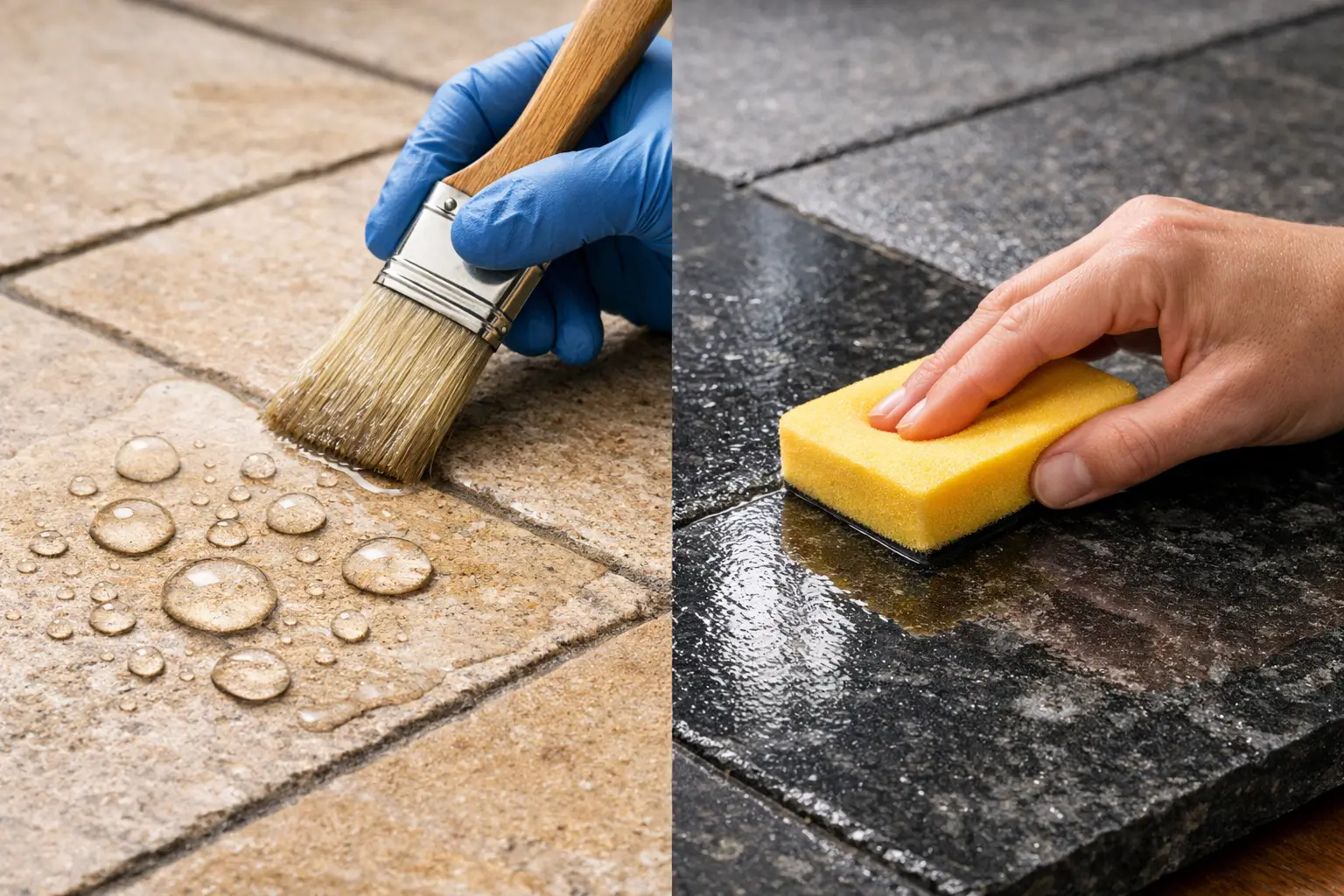
A marble benchtop can look immaculate after restoration, then lose its lustre quickly if the wrong protection is applied. That is why stone sealing vs coating is not a cosmetic choice alone. It determines how a surface handles spills, wear, moisture, cleaning products and the daily use that gradually compromises a premium finish.
For Sydney homes, apartments and commercial interiors, the right answer depends on the stone itself, its location, its existing condition and the type of protection required. A quality treatment should preserve the material’s natural character while reducing the risk of avoidable damage. It should never be a one-size-fits-all product applied simply because it is convenient.
Stone sealing vs coating: the fundamental difference
Stone sealing generally refers to a treatment that penetrates into the pores of a natural stone or grout joint. Its purpose is to reduce absorbency, so liquids and contaminants are less likely to enter the surface and cause stains. A penetrating or impregnating sealer sits below the visible surface rather than forming a heavy film over it.
A coating is a protective layer that sits on, or bonds closely to, the surface. Depending on the product, it may add gloss, alter the feel of the stone, create a barrier against soiling, or provide a more visibly protective finish. Coatings are often considered where enhanced surface protection, colour enrichment or a particular sheen is desired.
The distinction matters because stone needs to breathe, perform and look like stone. A beautiful honed limestone floor, a polished marble vanity and an external sandstone path all have different vulnerabilities. The treatment needs to suit those realities rather than merely create a temporary shine.
When stone sealing is the better choice
Penetrating sealing is often the preferred option for porous natural stone, including marble, limestone, travertine, sandstone, slate and some granites. It is particularly valuable in areas where the stone is exposed to oils, cosmetics, food spills, wet footwear or general grime.
A properly selected sealer helps give you more time to remove a spill before it becomes a stain. On a marble kitchen benchtop, for example, sealing can reduce the risk of cooking oil or coloured liquids penetrating the stone. In a bathroom, it can assist with moisture management and reduce the chance of lotions, make-up or toiletries discolouring the surface.
Importantly, sealers are not an invisible force field. They cannot stop acidic substances from etching calcium-based stone such as marble, limestone and travertine. Lemon juice, wine, vinegar and many bathroom products can react with the stone itself, leaving dull marks or roughened patches even where the surface has been sealed. Sealing targets absorption. Etching is a chemical reaction that requires different protection and care.
A penetrating sealer is also a strong choice where maintaining a natural appearance is essential. The stone retains its original texture and finish, whether that is polished, honed, tumbled or lightly textured. This makes sealing well suited to high-value interiors where the elegance of the material should remain the focus.
Where a protective coating makes sense
A coating can be appropriate when the surface needs a more defined protective layer or a visual enhancement that a penetrating sealer cannot provide. Some coatings are used to enrich colour in external stone, deepen the character of slate or sandstone, or create a more uniform appearance across a worn surface.
In commercial settings, a suitable coating may assist in making certain surfaces easier to maintain, particularly where heavy foot traffic and frequent cleaning are expected. However, this only works when the coating is compatible with the substrate, traffic level and cleaning regime. An unsuitable film can wear unevenly, scuff, peel, trap moisture or create a patchy finish that looks worse than the original problem.
Coatings also demand more consideration on floors. A glossy-looking product may be attractive on a sample board but inappropriate for an entry, bathroom or outdoor path where slip resistance is a priority. Surface texture, water exposure and public safety should always be assessed before selecting a coating for a walking surface.
For marble and other acid-sensitive stones, anti-etch film is another option worth considering in high-risk locations. Unlike a conventional stone coating, a professionally installed protective film is designed to act as a sacrificial barrier over selected surfaces such as benchtops and vanities. It can be an excellent solution for busy kitchens or hospitality areas where the likelihood of acidic spills is high, although it must be chosen and installed carefully to retain a refined appearance.
The condition of the stone comes first
Protection should be the final stage of restoration, not a substitute for it. Sealing over ingrained staining, applying coating over scratches, or treating an etched marble surface without honing and polishing first simply locks in an unsatisfactory result.
A specialist assessment begins with the material and its condition. Is the stone genuinely natural, or is it engineered stone? Is it polished marble with visible etching, a porous sandstone paver with ground-in dirt, or a quartz-based benchtop that has lost its clarity through unsuitable cleaning? The correct process can include deep cleaning, stain treatment, repairs, honing, polishing or grout restoration before any protective treatment is selected.
This is where material-specific knowledge makes a visible difference. Marble may need honing and polishing to remove etch marks and restore reflection. Limestone needs a more measured approach because its softer composition can be easily affected by harsh chemicals. Travertine often needs hole filling and careful finishing. Granite may be relatively dense but can still benefit from sealing in food preparation areas, especially where lighter colours are present.
Engineered surfaces such as Caesarstone and Silestone require particular care. They are usually less porous than many natural stones and are not automatically improved by sealing or coating. Applying an unsuitable product can leave haze, streaking or a difficult-to-remove residue. Their manufacturer guidance, finish and existing damage should direct the restoration approach.
Appearance, maintenance and longevity
The best protection should support the way the surface is used. A family kitchen needs practical stain resistance and an easy-care finish. A luxury bathroom vanity may require discreet protection that does not alter the stone’s polish. A hotel lobby floor needs durability, consistent presentation and maintenance methods that work at scale.
Sealed stone still needs sensible daily care. Use pH-neutral cleaning products made for stone, wipe spills promptly and avoid abrasive powders, acidic cleaners and improvised chemical remedies. On floors, regular dry soil removal matters because fine grit acts like sandpaper beneath shoes and can gradually dull polished stone.
Coated stone needs equally disciplined maintenance, though the method varies with the coating system. Aggressive cleaners and abrasive pads can prematurely wear the surface layer. When a coating reaches the end of its service life, it may need professional removal and reapplication rather than another product applied over the top.
Neither option is permanent. How long protection lasts depends on porosity, traffic, cleaning habits, water exposure and the quality of application. A benchtop, shower floor and external paved area should not be placed on the same resealing schedule. Professional testing can identify whether water is still beading as intended and whether a surface requires maintenance or a more substantial restoration treatment.
Choosing the right protection for your stone
The most reliable decision comes from asking what the surface needs protection from. If the principal risk is staining within a porous stone, penetrating sealing is often the answer. If you require surface-level enhancement, defined barrier protection or a specialist finish in a suitable environment, a coating may be appropriate. If acidic etching is the major concern, particularly on marble benchtops, anti-etch film or changes to daily use may offer more meaningful protection than sealer alone.
There is also a financial benefit to getting this right. Restoring and protecting stone early is usually far more cost-effective than allowing staining, dullness, deep etching or coating failure to progress until replacement appears necessary. The right treatment preserves both the visual impact and long-term value of a surface that was chosen for its natural beauty.
At Grand Stone Restoration, protection is selected as part of the complete restoration outcome, not sold as an off-the-shelf add-on. A careful assessment of your stone, its finish and the demands placed on it will reveal the treatment that keeps its elegance intact for longer.