
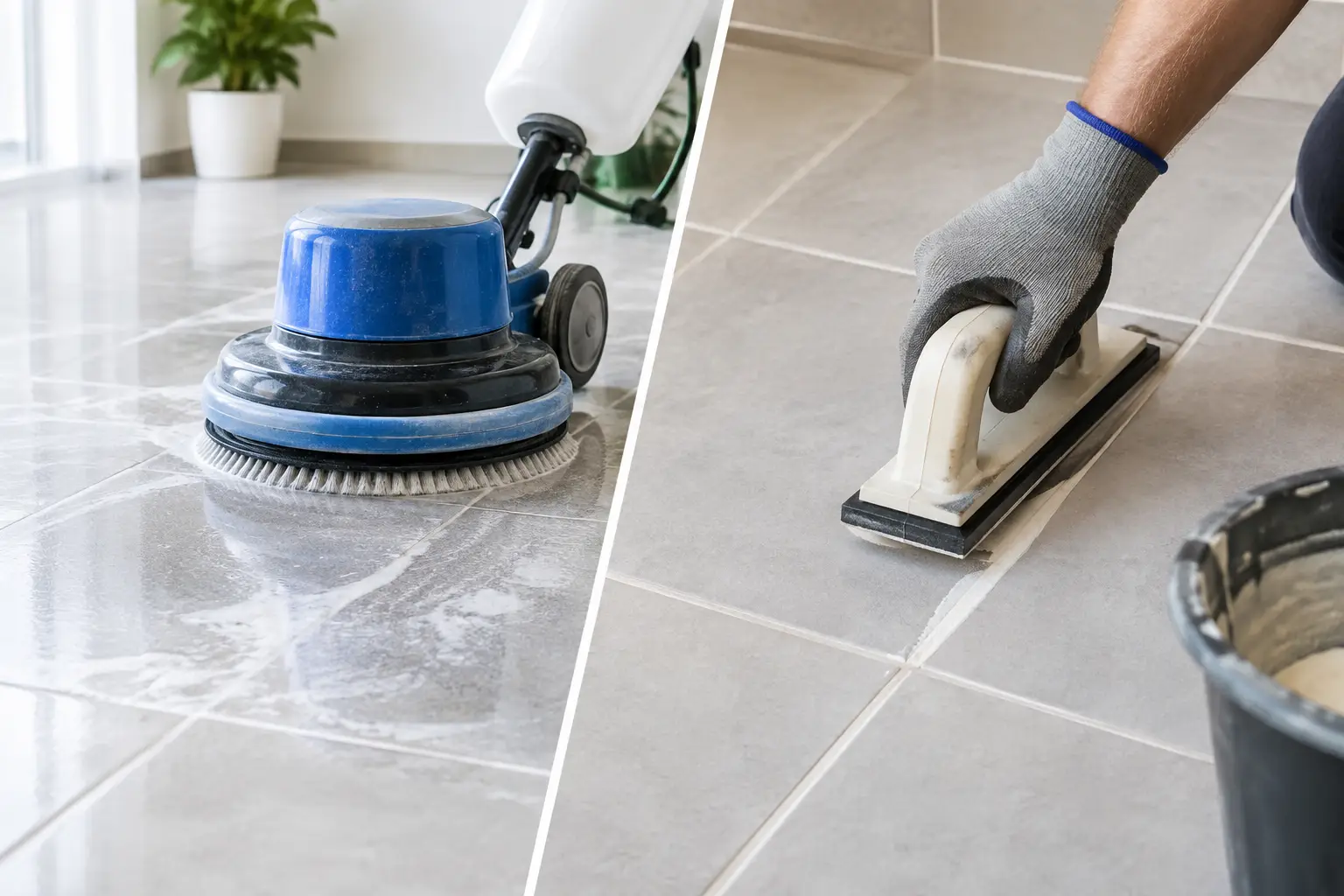
A tiled bathroom can be impeccably designed and still look neglected when the grout lines have turned dark, patchy or mould-stained. The question of tile cleaning vs regrouting is not simply about appearance. It is about identifying whether the existing grout can be restored or whether it has reached the point where replacement is the more durable, higher-value solution.
For Sydney homes, apartments and commercial interiors, the right choice protects the finish of the room, avoids unnecessary disruption and preserves the integrity of the tiled surface. A professional assessment looks beyond surface dirt to the condition of the grout, the tile material, moisture exposure and the result you expect to achieve.
Tile cleaning vs regrouting: the real difference
Tile cleaning restores what is already there. Professional cleaning removes embedded soil, soap residue, body oils, mineral deposits and surface mould from tiles and grout. Depending on the tile and grout type, this may involve specialist alkaline cleaners, controlled agitation, hot-water extraction or carefully selected treatments that lift contamination without compromising the surface.
Regrouting is a repair process. It involves removing deteriorated or contaminated grout from between the tiles and applying fresh grout. It is the appropriate option when grout is cracked, missing, loose, deeply stained, persistently mouldy or no longer performing its role as a stable joint between tiles.
The distinction matters because grout is not just a coloured line. In showers, bathrooms, laundries and commercial wet areas, it helps support a clean, finished surface and limits the paths through which water and grime can settle. Cleaning can revive sound grout beautifully. It cannot rebuild grout that has broken down.
When professional tile cleaning is the better choice
Cleaning is often the most cost-effective answer when grout is structurally intact but visually tired. This is common in bathroom floors, kitchen splashbacks, entry areas and tiled living spaces where daily use has gradually dulled the original colour.
The grout is firm and complete
If the grout remains well bonded, with no gaps, crumbling edges or visible cracks, it may only need a deep restorative clean. Dark grout lines are often caused by accumulated contaminants rather than permanent damage. A professional process can dramatically improve their colour and create a more uniform finish across the room.
This is particularly effective where white or light-grey grout has yellowed from soap, cooking residue or foot traffic. The improvement can be striking without the expense and disruption of removing the existing joints.
The tile surface needs attention too
A cleaning service can address more than grout. Porcelain and ceramic tiles can hold haze, hard-water deposits and greasy residue that ordinary mopping leaves behind. Textured tiles are especially prone to trapping soil in their surface profile, making the whole area appear dull even after regular cleaning.
Where tiles sit alongside natural stone, care becomes even more important. Marble, limestone, travertine and terrazzo can be damaged by acidic household cleaners and unsuitable scrubbing methods. A material-specific approach protects the stone while treating the surrounding grout and tile safely.
You want a fast visual transformation
For a property being prepared for sale, a tenancy changeover or an important commercial presentation, professional cleaning can deliver a substantial uplift with minimal interruption. It is generally the preferred first step when the grout is sound and the goal is to restore freshness rather than carry out a repair.
When regrouting is worth the investment
Regrouting is the stronger option when cleaning would only mask a deeper problem. It requires more labour and care than cleaning, but it creates a renewed joint that can improve both the appearance and serviceability of the tiled area.
Cracks, gaps and loose grout are visible
Grout that is missing in sections, flaking away or cracked along the joint has deteriorated beyond a cleaning solution. These openings collect dirt and moisture, and they make even premium tiles look unfinished. In wet areas, they may also contribute to ongoing staining around the affected joints.
Fresh grout restores crisp definition between tiles and gives the entire installation a more considered, refined appearance. Colour matching is critical, particularly where only part of a room requires treatment. The aim is not merely to fill gaps, but to achieve an even, well-finished result that belongs with the original surface.
Mould returns quickly after cleaning
Surface mould can often be removed through thorough cleaning. However, when dark growth reappears soon afterwards, the grout may be excessively porous, deeply contaminated or exposed to an ongoing moisture issue. Regrouting can be appropriate, but the moisture source must also be addressed. Poor ventilation, leaking shower fittings or failed seals will undermine even the finest restoration work.
The grout is permanently discoloured
Some stains penetrate deeply enough that cleaning produces an improvement but not a full restoration. Rust marks, old dye transfer, ingrained mould and years of neglected residue can leave grout uneven in colour. If a consistent, premium finish is the priority, replacing the affected grout may produce the more satisfying result.
The middle ground: grout recolouring and sealing
Not every worn grout line needs to be removed. In some cases, a grout colourant or recolouring treatment can refresh uniformity where the grout is stable but its original shade is beyond recovery. This can offer a cleaner visual result than repeated cleaning while avoiding the disruption of full regrouting.
Sealing is also worth considering after cleaning or regrouting, where suitable for the grout and location. A quality sealer helps reduce the absorption of moisture and staining agents, making routine maintenance easier. It is a protective measure, not a substitute for repair, and it must be selected carefully to avoid altering the appearance or creating an unsuitable surface film.
What a quality regrouting process should involve
Regrouting is often treated as a quick cosmetic job. Done properly, it is a precise restoration service. The old grout needs to be removed to an appropriate depth without chipping tile edges or damaging the surrounding surface. The joints are then cleared of debris before new grout is applied evenly and finished cleanly.
The correct grout type matters. A shower, balcony, kitchen splashback and high-traffic foyer face very different conditions. Colour, joint width, tile movement and exposure to water all influence the best material and method. Silicone joints at corners, wall-to-floor transitions and around fixtures may also need attention, as these flexible areas perform a different function from cement-based grout lines.
For high-end bathrooms and presentation-critical commercial interiors, neat edges and consistent colour are what separate a basic repair from a premium finish. The details remain visible long after the work is complete.
Cost, disruption and long-term value
Cleaning is normally less expensive and less disruptive because the existing grout remains in place. It is the sensible choice when the surface is fundamentally sound. It can also be repeated as part of a considered maintenance program, particularly in busy properties where appearance matters every day.
Regrouting has a higher upfront cost because it is a more involved repair. Yet it may represent better value when grout failure is widespread. Continually cleaning damaged joints can delay the inevitable while leaving the room looking inconsistent. Regrouting restores the visual order of the tiled area and can postpone the far greater cost of full tile replacement.
The most economical option is not always the cheapest service on the day. It is the one that addresses the actual condition of the surface and delivers a finish that lasts.
How to choose for your space
Start by looking closely at the grout rather than judging the room from a distance. If the lines are intact, firm and simply dirty, professional tile and grout cleaning is likely the right place to begin. If sections are missing, powdery, cracked or heavily stained despite previous cleaning, regrouting deserves serious consideration.
A shower floor with recurring mould may need both grout renewal and investigation of moisture or ventilation. A kitchen splashback with cooking residue may respond exceptionally well to cleaning alone. In a hotel lobby, retail space or apartment common area, cleaning can restore daily presentation, while localised regrouting can resolve worn sections without closing off an entire area for extensive replacement work.
Grand Stone Restoration approaches tiled and stone-adjacent surfaces with the same care given to premium marble, terrazzo and engineered stone. The right treatment is tailored to the material, condition and desired standard of finish.
A beautiful tiled surface should feel clean, composed and effortless. Before committing to replacement, have the grout assessed by a specialist who can distinguish temporary grime from genuine deterioration. That informed decision can return clarity, elegance and lasting confidence to the room you use every day.