
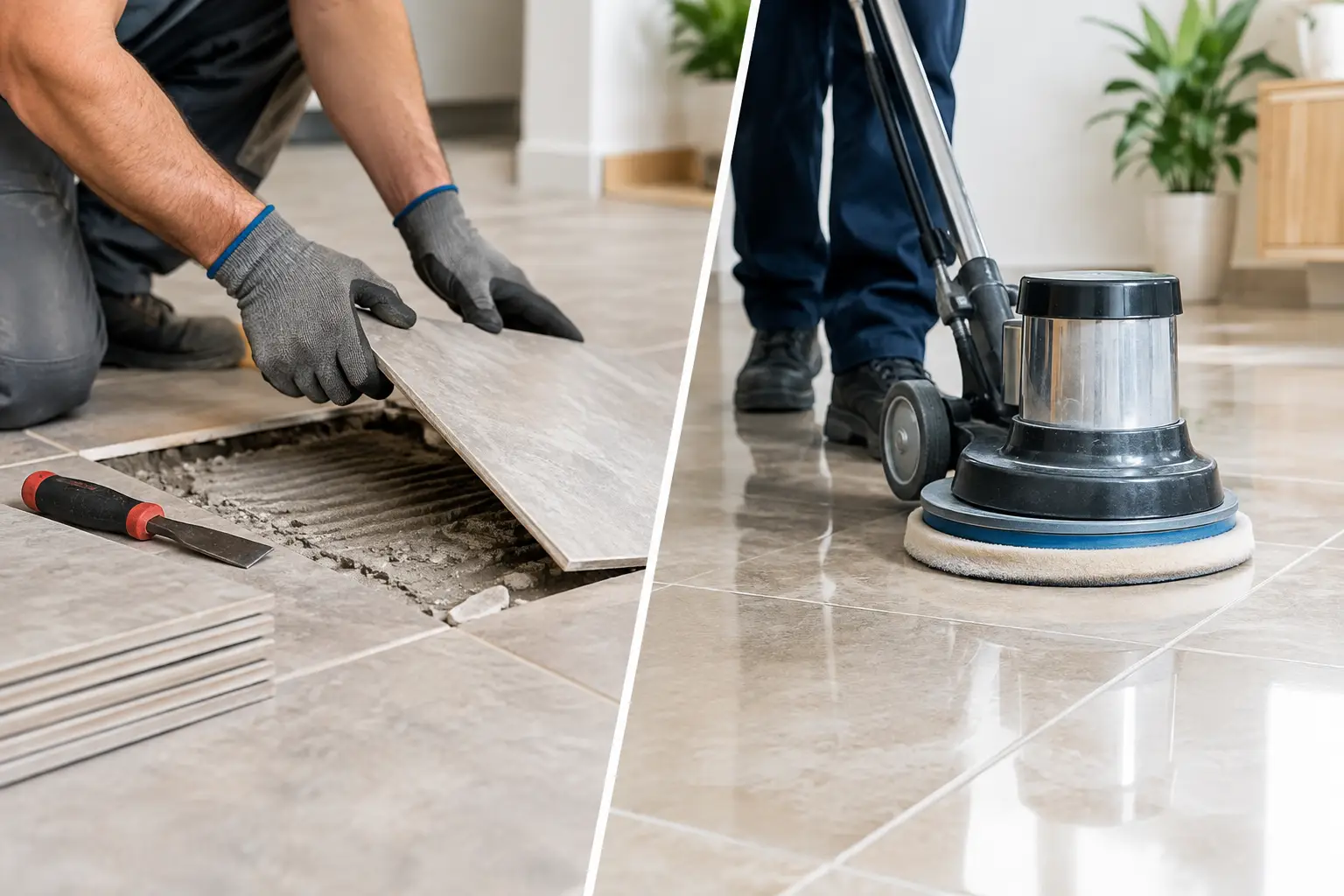
A tired tiled floor can make an otherwise refined bathroom, kitchen or commercial foyer feel neglected. Yet visible wear does not automatically mean the surface must be removed. Tile replacement vs restoration is a practical decision about the condition beneath the surface, the finish you want to achieve, and the level of disruption your property can accommodate.
For many Sydney homes and presentation-critical commercial spaces, professional restoration can revive dull tiles, stained grout and worn natural stone at a fraction of the cost of replacement. But when tiles are loose, extensively cracked or affected by a failure in the substrate, replacement is the more responsible investment.
Tile Replacement vs Restoration: The Essential Difference
Tile replacement involves removing existing tiles, preparing the substrate, installing new material, grouting and finishing the surrounding edges. It can completely change the appearance of a room, but it is also a construction project. Dust, noise, demolition, potential waterproofing work and access restrictions all need to be considered.
Restoration works with the material already in place. Depending on the tile type and its condition, this may include deep cleaning, grout restoration, stain treatment, chip repairs, honing, polishing, sealing and protective coatings. The objective is not to disguise wear with a temporary shine. It is to correct the surface as far as the material allows and protect it against further deterioration.
The key distinction is simple: restoration preserves a sound surface with expert treatment; replacement addresses material that is no longer sound, suitable or desirable.
When Tile Restoration Delivers Better Value
Restoration is often the strongest option when the tiles themselves remain firmly bonded, structurally intact and appropriate for the space. This is particularly true for natural stone floors, marble bathrooms, terrazzo entries, limestone surfaces and quality porcelain or ceramic tiles with deteriorated grout.
A surface can look beyond saving because of accumulated soap residue, ingrained dirt, hard-water marks, poor cleaning products or years of foot traffic. Natural stone presents another challenge. Marble and limestone can become etched by acidic products, leaving pale marks and a dull, uneven reflection. Scratches and traffic lanes can take away the elegance of a polished floor even when the stone beneath is perfectly serviceable.
In these situations, specialist restoration can produce a visible transformation without lifting a single tile. Honing can refine etched or scratched stone, polishing can restore clarity and brilliance where a polished finish is suitable, and sealing can provide valuable resistance against staining. Grout can be professionally cleaned, repaired, recoloured or sealed to restore definition between tiles.
For apartment owners, restoration also avoids the practical complications of demolition in a strata building. For hospitality, retail and office environments, it can reduce closure time and preserve a premium appearance with far less interruption to daily operations.
Restoration is material-specific
Not every tiled surface should be treated the same way. Marble, granite, travertine, limestone and terrazzo each respond differently to abrasives, moisture and polishing methods. Engineered stone, porcelain, ceramic and quarry tiles require their own approach. A process that improves one surface may permanently damage another.
For example, natural stone can often be honed and polished because the surface is workable. Glazed ceramic and porcelain tiles generally cannot be polished in the same manner without compromising their factory finish. Their improvement usually comes from targeted cleaning, grout restoration, careful chip repairs and appropriate protective treatment.
This is why a professional assessment matters. The right solution should be based on the material, finish, location, existing damage and the result you expect.
When Tile Replacement Is the Better Choice
Restoration has limits, and a reputable specialist should be clear about them. Replacement is generally the better path when tiles are loose, hollow-sounding, badly fractured or lifting away from the substrate. These problems suggest movement, adhesive failure or moisture issues below the visible surface. Treating the top layer will not resolve the cause.
Replacement may also be necessary where there is widespread water damage, a failed waterproofing membrane, extensive missing tiles, severe lipping between tiles or an outdated layout that no longer suits the room. In wet areas, any concern about waterproofing deserves prompt investigation before cosmetic work is considered.
Aesthetic preference is another valid reason to replace. If the tile colour, size or pattern no longer aligns with a planned renovation, restoration cannot turn a dated beige ceramic tile into large-format porcelain. It can make the existing surface clean, cared for and more presentable, but it cannot change the design language of the material.
The challenge is that replacement frequently uncovers additional work. Removing old tiles can damage wall linings or screeds, require substrate levelling and create a mismatch with adjoining floors, skirting, cabinetry or fixtures. A seemingly contained tile project can quickly expand in scope and cost.
Comparing Cost, Time and Disruption
The initial price of restoration is usually lower than full replacement because there is no demolition, disposal, tile purchase or large-scale installation labour. It also preserves valuable materials already in place, particularly premium natural stone or tiles that may be difficult to match.
Replacement can be a worthwhile long-term investment when structural defects are present, but the budget should account for more than the new tiles. Consider removal, rubbish disposal, substrate repairs, waterproofing, adhesives, grout, trims, plumbing adjustments and reinstatement of fixtures. In older properties, there can also be unforeseen issues beneath the existing finish.
Time matters as much as cost. A specialist restoration process may be completed with comparatively limited downtime, subject to the surface, treatment and curing requirements. Replacement can take considerably longer, especially if waterproofing, screeding or custom tile ordering is involved.
There is also a lifestyle consideration. Restoration is generally cleaner and less invasive, which makes it appealing for occupied homes, luxury apartments, hotel bathrooms and commercial foyers where appearance cannot be compromised for weeks at a time.
A Practical Way to Assess Your Surface
Before deciding, look beyond general dullness. Dullness, staining, soap scum, grout discolouration, minor chips and light scratching often point towards restoration. Loose tiles, movement underfoot, recurring cracks, water damage and signs of mould or moisture behind the tiled area call for deeper investigation.
Ask whether the problem is isolated or widespread. A few chipped tiles may be repaired or selectively replaced if matching material is available. A whole floor that has lost its lustre may respond exceptionally well to professional cleaning, honing or polishing. Conversely, a single visible crack may be a symptom of movement that affects a much larger area.
It is also wise to consider the original quality of the installation and material. High-value marble, granite, terrazzo and well-laid tiles deserve careful assessment before removal is considered. Their replacement cost, visual character and contribution to the property’s value can make restoration the more considered choice.
Protecting the Finish After Restoration
Whether you restore or replace, the final result depends on ongoing care. Natural stone should be cleaned with pH-neutral products rather than acidic or harsh chemical cleaners. Spills should be attended to promptly, especially on marble, limestone and other calcareous stones vulnerable to etching.
Sealing can help reduce absorption and staining on suitable porous surfaces, but it is not a licence to ignore spills or use unsuitable cleaners. In high-use areas, protective coatings or anti-etch film may also be appropriate, particularly for stone benchtops and surfaces exposed to acidic foods, drinks or cleaning products.
Grout deserves equal attention. Regular cleaning and periodic resealing, where suitable, can prevent staining from becoming deeply embedded and preserve the crisp, well-maintained appearance of tiled spaces.
Choose the Solution That Respects the Surface
The best decision is rarely based on a surface photograph alone. It comes from understanding what the tile is made from, what caused the damage and whether the underlying installation remains sound. Grand Stone Restoration applies material-specific expertise to assess these details and recommend treatment that protects both the finish and the investment behind it.
If your tiles are structurally sound but have lost their colour, clarity or refinement, restoration may be the most intelligent way to bring back a finish worthy of the space. If the substrate has failed, addressing that problem first will give any new surface the lasting foundation it deserves.