
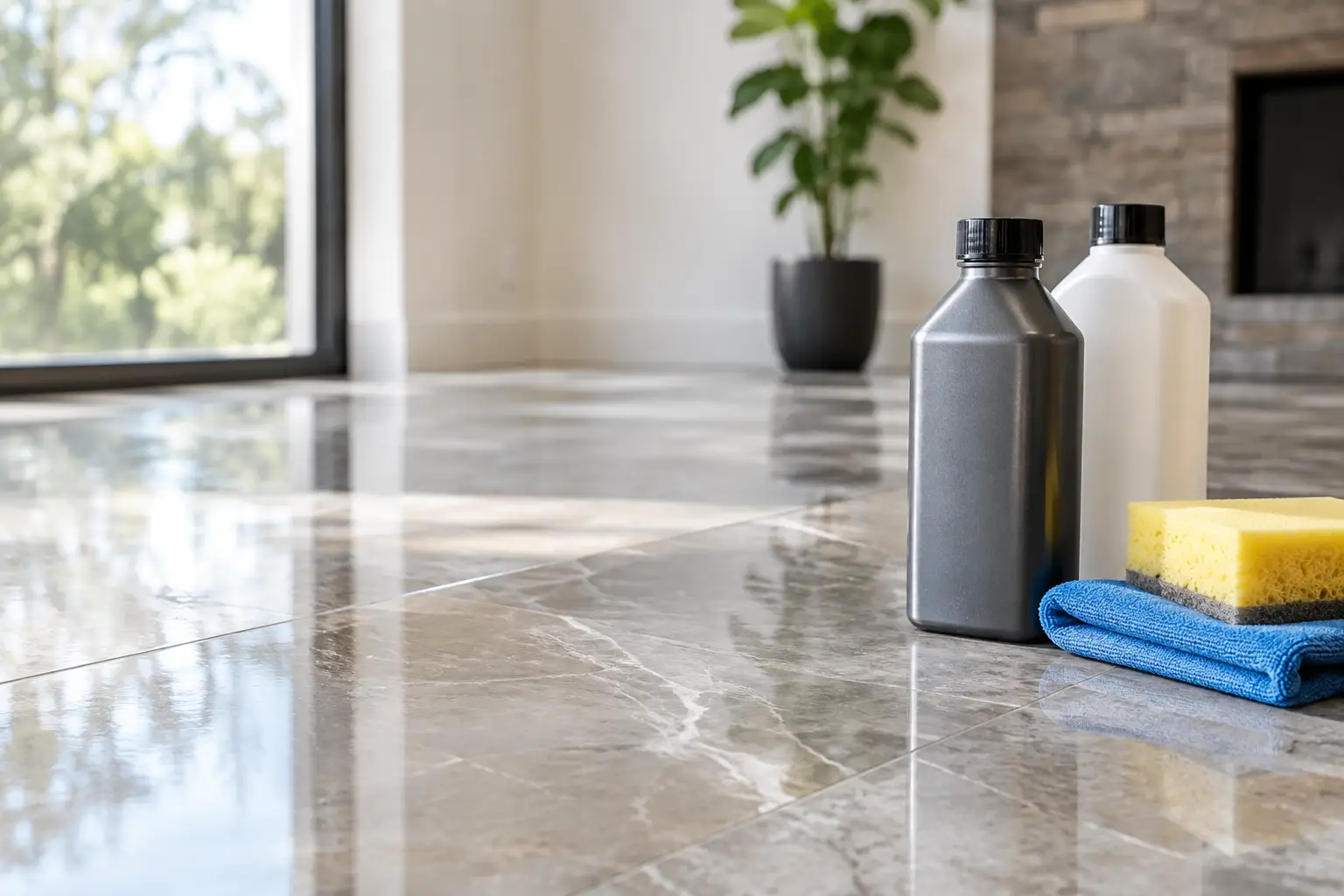
A stone floor can look exceptional on installation day, then lose its clarity surprisingly quickly under wet shoes, furniture movement, spills and everyday foot traffic. The top stone floor protection options are not interchangeable. A treatment that performs well on dense granite may be entirely wrong for acid-sensitive marble or porous limestone. Lasting protection starts with identifying the stone, its finish, how the space is used and the type of damage you are trying to prevent.
For Sydney homes, apartment common areas, retail spaces and commercial foyers, the right approach preserves more than appearance. It protects a valuable surface from premature wear, avoids unnecessary replacement and helps maintain the polished, considered finish that stone brings to a property.
Why stone floors need tailored protection
Natural stone is not one material. Marble, travertine, limestone, sandstone, granite and terrazzo each have different densities, mineral compositions and surface characteristics. Engineered stone products also require material-specific care. Treating all of them with a generic sealer is one of the most common reasons floors develop patchiness, reduced slip resistance or a dull, artificial-looking finish.
There are also different threats to address. Absorption of oil, food, moisture and coloured spills is one problem. Acid etching from wine, citrus, soft drinks or bathroom products is another. Scratches, traffic lanes and wear around entrances are mechanical issues, while outdoor floors must contend with weather, organic growth and contaminants carried in from the footpath.
Protection should therefore be selected after the floor has been properly cleaned, repaired and, where needed, honed or polished. Sealing a floor over ingrained soil, etching or uneven gloss simply locks in the problem.
Top stone floor protection options for premium surfaces
Penetrating and impregnating sealers
For many natural stone floors, a high-quality impregnating sealer is the most appropriate first line of protection. These treatments penetrate beneath the surface and line the pores of the stone, helping to resist the absorption of water, oils and staining agents without forming a thick film on top.
This is particularly valuable for porous materials such as limestone, travertine, sandstone and some varieties of marble. In a kitchen, dining area or lobby, an impregnating sealer provides more time to remove a spill before it becomes a permanent stain. It generally keeps the stone looking natural, which matters when the appeal lies in veining, texture and colour variation rather than a coated appearance.
However, a penetrating sealer is not a shield against everything. It will not stop marble from etching when acidic substances contact the surface, and it will not prevent scratching from grit or furniture. Its performance also depends on correct preparation and application. Too little product leaves vulnerable areas; too much can leave residue or create uneven results.
Colour-enhancing sealers for selected stone
Some honed or textured stones benefit from a colour-enhancing sealer. As the name suggests, this treatment deepens the natural colour and can bring out the richness of slate, sandstone, travertine or certain darker stones while also providing stain resistance.
The visual result can be striking, particularly on outdoor entertaining areas or feature entry floors. Yet this is a finish-led decision, not a default maintenance step. An enhancer can permanently alter the appearance of stone, making pale materials look darker or changing the way surface variation is perceived. A small test area is essential before committing to the full floor.
For refined marble or light limestone interiors, a natural-look impregnating sealer is often the more conservative choice. The objective is to preserve elegance, not create a finish that appears overly saturated or inconsistent with the rest of the space.
Topical protective coatings
Topical coatings sit on the surface rather than soaking into the stone. Depending on the product and application, they can provide a stronger barrier against traffic, surface soiling and certain contaminants. They are sometimes considered for commercial environments, utility areas or highly porous floors where enhanced protection is needed.
The trade-off is appearance and maintenance. A coating may change the stone’s sheen, deepen its colour or create a more uniform finish that does not suit premium natural stone. If it wears unevenly in a busy foyer or corridor, it may require stripping and reapplication rather than a straightforward clean and reseal. Poorly selected coatings can also compromise slip resistance, particularly where floors become wet.
Topical protection has a place, but only after careful assessment of the stone, desired finish and traffic conditions. It should never be used to disguise poor restoration work or existing surface damage.
Anti-etch film for vulnerable polished stone
Polished marble and other calcium-based stones can be especially vulnerable in areas exposed to acidic spills. Etching does not always look like a stain. It often appears as dull marks, rings or cloudy patches where acid has reacted with the stone and altered its polished surface.
Anti-etch film can provide a practical protective layer in selected high-risk areas, helping guard polished stone against etching and light surface wear while preserving a refined appearance. It is particularly worth considering where a luxury finish is exposed to frequent spills or intensive use.
Film is not a universal solution for every floor. Suitability depends on traffic volume, surface profile, wet-area requirements and the visual expectations for the space. A professional assessment is needed to ensure clean edges, sound adhesion and an appropriate result underfoot.
Entrance matting and practical traffic control
Some of the best protection is preventative rather than chemical. Grit is abrasive. Walked onto a polished marble or terrazzo floor, it acts like fine sandpaper and gradually creates a dull traffic path. Effective entrance matting captures moisture and debris before it reaches the stone, reducing cleaning demands and surface wear.
This is especially relevant for commercial properties, apartment lobbies and homes with direct access from outdoor areas. Protective pads beneath movable furniture, prompt spill removal and avoiding harsh cleaning chemicals also make a measurable difference. These are simple measures, but they extend the life of professional restoration and reduce the frequency of more intensive work.
Match protection to the stone and setting
A high-end bathroom floor has different needs from a sandstone terrace, and a hotel foyer has different demands from a private dining room. Before choosing a treatment, consider four practical factors:
- the stone type and its porosity
- whether the finish is polished, honed, textured or tumbled
- exposure to acids, oils, water and outdoor contaminants
- traffic levels, cleaning routines and slip-resistance requirements
Polished marble in a formal interior may need restoration of etching followed by a natural-look sealer and careful maintenance. Honed limestone near a kitchen may benefit from a premium impregnating sealer, while an outdoor sandstone floor requires a breathable treatment that will not trap moisture or create an unsuitable sheen.
Commercial spaces demand another level of planning. A protective system must support presentation standards while allowing practical cleaning and staged maintenance. There is little value in applying a treatment that looks perfect initially but cannot withstand daily traffic or creates disruption when it needs renewal.
Preparation determines the result
Even the finest protective product cannot compensate for inadequate preparation. Stone should first be assessed for stains, old coatings, grout haze, scratches, lippage, cracked tiles and areas of uneven sheen. Depending on the condition, the floor may require deep cleaning, stripping, honing, polishing, repairs or grout restoration before protection is applied.
This sequence is central to a premium result. Honing removes light scratches and etching from the stone itself. Polishing restores clarity and brilliance to suitable polished surfaces. Sealing then helps preserve that renewed finish. Reversing the order leaves the floor looking temporarily improved at best.
At Grand Stone Restoration, protection is considered as part of the full restoration lifecycle rather than a one-size-fits-all add-on. That material-specific approach is what helps a floor retain its natural character while gaining meaningful resistance to the issues it faces every day.
Protect the finish with the right maintenance
A sealed floor still needs appropriate care. Use a pH-neutral cleaner formulated for natural stone, avoid acidic or abrasive products, and remove spills promptly. For polished stone, regular dry dust mopping is one of the simplest ways to reduce scratching caused by grit.
Resealing intervals vary considerably. A lightly used residential floor may retain effective protection for years, while a busy commercial entrance may need more frequent inspection and maintenance. Rather than relying on a calendar alone, assess whether water still beads on the surface, whether spills darken the stone quickly and whether high-traffic zones are becoming harder to clean.
The most successful protection is rarely the most visible. It is the treatment that lets the stone retain its natural depth, elegance and lasting shine while quietly standing up to the way the space is actually used.