
A beautiful stone surface rarely fails overnight. The change is usually gradual: water no longer beads on a benchtop, a pale ring appears near the sink, or a once-refined floor begins to look tired despite regular cleaning. Knowing when should stone be resealed helps protect the finish before everyday moisture, oils and spills find their way below the surface.
Resealing is not a calendar-only task. The right timing depends on the stone itself, where it is installed, how it is used and the condition of the existing protection. A marble vanity in a lightly used ensuite has very different demands from a sandstone entertaining area exposed to Sydney weather, pool traffic and outdoor dining.
What Stone Sealer Actually Does
A quality penetrating sealer is designed to reduce the absorption of water, oils and staining agents into porous stone, grout and some tile surfaces. It sits below the surface or within the pore structure rather than creating a thick, visible coating. When applied correctly, it preserves the natural character of the material while giving spills more time to be removed.
Sealer is a protective measure, not a cure for every form of damage. It will not stop acidic liquids from etching marble, limestone or travertine. Nor will it repair scratches, chips, worn polish or deep staining already present in the stone. Those issues require material-specific restoration, such as honing, polishing, repair or poultice treatment, before a new protective sealer is applied.
This distinction matters. Applying more sealer over a dull, etched marble floor may offer little benefit and can leave behind an uneven appearance if the surface has not been properly prepared.
When Should Stone Be Resealed? Look for These Signs
The most reliable answer comes from the surface, not from a fixed date in the diary. If the existing sealer is wearing down, stone will begin to absorb liquids more readily.
Water no longer beads on the surface
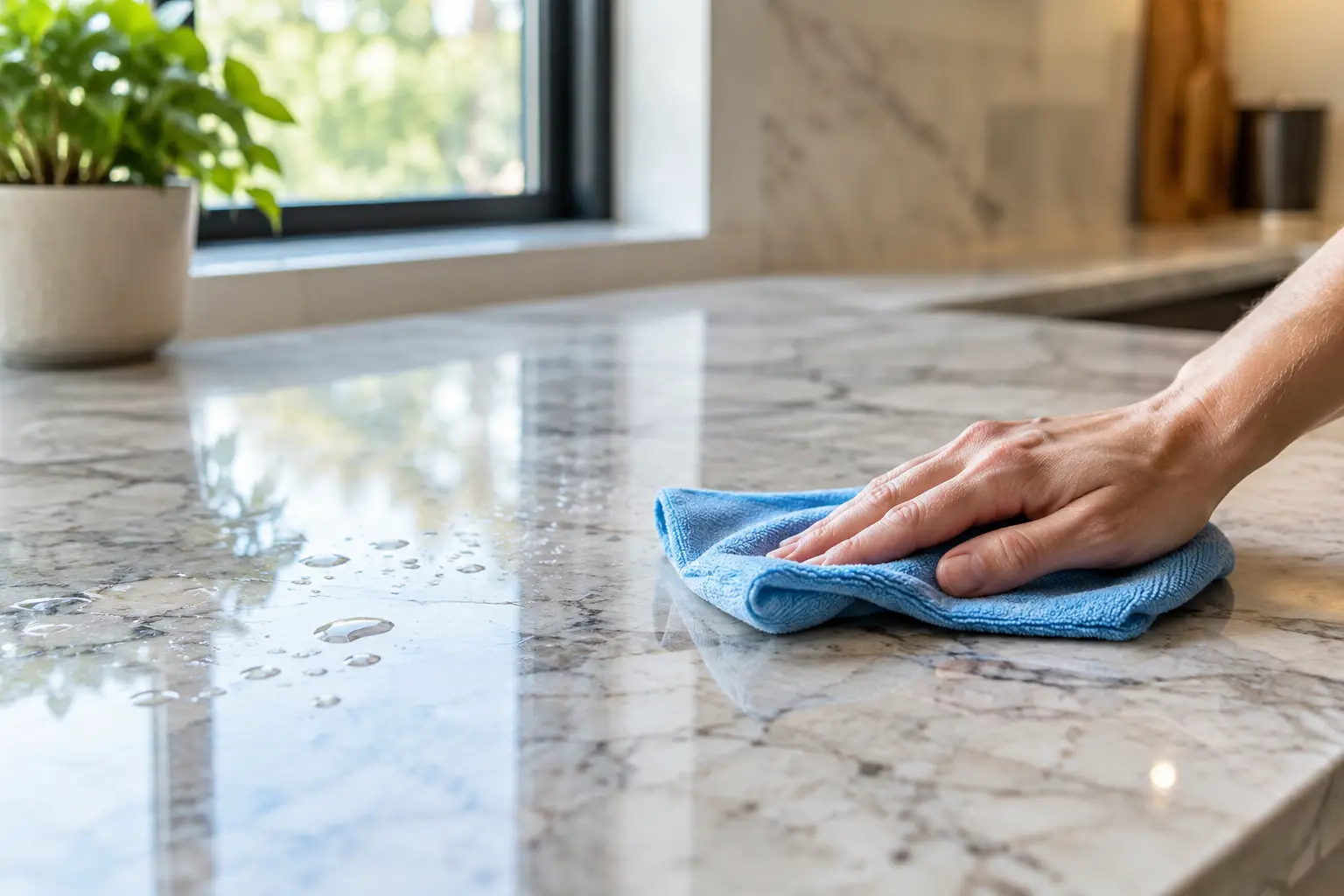
A simple water test can offer a useful indication. Place a few drops of clean water in an inconspicuous area and observe them for several minutes. On a well-sealed porous surface, the drops should remain beaded rather than soaking in quickly.
If the stone darkens beneath the water or absorbs it within a few minutes, its protection may be reduced. This does not automatically mean every square metre needs immediate resealing, but it is a strong reason to have the surface assessed – particularly around sinks, vanities, cooktops, entryways and other high-use areas.
Spills leave dark patches or rings
Oil, wine, coffee, cosmetics and cooking residue can penetrate unsealed or poorly protected stone. A temporary dark patch after water exposure may simply be moisture moving through the stone, but marks that linger after drying deserve attention.
Benchtops are especially vulnerable because daily use concentrates risk in a small area. In commercial foyers and hospitality settings, food and drink spills combined with heavy foot traffic can produce the same problem on a larger scale.
The surface is harder to clean than it used to be
When dirt appears to cling to grout lines, textured stone or honed finishes, it may indicate that the protective barrier has diminished. Routine cleaning should maintain a refined appearance, not become a constant battle against ingrained grime.
That said, cleaning difficulty can also be caused by residue from unsuitable products. Household sprays, soap-based cleaners and harsh chemicals can leave films, degrade some sealers or alter the visual clarity of polished stone. A specialist can determine whether the problem is failed sealer, surface contamination or physical wear.
High-use zones look different from surrounding areas
A floor may still repel water along the edges of a room while absorbing it near doorways, dining areas or reception desks. This uneven performance is common. Foot traffic, abrasive dirt and repeated mopping wear down protection faster in active zones.
Spot resealing can sometimes be appropriate, but it must be done carefully to avoid patchiness. For premium stone floors, a consistent preparation and sealing approach is usually the better way to maintain an even finish.
How Often Does Natural Stone Need Resealing?
There is no single interval that suits every stone surface. As a broad guide, high-use kitchen benchtops and bathroom vanities may require inspection every 12 months, while lower-use internal stone floors can often go longer. Outdoor stone may need more frequent attention because UV exposure, rain, pool chemicals, organic matter and thermal movement place extra pressure on the surface.
The stone type is equally significant. Dense granite and many engineered stone products are generally less absorbent than marble, limestone, travertine, sandstone or unglazed grout. Yet density alone does not remove the need for care. Even a low-porosity surface can suffer staining at seams, edges, damaged sections or areas where the original finish has been compromised.
For Sydney properties, outdoor areas deserve particular scrutiny after prolonged wet weather or a busy summer entertaining season. Pool surrounds, balconies, patios and sandstone paths are exposed to a combination of moisture, sunscreen, food spills and tracked-in grit. The right sealer must suit both the material and the slip-resistance requirements of the area.
Resealing Different Stone Surfaces
Marble, limestone and travertine
These calcium-based stones are valued for their elegance, but they are sensitive to acidic substances. Sealing helps reduce staining from water-based and oily spills, though it will not prevent etching from lemon, vinegar, wine or acidic bathroom products.
Before resealing, check for dull spots, rings and loss of polish. A professional hone and polish may be needed first to restore clarity and brilliance. Sealing a restored surface is the final protection step, not a substitute for the restoration itself.
Granite and engineered stone
Granite is often more resistant to absorption, but its performance varies by colour, finish and composition. Honed granite can show moisture and fingerprints more readily than polished granite. Engineered stone benchtops also vary, and manufacturers’ care recommendations should be respected.
These materials may not need resealing as frequently as porous natural stone, but a water test and professional inspection remain worthwhile when staining or absorption becomes noticeable. Avoid assuming that a hard-looking surface is maintenance-free.
Sandstone, slate and outdoor stone
Porous outdoor stone benefits greatly from an appropriate breathable sealer. The wrong product can trap moisture, alter the colour excessively or create an unwanted sheen. In some outdoor applications, a colour-enhancing finish is desired; in others, preserving the natural appearance is the priority.
This is where product selection and preparation are critical. Cleaning, salt removal, mould treatment and adequate drying time may all be required before sealing can deliver a durable result.
Tile and grout
Grout is commonly one of the most absorbent elements in a tiled area. In showers, kitchens and commercial bathrooms, it can discolour quickly if left unprotected. Resealing grout after a deep clean can help maintain a cleaner, more uniform appearance, but damaged or crumbling grout should be repaired first.
Why Preparation Determines the Result
Resealing is only as good as the surface beneath it. Stone needs to be thoroughly cleaned, free of residues and allowed to dry before sealer is applied. If moisture or contaminants are sealed in, the result can be blotchy, hazy or ineffective.
Professional application also avoids a common mistake: applying too much sealer. Excess product left on polished stone can dry into streaks or cloudy residue that detracts from the finish it was meant to protect. The correct method involves matching the sealer to the material, applying it evenly, allowing suitable dwell time and removing excess before it cures.
For large marble floors, reception areas, premium benchtops and heritage stone, this precision protects both appearance and asset value. It also provides an opportunity to identify early issues such as failed grout, etched patches, loose tiles or chipped edges before they become more costly repairs.
Protect the Finish Between Sealing Appointments
Good daily care extends the life of a sealer. Wipe spills promptly, especially oils, wine, acidic liquids and cosmetics. Use pH-neutral cleaners formulated for stone, rather than acidic, abrasive or bleach-heavy products. On floors, regular dust removal matters because grit acts like fine sandpaper under shoes and furniture.
Use mats at entry points, felt protection under furniture and coasters or trays in areas where drinks, soaps and oils are regularly placed. These small habits preserve the refined surface treatment and reduce the frequency of more intensive restoration.
If your stone has stopped repelling moisture, is developing stains or has lost its polished presence, do not simply apply another coat and hope for the best. A tailored assessment can establish whether resealing is enough or whether cleaning, honing, polishing or repair should come first. The right restoration sequence lets the stone retain the depth, elegance and lasting brilliance that made it worth choosing in the first place.