
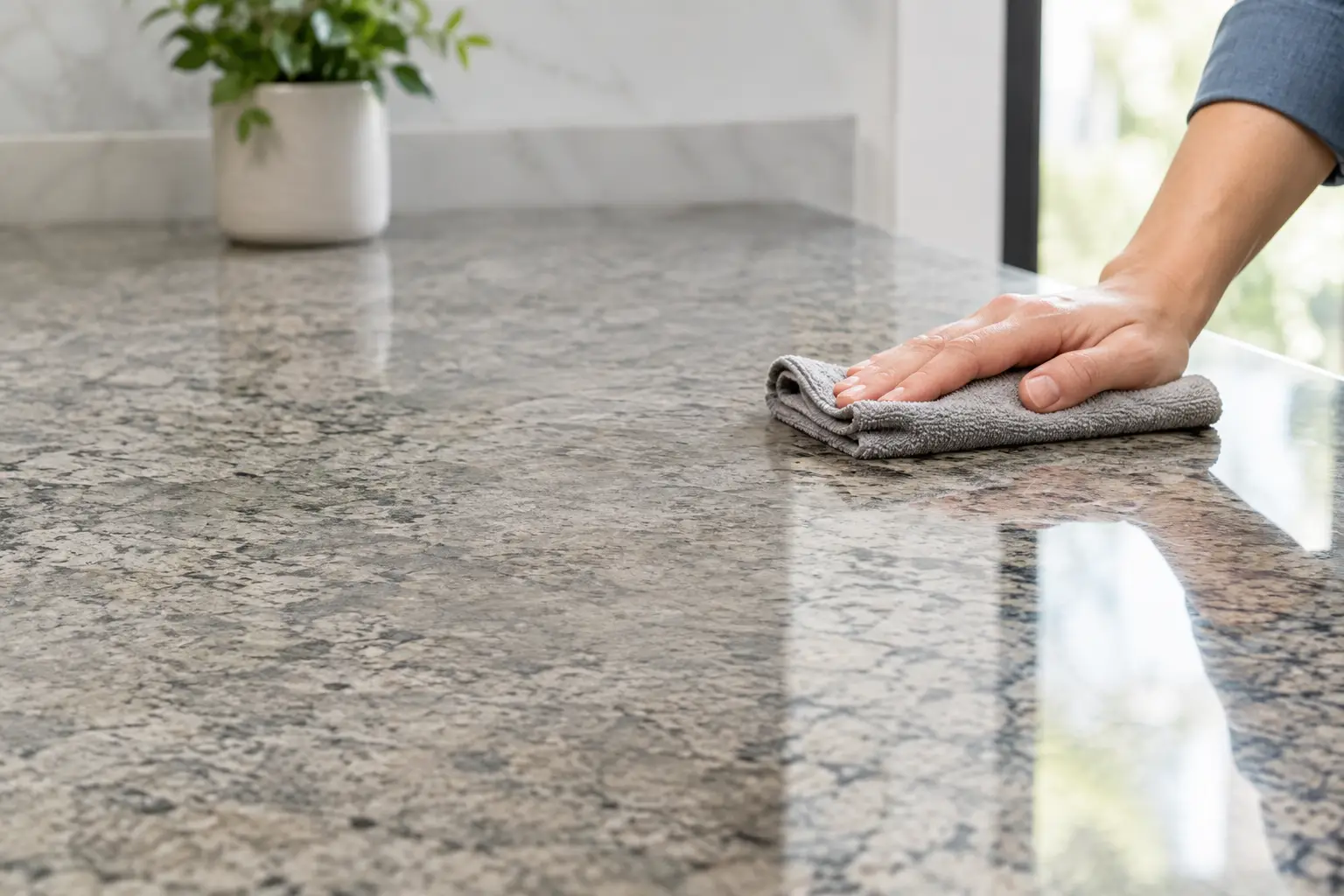
A marble floor can look beautifully reflective after installation, then appear flat and tired only months later. The change is often gradual: a cloudy track through a foyer, pale rings around a vanity, or a benchtop that no longer catches the light evenly. So, why does stone lose shine? In most cases, the stone has not lost its quality. Its finely finished surface has been altered by wear, chemical damage, residue or unsuitable maintenance.
A lasting shine is created by a smooth, level surface that reflects light cleanly. When microscopic scratches, etched patches or films of residue interrupt that surface, the reflection becomes scattered. The result is dullness, even when the stone is otherwise clean. Understanding the cause matters because the right solution for polished marble is not necessarily right for granite, limestone, terrazzo or engineered stone.
Why Does Stone Lose Shine Over Time?
Stone surfaces live hard-working lives. Kitchen benchtops meet food acids, cleaning sprays and daily abrasion. Bathroom vanities are exposed to cosmetics, soap and water marks. Floors collect grit from shoes, furniture movement and repeated foot traffic. In commercial settings, this process is accelerated by hundreds of people crossing the same areas each day.
Polished stone is particularly vulnerable because its shine relies on an exceptionally refined finish. Small changes that may be hard to feel by hand can be highly visible under downlights or natural sunlight. A dull surface is therefore rarely a simple cleanliness issue. It is usually a finish issue.
Etching changes the stone itself
Etching is one of the most common reasons polished marble, limestone, travertine and terrazzo lose their lustre. Acidic substances react with calcium-based stone, leaving a pale, roughened or dull mark. Lemon juice, vinegar, wine, soft drink, some bathroom products and acidic cleaners can all cause etching.
Unlike a stain, etching is not something that can be wiped away. The stone’s polished face has been chemically disrupted. A light etch may show as a dull splash-shaped patch; more severe damage can feel slightly textured and make the surrounding shine look uneven. Professional honing and polishing are generally required to restore an even finish.
Granite and many engineered stones are more resistant to acid than marble, but they are not immune to surface damage. Strong chemicals, abrasive pads and incorrect polishing products can still leave these materials looking hazy or lacklustre.
Abrasion creates fine scratches and traffic lanes
Grit is effectively sandpaper underfoot. Fine sand carried in from outdoors, especially around entryways and patio doors, slowly scratches stone flooring. Chair legs, dropped objects and day-to-day use create further abrasion. Over time, the dense pattern of micro-scratches diffuses light rather than reflecting it, producing a broad dull area.
This is why a stone floor may still look glossy around the perimeter of a room but appear worn in its central walking path. In a hotel lobby, office foyer or retail environment, these traffic lanes can undermine the entire presentation of the space even when the floor is regularly cleaned.
Cleaning residue can mask a polished finish
Not every dull surface needs mechanical restoration. Soap, detergent, mop-and-shine products, waxes and poorly rinsed cleaners can leave a film over stone. This film attracts more soil, streaks under light and creates a cloudy appearance that is often mistaken for permanent damage.
The trade-off is that aggressive attempts to remove this build-up can cause further harm. Scouring powders, cream cleaners, abrasive sponges and acidic descalers may strip residue, but they can also scratch or etch the stone beneath. The surface needs to be assessed before choosing a cleaning method.
Hard water is another frequent culprit in Sydney bathrooms. Mineral deposits can dull shower walls, vanity tops and tiles, while repeated cleaning with the wrong descaler may add etching to the problem. The correct approach depends on whether the deposit is sitting on the surface or whether the stone itself has been affected.
Incorrect products damage the finish
Natural stone is not a single material category. Marble, granite, limestone, sandstone and terrazzo all behave differently, while engineered stone products have their own manufacturer-specific care requirements. A product marketed as a general bathroom or kitchen cleaner may be unsuitable for one or more of these surfaces.
Common troublemakers include vinegar, citrus-based cleaners, bleach mixtures, abrasive powders and highly alkaline degreasers. Even a product that causes no immediate visible mark can gradually reduce clarity when used repeatedly. Polishing sprays may offer a brief cosmetic shine but can build up, leaving the surface uneven and harder to restore properly later.
The Difference Between Dull Stone, Etched Stone and Stained Stone
These problems are often grouped together, but they require different treatment. Dullness from residue may be corrected through specialised deep cleaning and rinsing. Etching requires refinishing because it changes the stone surface. Scratches may need honing to level the damaged layer before polishing restores the desired sheen.
A stain is different again. It occurs when a substance is absorbed into porous stone, leaving a change in colour rather than a loss of reflection. Oil, wine, rust, cosmetics and organic matter can all stain natural stone. A surface can be stained and shiny, or clean in colour but heavily etched. Accurate diagnosis avoids unnecessary work and protects the material.
Sealers also need to be understood for what they do. A quality penetrating sealer helps reduce the absorption of spills and makes routine maintenance easier. It does not prevent etching on marble, stop scratches, or create a glossy finish on its own. Protective coatings and anti-etch film can offer additional protection in high-risk areas, but the right option depends on the stone, its use and the finish you want to retain.
How Professional Restoration Brings Back the Shine
Professional stone restoration is a controlled process, not simply an application of polish. The first stage is identifying the material, existing finish and cause of damage. A honed marble floor, for example, should not be treated like a high-gloss polished benchtop. Likewise, an engineered stone surface must be restored within the limits of its composition and manufacturer guidance.
For damaged natural stone, the process may begin with deep cleaning to remove embedded soil and product residue. Where scratches, etching or uneven wear are present, diamond honing progressively refines the surface. This removes or reduces the damaged layer and levels the finish. Polishing then brings the stone back to its intended degree of reflection, from a soft satin appearance to a high-gloss finish where appropriate.
The aim is not to make every surface look artificially glossy. Some stones are designed to suit a honed, matt or textured finish, especially in wet areas and outdoor spaces where a highly polished surface may be impractical. Premium restoration respects the character of the material while delivering an even, elegant result.
Chips, cracks and open joints can also affect the appearance of a stone surface. Repairing these details before refinishing creates a more cohesive finish and prevents small defects from drawing attention away from the restored stone. Once the surface is properly restored, an appropriate sealer or protective treatment can help preserve that result.
Keeping Restored Stone Brighter for Longer
Good maintenance is simple, but it needs to be material-aware. Use pH-neutral stone cleaner where recommended, clean spills promptly and avoid abrasive tools. On floors, entrance mats reduce the grit that causes premature scratching, provided the mats are kept clean. Felt pads beneath furniture and careful handling of heavy items also make a real difference.
In kitchens, do not leave acidic food or drinks sitting on marble or limestone. In bathrooms, wipe away standing water and soap residue rather than allowing layers to build up. Avoid treating a stone surface as though it were ceramic tile: the products and methods that work well on one can permanently mark the other.
For commercial properties, scheduled maintenance is often more cost-effective than waiting for widespread dullness or heavy traffic wear. Periodic professional cleaning, localised honing and protective treatment can maintain the standard of a foyer, reception area or retail floor without the disruption and expense of replacement.
When It Is Time to Call a Stone Specialist
If cleaning no longer improves the appearance, or the surface looks different depending on where the light falls, restoration is usually the more effective answer. Etched rings, dull traffic lanes, widespread fine scratching, cloudy patches and inconsistent gloss are all signs that the finish itself needs attention.
Replacing premium stone can be expensive, disruptive and unnecessary when the underlying material is sound. With the right restoration method, even heavily used marble floors, benchtops and bathroom surfaces can regain their depth, clarity and refined brilliance. Grand Stone Restoration assesses each surface on its material and condition, then applies the treatment needed to restore a finish that looks considered, not merely covered over.
A stone surface should reflect the care invested in the property around it. Address dullness early, and a precise restoration can preserve its elegance for many years to come.