
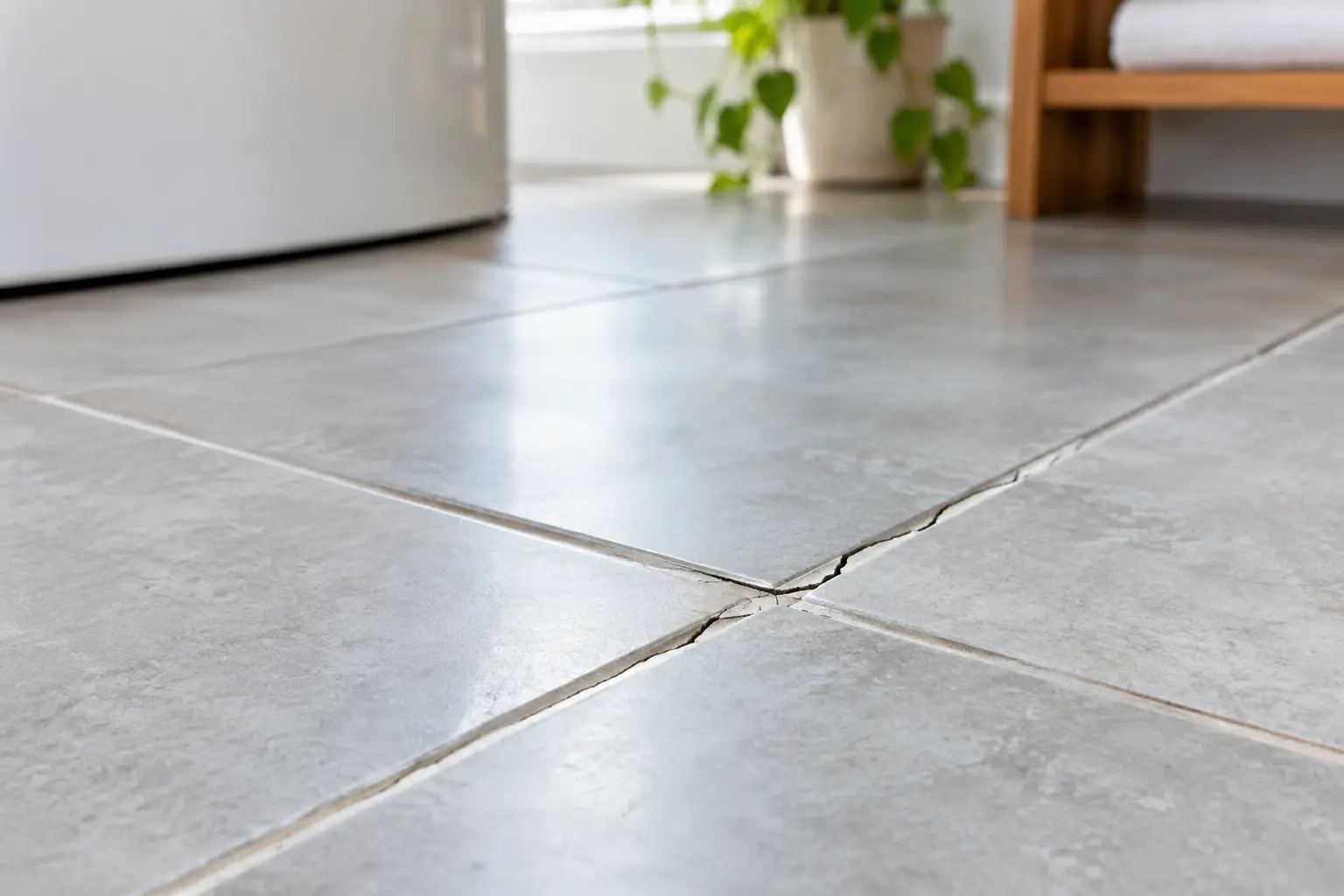
A fine line across a grout joint can look minor beside an otherwise elegant tiled floor or marble bathroom. Yet understanding why grout cracks early can prevent moisture penetration, loose tiles and a tired, uneven finish that detracts from the entire space. Grout is not merely a cosmetic filler. It supports the visual rhythm of a tiled surface, closes vulnerable joints and helps protect the layers beneath.
In premium homes, apartment bathrooms, commercial foyers and hospitality spaces, cracked grout is often a signal rather than the problem itself. The right repair depends on what caused the crack, the tile material, the condition of the substrate and whether water has already found its way behind the surface.
Why grout cracks: the real causes
Grout is rigid once cured. Tile installations, however, are rarely completely still. Floors flex slightly under load, building materials expand and contract with temperature changes, and wet areas are exposed to repeated moisture. When the movement exceeds what the grout can tolerate, it fractures.
A crack may be isolated to one small area, or it may run along several joints. The pattern matters. A single hairline crack near a doorway may have a very different cause from recurring cracking around a shower perimeter or across a large tiled floor.
Natural building movement and floor deflection
All buildings move to some degree. In Sydney properties, seasonal temperature changes, settlement, timber subfloor movement and normal structural flex can place pressure on a tiled surface. Grout is usually the first material to reveal that pressure because it is less flexible than the assembly beneath it.
This is particularly common on timber-framed floors, upper-level apartments and large-format tiled areas. If tiles move when walked on, sound hollow, or the cracking returns soon after regrouting, simply filling the joint again will not provide a lasting result. The substrate and tile bond need assessment before cosmetic repairs are carried out.
Missing or failed movement joints
Movement joints are deliberately flexible gaps placed around the perimeter of a tiled area, at changes of plane and, where required, through larger expanses of tiling. They allow the surface to expand and contract without forcing adjacent grout joints to absorb the stress.
Where rigid grout has been used in corners, around bath edges, along benchtop splashbacks or at floor-to-wall junctions, cracking is highly likely. These areas generally require an appropriate flexible sealant, colour-matched where possible, rather than standard cement-based grout. This is one of the most common reasons cracking appears repeatedly in bathrooms and kitchens.
Moisture beneath or behind the tiles
Water changes the equation. A leaking shower screen, failed silicone joint, plumbing issue or compromised waterproofing can saturate the substrate behind tiles. As materials swell, soften or deteriorate, grout joints may crack and tiles can gradually lose adhesion.
Cracked grout does not always mean waterproofing has failed. But in a shower, balcony, laundry or other wet area, it should never be dismissed without checking the surrounding signs. Persistent damp odours, darkened grout, loose tiles, peeling paint outside the shower wall or efflorescence – a white, powdery residue – warrant prompt professional attention.
Poor preparation or incorrect installation
Grout performs best when it is applied to clean, suitably deep joints after the adhesive has cured. If joints are dusty, too shallow, inconsistently filled or grouted before the tile adhesive has properly set, the finished surface can be weak from the beginning.
Mixing also matters. Overwatering grout, adding water after it begins to set, rushing the curing process or using the wrong grout type can reduce its strength and leave it prone to shrinkage cracks. These issues are more likely in rushed installations, but they can also emerge years later as the surface is subjected to daily wear.
Wear, harsh cleaning and ageing
Grout is porous unless protected with an appropriate sealer. Over time, foot traffic, abrasive scrubbing, acidic cleaners and repeated wetting can erode its surface. In natural stone installations, unsuitable cleaners can be especially damaging. Acidic products may etch marble, limestone or travertine while also weakening adjacent grout.
Ageing grout often becomes powdery before it begins to crack or fall away. This is not always a structural issue, but it does leave joints open to staining and moisture. Professional restoration can remove failed material, prepare the joints correctly and renew the finish without the disruption and expense of replacing the entire tiled area.
How to tell whether cracked grout is serious
Not every crack requires major remedial work. A small, stable crack in a dry-area wall can often be repaired locally. The concern rises when cracking is widespread, returns after repair, appears alongside loose tiles or occurs in a wet area.
Look closely at the condition of both the grout and the tiles. The following signs suggest the issue needs more than a quick patch:
- Cracks recur in the same joints within weeks or months.
- Tiles rock, sound hollow or have visible cracks of their own.
- Grout is missing, soft, crumbling or persistently dark in a shower or balcony.
- Cracks follow a long straight line across the floor or concentrate at corners and transitions.
- There is evidence of moisture beyond the tiled area, including bubbling paint, mould or staining.
A specialist assessment distinguishes between surface deterioration and movement below the tiles. That distinction protects you from spending on regrouting that looks fresh initially but fails again because the underlying cause was left untouched.
The right way to repair cracked grout
A quality repair begins with diagnosis, not a tube of filler. Failed or loose grout should be carefully removed to a suitable depth without chipping tile edges or damaging delicate natural stone. The joints are then cleaned, dried and inspected for movement, moisture damage and loss of tile adhesion.
Where the tiled surface is stable, new grout can be installed with the correct formulation and colour for the application. Epoxy grout may suit high-use or moisture-prone areas because of its excellent stain resistance and low porosity, although it is more demanding to install and is not necessary for every surface. Premium cementitious grout can be an excellent choice where the installation is sound and the desired finish calls for a more traditional appearance.
At corners, perimeters and changes of plane, a flexible sealant is generally the correct treatment. This small detail makes a substantial difference to the life of the repair. On natural stone, grout selection and cleaning methods must be matched to the specific material. Marble, limestone and travertine require particular care to avoid scratching, etching or staining the stone during restoration.
If tiles are loose or moisture has compromised the backing, the work may extend beyond regrouting. Individual tiles may need to be lifted and reset, damaged sections repaired, or the source of water addressed before the surface is refinished. There is a trade-off: local repairs cost less and cause less disruption when the installation is stable, while deeper remedial work is the better investment when evidence points to an underlying failure.
Protecting grout after restoration
Once grout has been repaired, daily care determines how well it holds its finish. Use a pH-neutral cleaner suitable for both the grout and tile or stone. Avoid bleach-heavy products, acidic bathroom cleaners and harsh scourers, particularly on natural stone surfaces. They can strip sealers, roughen grout and dull polished finishes.
Ventilation matters in bathrooms. Running the exhaust fan, wiping down shower walls and addressing drips promptly reduce the moisture that encourages mould and grout deterioration. In kitchens, wipe spills before pigments, oils and acidic ingredients have time to penetrate the joints.
Sealing can provide valuable protection for porous grout, but it is not a cure for movement or water ingress. A sealer helps resist staining and makes routine maintenance easier. It does not hold a failing tile installation together, nor does it replace proper waterproofing in a wet area.
For high-value stone and tile surfaces, a tailored maintenance plan is often the most cost-effective approach. Periodic deep cleaning, targeted repairs and professional sealing preserve the crisp grout lines that frame the surface and enhance the natural beauty of the material.
When specialist restoration is the better choice
Grout repair can appear straightforward until it sits beside honed marble, polished limestone, terrazzo or large-format porcelain. Poorly chosen products, rough removal methods and mismatched colour can make the repair more noticeable than the original crack. The goal is not simply to fill a gap. It is to restore consistency, protection and a finish worthy of the space.
Grand Stone Restoration approaches cracked grout as part of the wider surface system, with careful attention to tile stability, natural stone compatibility and the lasting appearance of the repair. When grout lines are clean, sound and properly finished, they allow the tile or stone itself to return to centre stage – exactly where it belongs.